

If your KitchenAid Artisan Series 5 Quart Tilt Head Stand Mixer isn’t tilting back as it should, it can hinder your baking and mixing routines. This common issue often results from a faulty tilt mechanism, misaligned parts, or debris blocking movement. Fortunately, with some basic tools and careful steps, you can often fix this problem yourself, saving time and repair costs.

Get kitchen staples and gadgets delivered free with Prime
- Fast, free delivery on millions of items
- Prime Video, Amazon Music and more included
- Member-only deals all year
Before proceeding, ensure your mixer is unplugged to prevent any accidental operation or injury. This guide will walk you through a practical, safe process to diagnose and repair the tilt-back issue effectively.
Key Takeaways
| Identify the cause | Determine if the tilt mechanism is stuck, broken, or obstructed. |
| Gather tools | Use a screwdriver, pliers, and possibly a lubricant for smooth operation. |
| Disassemble carefully | Remove the top cover and inspect parts for damage or debris. |
| Replace or repair parts | Order replacement parts if components are broken or worn. |
| Test after fixing | Ensure the mixer tilts back smoothly before using. |
Prepare Your Workspace and Safety Measures
Begin by unplugging your KitchenAid mixer from the power outlet. Place it on a stable, flat surface with good lighting. Gather your tools: a Phillips or flat-head screwdriver, a pair of pliers, and possibly a silicone-based lubricant. Wear safety glasses if you plan to disassemble the mixer extensively to protect your eyes from small parts or debris.
Ensure you have adequate space to work around the mixer and keep small parts organized during disassembly to avoid losing any components.
Accessing the Tilt Head Mechanism
- Remove the pouring shield if attached. It usually snaps or slides off.
- Locate the tilt mechanism, which is accessible once the top cover or the tilt head is unlocked. Use a screwdriver to remove screws holding the top panel or the tilt head in place, depending on your model specifics.
- Carefully lift or tilt back the head to expose the internal tilt assembly, including the hinge, springs, and latch components. Take note of how parts are assembled for reassembly.
Inspecting and Cleaning the Tilt Mechanism
- Check for any debris, dried grease, or obstructions that could hinder movement. Clean these areas with a soft cloth or brush.
- Inspect the hinge and tilt latch for signs of damage, cracks, or wear. If parts are bent or broken, replacement may be necessary.
- If parts are dirty or sticky, apply a small amount of silicone-based lubricant to the moving parts to facilitate smooth tilting.
Replacing Damaged Components
If you identify damaged or worn parts, order replacement components compatible with your model (refer to the specific part numbers or consult KitchenAid support). To replace, remove the faulty part using pliers or screwdrivers, then install the new component following the reverse order of disassembly.
Ensure all screws and parts are securely fitted and check the movement of the tilt head before reassembling the entire unit.
Reassemble and Test the Mixer
- Reattach the top cover or tilt head, tightening all screws securely.
- Replace the pouring shield if necessary.
- Plug in the mixer and gently tilt the head back and forth to test for smooth movement. Watch for any sticking or resistance.
- Operate the mixer at low speeds to verify that the tilt mechanism works reliably during normal use.
The Products in This Guide
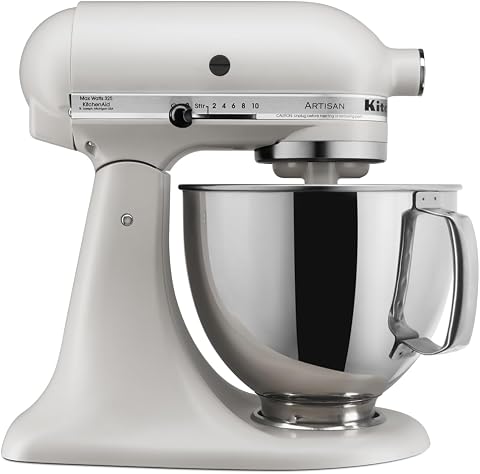
KitchenAid Artisan Series 5 Quart Tilt Head Stand Mixer
- ✔ Weight: 26 pounds
- ✔ Power: 325 watts
- ✔ Warranty: 1-year limited

KitchenAid Stand Mixer Attachment
- ✔ Weight: 3 pounds
- ✔ Size: 7 x 6 x 8 inches
- ✔ Color: Silver
KitchenAid Artisan Series 5 Quart Tilt Head Stand Mixer
The KitchenAid Artisan Series 5 Quart Tilt Head Stand Mixer is built with durable metal construction and offers 59 touchpoints for thorough mixing. Its tilt-head feature provides easy access to the bowl, making ingredient addition effortless. Despite occasional mechanical issues, its robust design ensures long-lasting performance.
Pros:
- Durable metal construction
- Easy to access bowl with tilt-head
- Powerful 10-speed motor
- Large 5-quart capacity
Cons:
- Tilt mechanism can jam over time
- Requires careful maintenance
- Potential for mechanical wear
Best for: Baking enthusiasts and small to medium batch cooks
Not ideal for: Heavy users needing frequent repairs or with limited space
Bottom line: A reliable stand mixer with a sturdy build, but watch for tilt mechanism issues over time.
KitchenAid Stand Mixer Attachment
The KitchenAid Stand Mixer Food Grinder attachment enhances your mixer’s capabilities, allowing you to grind meat, vegetables, and more with ease. It connects directly to the power hub, turning your mixer into a mini food processor, perfect for homemade sausages, burgers, or even grinding fresh vegetables.
Pros:
- Increases mixer functionality
- Includes multiple grinding plates
- Easy to clean and store
- Made of durable metal
Cons:
- Requires separate purchase
- Needs pre-chilling for best results
- May be bulky for small kitchens
Best for: Home cooks who want to process ingredients from scratch
Not ideal for: Users who do not frequently grind foods or have limited storage
Bottom line: A powerful attachment that extends your mixer’s versatility for fresh food prep.
Frequently Asked Questions
Why won’t my KitchenAid tilt back?
This issue often occurs due to debris or grease buildup in the tilt mechanism, worn or broken parts, or a misaligned latch. Inspecting and cleaning the mechanism can often resolve the problem.
Can I fix the tilt mechanism myself?
Yes, with basic tools, careful disassembly, and replacement parts if needed, you can usually repair the tilt back feature yourself. Just ensure you follow safety precautions.
What parts might need replacing?
Common parts that may wear out include the hinge, tilt latch, or springs. Damage or deformation in these components can prevent proper tilting.
Is it safe to disassemble my KitchenAid mixer?
As long as the mixer is unplugged and you follow proper procedures, disassembly can be safe. If you’re uncomfortable, consider consulting a professional or contacting KitchenAid support.
How often should I clean the tilt mechanism?
Regular cleaning every few months or when you notice stiffness can prevent buildup. Use a soft cloth and avoid harsh chemicals that could damage plastic or metal parts.
Keep Your Mixer Tipping Smoothly for Better Baking
With a little troubleshooting and maintenance, you can often restore your KitchenAid tilt head mixer to its full functionality. Regular cleaning and inspection will extend its lifespan and ensure smooth operation during your baking projects. Remember, safety first: always unplug your mixer before disassembly and handle parts carefully. If parts are damaged beyond simple repair, replacing them ensures continued performance and safety.
Affiliate disclosure: As an Amazon Associate we earn from qualifying purchases. Prices and availability are accurate as of the time of publishing.