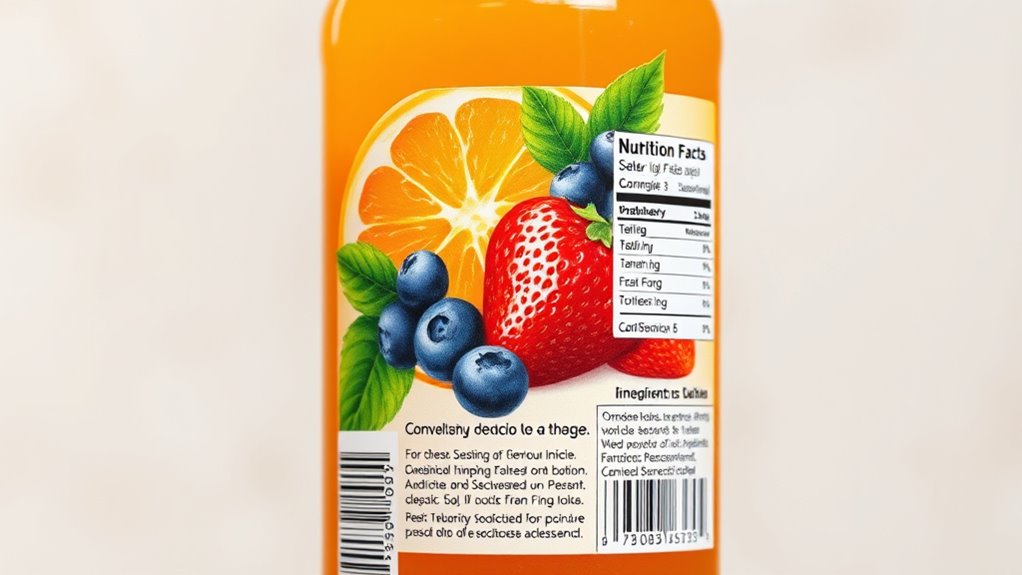

To understand a juice label, start by checking the serving size and calories per serving to see how they fit into your diet. Look at the ingredient list for recognizable, natural fruit options like “100% orange juice,” and avoid products with added sugars or artificial ingredients. Be mindful of the total sugar content, including natural sugars, to manage intake. Keep exploring these tips to make smarter, healthier choices easily.
Key Takeaways
- Check the serving size to understand the nutritional values per portion.
- Look at the calories and sugar content per serving to assess health impact.
- Read the ingredient list for natural ingredients and minimal additives.
- Identify added sugars and avoid products with high or artificial sweeteners.
- Ensure the juice is labeled as “100% fruit juice” for pure, natural content.

Reading a juice label can seem confusing at first, but understanding what to look for helps you make healthier choices. When you pick up a bottle, your first step should be to examine the nutrition facts panel. This section provides vital information about what’s inside the juice—calories, sugars, vitamins, and other nutrients. Pay close attention to the serving size, because all the numbers are based on that amount. If the serving size is small, the calories and sugar content will be lower per serving, but if you drink the entire bottle, those numbers could add up quickly. Look for the total sugar content, and try to choose options with lower added sugars; even natural fruit juices can contain high amounts of sugar, which can impact your health over time. Also, check the amount of calories per serving to gauge how it fits into your daily diet, especially if you’re watching your intake for weight management.
Next, turn your attention to the ingredient list, which is often found on the side or back of the package. This list reveals exactly what’s in the juice, and it’s essential for making an informed decision. Ideally, you want a short, straightforward ingredient list with recognizable ingredients like “100% orange juice” or “apple juice.” Avoid juices filled with added sugars, artificial flavors, preservatives, or colorings. If you see ingredients like high fructose corn syrup, added sweeteners, or artificial additives, it’s a sign that the product isn’t as natural or healthy as it might seem. Opt for juices that list fruit as the first ingredient and avoid those with multiple unpronounceable chemicals. Sometimes, a juice may be labeled as “fruit juice” but contain a blend of juices or additives that dilute the natural fruit content. Checking the ingredient list helps you verify what you’re truly drinking and guarantees you’re not consuming unnecessary or harmful ingredients.
Additionally, understanding the essential oils used in health remedies can help you find natural ways to support your well-being, similar to how reading labels helps you make healthier food choices.
Frequently Asked Questions
How Can I Identify Added Sugars in Juice Labels?
You can identify added sugars on juice labels by checking the ingredient list for natural sweeteners like honey, agave, or cane sugar. Also, look at the nutrition facts panel for the sugar content; high numbers often indicate added sugars. Be cautious if the label lists multiple types of sweeteners, and remember that even if it says “no added sugar,” natural sugars may still be present, affecting the overall sugar content.
What Do Terms Like “100% Juice” Really Mean?
When you see “100% juice,” it’s like finding a pure, untouched gem — it means the drink is made entirely from fruit content, with no added sugars or fillers. Look for labels that specify “fruit juice from concentrate” or “not from concentrate” to understand the processing. This label assures you that what’s inside is just nature’s liquid gold, without any sneaky additives diluting its true fruit essence.
Are Organic Labels on Juice Products Trustworthy?
Organic labels on juice products can be trustworthy if they carry reputable organic certification, ensuring the product meets strict standards. Always check for certification logos from recognized agencies like USDA Organic. While some labels claim “organic,” their authenticity can vary, so verify the label’s authenticity by researching the certifying organization. Trustworthy organic labels provide transparency and guarantee that the juice is made from organically grown ingredients without synthetic additives.
How Do Preservatives in Juice Affect Health?
Think of preservatives as the silent guards of your juice, but they can also be hidden threats. Artificial additives help extend shelf life, yet they might pose health implications like allergies or hormone disruption. When preservatives are present, they act like uninvited guests in your body, potentially causing inflammation or other issues. To protect your health, choose juices with natural ingredients and avoid those packed with artificial additives.
What Is the Significance of Juice Expiration Dates?
You should pay attention to juice expiration dates because they help guarantee your safety and quality. Proper juice storage, like keeping it refrigerated, prevents spoilage, while understanding packaging materials can reveal how well the juice is preserved. An expiration date indicates when the juice might lose flavor or nutrients, and potentially become unsafe. Always check these dates before consuming to enjoy fresh, healthy juice and avoid health risks.
Conclusion
Now that you know how to read a juice label, you’re like a detective uncovering the secrets behind each bottle. With this new skill, you’ll spot the healthy choices hiding in plain sight and avoid the sneaky added sugars. Think of each label as a treasure map guiding you to better wellness. So, next time you reach for juice, you’ll do so confidently, steering clear of traps and filling your glass with real, nourishing goodness.

Cindy thoroughly researches juicing trends, techniques, and recipes to provide readers with practical advice and inspiration. Her writing style is accessible, engaging, and designed to make complex concepts easy to understand. Cindy’s dedication to promoting the advantages of juicing shines through her work, empowering readers to make positive changes in their lives through the simple act of juicing.