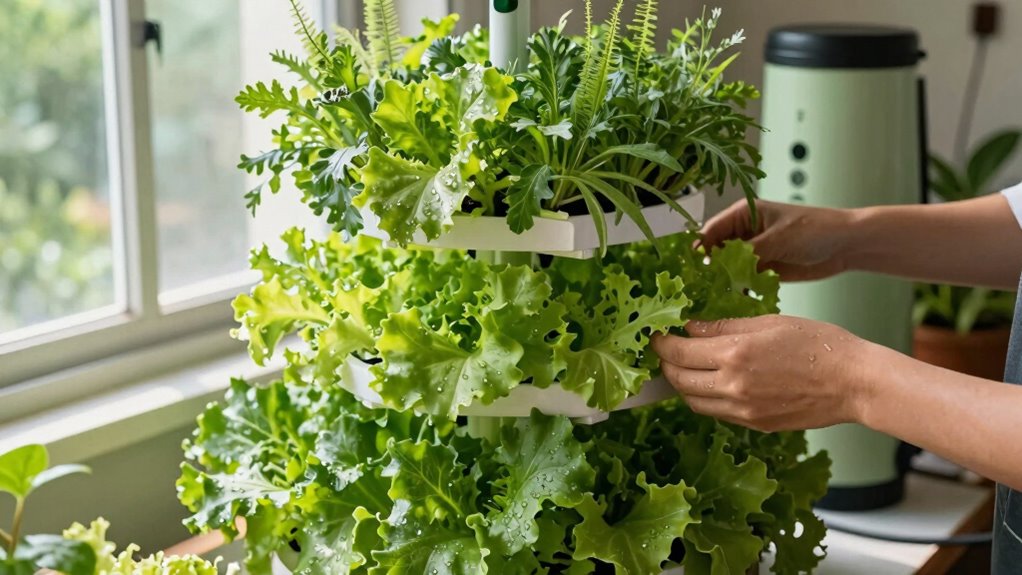

To plan harvest cycles for daily juicing in your hydroponic tower garden, stagger plant maturity by growing multiple batches at different stages. Regularly prune and harvest to maintain plant vigor and encourage continuous growth. Rotate crops so you always have greens ready for harvest, and keep detailed schedules to track maturity times. This approach guarantees a steady, fresh supply of nutrient-rich greens every day. If you want to optimize your system further, you’ll find helpful tips as you continue.

Get kitchen staples and gadgets delivered free — and shop member deals
- Fast, free delivery on millions of items
- Access to Prime Big Deal Days deals on October 6–7
- Prime Video, Amazon Music and more included
Key Takeaways
- Stagger planting and maturity stages across batches for a continuous, daily harvest supply.
- Grow multiple plant batches at different growth stages to ensure consistent availability.
- Regularly prune and harvest to maintain plant vigor and prevent overgrowth.
- Keep detailed schedules and notes to optimize harvest timing and streamline workflow.
- Monitor plant health closely to prevent delays and ensure high-quality, fresh produce daily.
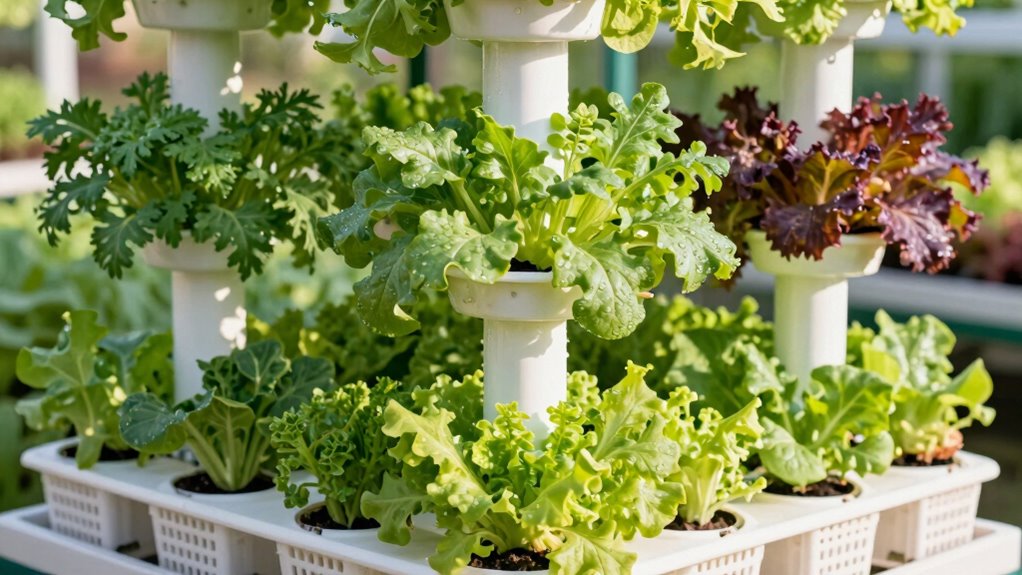
Pest management in a hydroponic tower garden differs from traditional soil gardening. Without soil, common pests like soil-borne insects are less of a concern, but you still need to watch out for aphids, whiteflies, and spider mites. These pests can quickly infest your plants, especially in a densely packed tower where airflow may be limited. To manage pests effectively, start with preventative measures—keep your growing environment clean, inspect plants regularly, and remove any infected leaves immediately. Introducing natural predators or using organic insecticidal soaps can help control pests without harming your plants or compromising your juice quality. Since your system is so compact, maintaining good airflow and avoiding excess humidity helps prevent fungal issues and pest infestations. Monitoring your plants for early signs of pests is crucial, and understanding pest management strategies can help you keep your garden healthy. Proper plant health practices also play a significant role in reducing pest problems and promoting vigorous growth. Ensuring proper nutrient balance in your system supports strong plant defenses against pests and diseases. Regularly checking for early pest signs and promptly addressing issues can prevent major infestations and protect your harvest. Additionally, maintaining a clean growing environment is essential for minimizing pest attraction and ensuring a successful harvest. Planning your harvest cycle for daily juicing involves staggering plant maturity times. You’ll want to grow multiple batches of your favorite leafy greens and herbs, each at slightly different stages. This way, as one batch reaches peak flavor and freshness, another is ready to be harvested. Regularly pruning and harvesting not only encourages healthy growth but also ensures you always have ingredients at their peak for juicing. Keep a schedule and notes on each plant’s growth cycle to optimize your harvest timing. By managing plant nutrition carefully and staying vigilant about pest control, you’ll create a steady supply of fresh produce. This consistency enables you to enjoy daily fresh juices, packed with nutrients, without the hassle of unpredictable harvests.
As an affiliate, we earn on qualifying purchases.
Frequently Asked Questions
How Long Does It Take for Plants to Mature in a Hydroponic Tower?
Plant maturation timelines in hydroponic tower gardens typically range from 3 to 8 weeks, depending on the plant type. You’ll notice the initial growth stages—seedling to vegetative phase—happen quickly, often within a few weeks. As plants progress to flowering or fruiting stages, development takes longer. To plan your harvests for daily juicing, monitor your plants regularly, and note their growth stages to guarantee you’re harvesting at peak maturity.
What Are the Most Pest-Resistant Plants for Tower Gardens?
You should plant pest-resistant options like garlic, chives, and marigolds, which naturally deter pests through pest control. Incorporate companion planting by pairing these with vulnerable plants to enhance pest resistance. These methods create a healthier environment, reducing the need for chemical treatments. By choosing hardy, pest-resistant plants and strategic companion planting, you’ll maintain a thriving tower garden with minimal pest issues, ensuring steady supplies for your daily juicing.
Can Tower Gardens Be Used Indoors Year-Round?
Yes, you can use tower gardens indoors year-round. To guarantee healthy growth, maintain proper indoor airflow, which prevents mold and pests, and keep an eye out for pest prevention. Position your tower in a well-ventilated area with adequate light, and regularly check for pests to avoid infestations. With these precautions, your indoor tower garden can thrive all year, providing fresh produce for your daily juicing needs.
How Often Should Nutrient Levels Be Adjusted?
Think of your garden as a symphony orchestra; each note matters. You should adjust nutrient levels regularly, about once a week, to prevent nutrient deficiencies and keep pH balanced. If plants show signs of deficiencies, act quickly. Consistent monitoring guarantees your tower garden remains harmonious, supporting healthy growth. By staying attentive, you’ll produce vibrant, nutrient-rich produce perfect for daily juicing, making sure every “note” hits just right.
What Are the Best Lighting Options for Indoor Hydroponic Towers?
You should choose LED grow lights with full spectrum lighting for your indoor hydroponic towers. These lights mimic natural sunlight, promoting healthy plant growth and maximizing yields. LED options are energy-efficient, produce less heat, and last longer, making them ideal for indoor gardening. Make sure your lights are positioned appropriately to provide even coverage, and adjust the height as plants grow to maintain ideal light exposure for robust, flavorful produce.
Conclusion
With proper planning, your hydroponic tower garden can supply fresh, nutritious produce daily for juicing. By staggering your harvest cycles, you guarantee a continuous supply of herbs and greens, saving money and boosting health. Did you know that urban hydroponic farms can produce up to 20 times more crops per square foot than traditional soil gardening? Embrace these efficient techniques, and you’ll enjoy a steady stream of vibrant, farm-fresh ingredients right at home—no dirt required!
NFL season / tailgating Picks
team gear
As an affiliate, we earn on qualifying purchases.