
To increase your yield, focus on proper produce prep by harvesting at peak ripeness for the best flavor and nutrition. Handle fruits and veggies gently to prevent damage, and use sharp tools rather than pulling or twisting. Store produce in the right conditions—cool, dark, and humid areas for roots, and perforated bags for greens—to prolong freshness. Planning your storage space in advance helps you manage your harvest efficiently. Keep these tips in mind, and you’ll discover more ways to boost your crop success.
Key Takeaways
- Harvest produce at peak ripeness to maximize flavor, nutrition, and yield quality.
- Handle fruits and vegetables gently during harvest to prevent damage and spoilage.
- Use proper post-harvest handling, including cleaning and correct storage, to extend freshness.
- Tailor storage conditions to each produce type to maintain quality and prevent spoilage.
- Plan and prepare storage areas in advance to ensure efficient handling and preservation of harvests.
Getting your produce ready before planting can substantially boost your harvest. Proper preparation starts with understanding the best harvesting techniques and storage methods to maximize your yield and preserve freshness. When you approach harvesting, timing is everything. You want to pick your fruits and vegetables at their peak ripeness; this ensures the best flavor, texture, and nutrition. For example, many vegetables like beans and zucchinis should be harvested before they become overly mature, while fruits like tomatoes and peppers are best picked when their color is fully developed. Using the right harvesting techniques prevents damage and encourages continued production. Handle your produce gently, using sharp tools or your hands, and avoid pulling or twisting, which can harm the plant or cause bruising. Regularly checking your plants and harvesting frequently also prevents overripening, which can lead to spoilage and reduced overall yield. Incorporating proper produce handling practices, such as gentle cleaning and correct storage, further enhances your harvest quality.
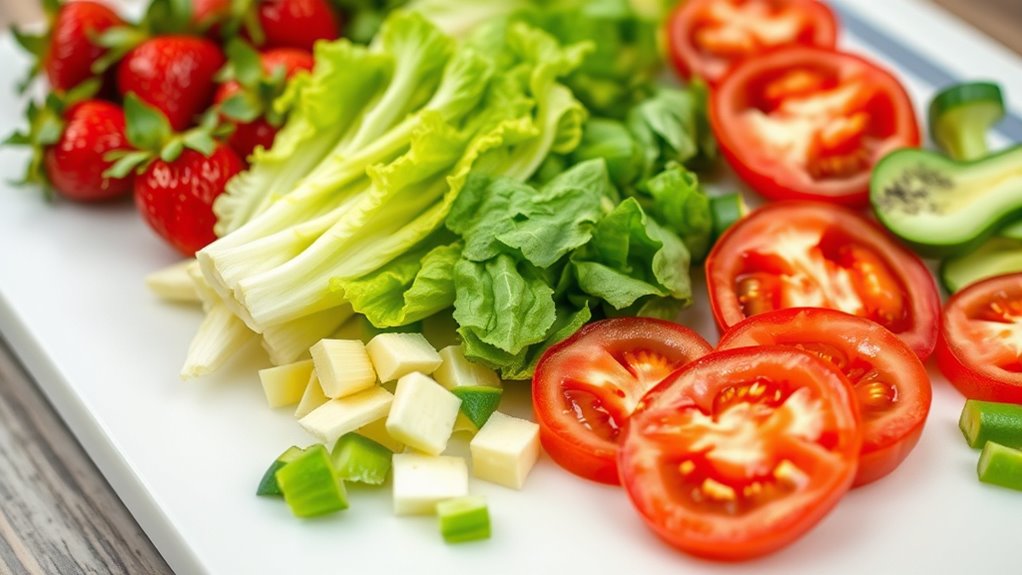
Once you’ve harvested your produce, proper storage methods come into play. The way you store your fruits and vegetables can make a significant difference in how long they stay fresh and how well they maintain their nutritional value. Different produce requires different storage conditions, so educate yourself on the specific needs of each type. For instance, leafy greens do best when stored in perforated plastic bags in the refrigerator, while root vegetables like carrots and potatoes prefer a dark, cool, and humid environment, such as a cellar or basement. Proper storage not only prolongs freshness but also reduces waste, allowing you to enjoy your harvest over a more extended period. Additionally, some produce benefits from pre-storage treatments—such as washing and drying thoroughly before refrigerating or using ethylene-absorbing packets to slow ripening. The key is to keep produce in ideal conditions—usually a cool, dark, and slightly humid space—while avoiding excess moisture, which can promote mold and decay.
Getting your produce ready before planting is also about planning for the post-harvest phase. Set up your storage areas before your harvest begins so you’re ready to handle your bounty promptly. This proactive approach ensures your produce stays in the best possible condition, which leads to better yields overall. Combining good harvesting techniques with appropriate storage methods enables you to make the most of your garden’s productivity. When you pay attention to these details, you not only enjoy fresher, tastier produce but also increase your overall harvest success. Properly prepared produce, from harvest to storage, helps you maximize your yield and enjoy the fruits of your labor longer, making every growing season more rewarding.
Frequently Asked Questions
How Does Produce Prep Impact Shelf Life?
Proper produce prep markedly impacts shelf life by maintaining produce freshness and preventing spoilage. When you wash, trim, and store fruits and vegetables correctly, you reduce bacteria and mold growth, which helps them stay fresh longer. Additionally, removing damaged or rotting parts slows spoilage, ensuring your produce remains appealing and safe to eat. This careful prep extends shelf life, minimizes waste, and keeps your produce at its best for as long as possible.
What Tools Are Essential for Effective Produce Prep?
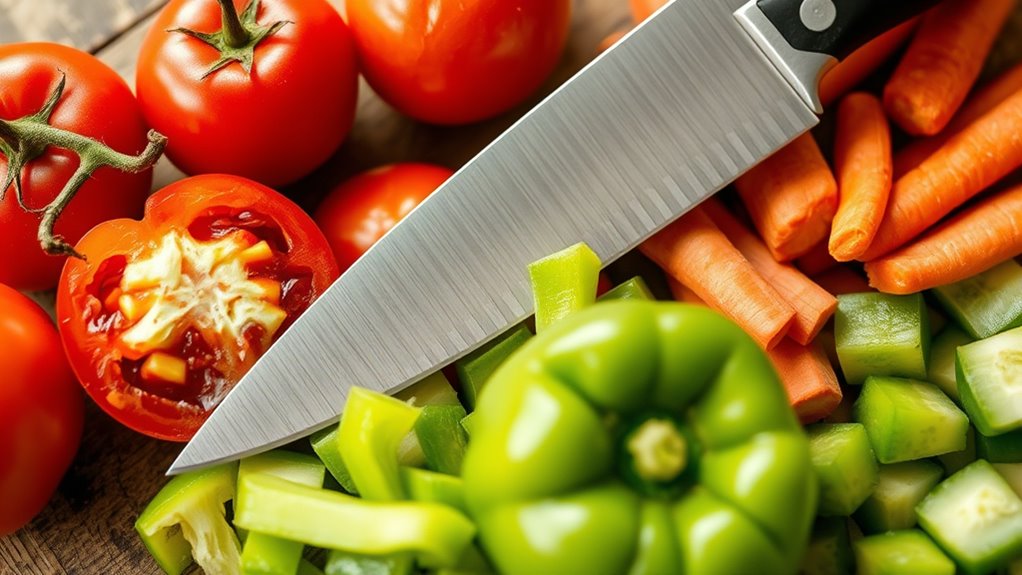
You need sharp knives and quality storage containers for effective produce prep. Sharp knives make cutting easier and safer, ensuring precise cuts that reduce waste. Use storage containers to organize and protect produce, extending freshness. Regular knife sharpening maintains blade effectiveness, while choosing the right containers prevents spoilage and cross-contamination. Together, these tools streamline prep, improve yield, and keep your produce fresh longer.
Are There Safety Concerns When Prepping Produce?
Like a vigilant guardian, you must be aware of safety concerns when prepping produce. Food safety is essential, so wash your hands and tools thoroughly to prevent cross contamination. Keep raw produce separate from cooked or ready-to-eat items, and clean surfaces regularly. These precautions are your armor, ensuring your produce stays safe to eat and your health remains protected. Don’t let careless prep turn your kitchen into a hazard zone.
How Can Prep Techniques Reduce Waste?
You can reduce waste by sharpening your knives and using precise prep techniques, which boost prep efficiency. When you trim only what’s necessary, you minimize discard, making the most of each piece of produce. Properly storing leftovers and repurposing scraps into stocks or sauces further cuts waste. These practices not only save ingredients but also lower costs, ensuring you get the most out of your produce while maintaining high-quality dishes.
Does Produce Prep Differ for Organic Versus Conventional Produce?
Organic produce prep often involves gentle organic washing to remove dirt and residues, emphasizing preservation of natural qualities. Conventional produce prep frequently requires peeling to remove pesticides or wax coatings, ensuring safety and quality. While both methods aim to prepare produce effectively, they differ in technique—organic washing focuses on cleaning, while conventional peeling emphasizes removal of outer layers. Tailoring your prep methods to each type maximizes freshness, safety, and yield.
Conclusion
By mastering proper produce prep, you’re planting the seeds for a bountiful harvest. Think of your careful preparation as nurturing a delicate sapling—each thoughtful step strengthens your crop’s potential. When you tend to your produce with care, you’re not just preparing food; you’re cultivating success. Remember, the smallest actions today can blossom into the abundant yield you envision. Approach your prep like tending a garden—patient, attentive, and committed to growth.

Cindy thoroughly researches juicing trends, techniques, and recipes to provide readers with practical advice and inspiration. Her writing style is accessible, engaging, and designed to make complex concepts easy to understand. Cindy’s dedication to promoting the advantages of juicing shines through her work, empowering readers to make positive changes in their lives through the simple act of juicing.