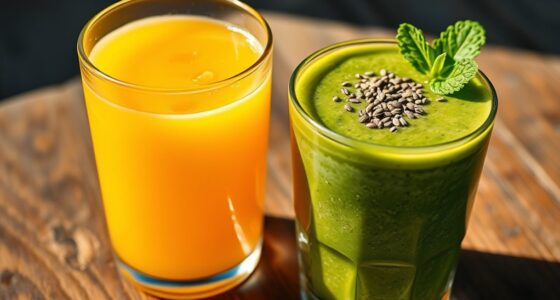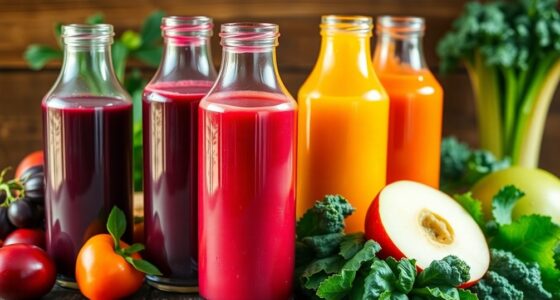
Juice density impacts how sweet you think it tastes by increasing the concentration of sugars and pulp, making the juice feel richer and more satisfying. When the density is higher, flavors appear stronger and more intense, often tricking you into perceiving it as sweeter. pH balance also plays a role, as more acidic juices may seem sharper despite high density. If you keep exploring, you’ll uncover how these factors work together to create a perfectly balanced flavor.

Get kitchen staples and gadgets delivered free with Prime
- Fast, free delivery on millions of items
- Prime Video, Amazon Music and more included
- Member-only deals all year
Key Takeaways
- Higher juice density increases flavor concentration, making the juice taste sweeter and more robust.
- Denser juices enhance mouthfeel, leading to a perception of increased sweetness and richness.
- Increased density can amplify flavor intensity, tricking senses into perceiving higher sweetness levels.
- The interaction between density and pH influences how sweetness is perceived, with acidity masking or highlighting sweetness.
- Visual and textural cues from denser juice contribute to the overall perception of a sweeter taste.
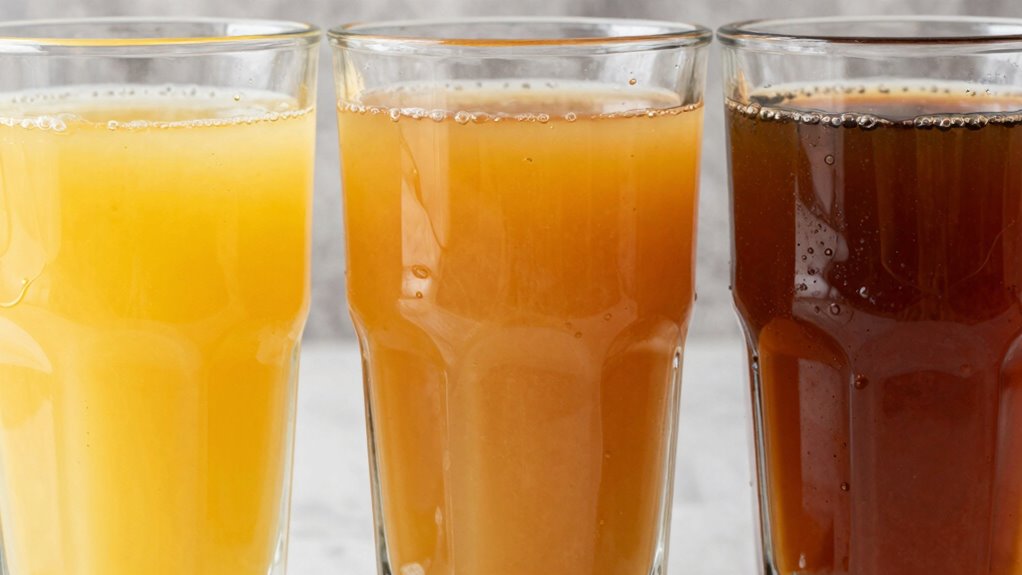
Have you ever wondered why some juices taste sweeter or feel thicker than others? The answer often lies in juice density, which directly influences how you perceive sweetness and overall flavor experience. Juice density refers to how much solid content, like sugars and pulp, is packed into the liquid. When a juice has a higher density, it typically contains more dissolved sugars and pulp, making it feel richer and taste sweeter. But it’s not just about sugar content; the density also impacts flavor intensity. The more concentrated the juice, the more pronounced its flavors become, giving you a more robust and vivid tasting experience. This heightened flavor intensity can trick your senses into perceiving a higher level of sweetness, even if the actual sugar content isn’t drastically different. juice density can also influence how your palate perceives other flavor components, amplifying or masking certain tastes. pH balance plays a crucial role here, too. Juices with different pH levels can affect how dense liquids feel and how flavors are perceived. For example, a more acidic juice (lower pH) often seems sharper and less sweet, even if it’s dense, because acidity can mask sweetness. Conversely, a less acidic, more neutral pH juice tends to amplify the perception of sweetness, especially when combined with higher density. When you’re tasting juice, your palate responds not just to sugar but also to acidity, bitterness, and other flavor components. If the pH is balanced to favor sweetness, the dense juice will seem even sweeter, creating a richer, more satisfying flavor profile. Additionally, mouthfeel plays a significant role in how thickness and richness are perceived, influencing overall enjoyment. The sensation of thickness isn’t just about the visual or textural qualities of the juice; it’s also about how the density influences your mouthfeel. A denser juice coats your tongue more thoroughly, intensifying the sensations of sweetness and flavor. This thicker feeling can make the juice seem more indulgent and satisfying, even if the actual sugar content isn’t extremely high. Recognizing how the interaction between pH and density affects flavor perception helps explain why some juices taste sweeter or more balanced than others. The key lies in the interplay between density, flavor intensity, and pH balance. When these elements align, you experience a juice that feels fuller, tastes sweeter, and offers a more memorable flavor experience.
As an affiliate, we earn on qualifying purchases.
Frequently Asked Questions
How Does Temperature Influence Juice Density?
Temperature effects cause density fluctuations in juice, meaning as you lower the temperature, the juice becomes denser because liquids contract. Conversely, warming the juice causes it to expand and decrease in density. These fluctuations influence how you perceive sweetness because denser juice often feels richer and sweeter on your palate. So, when you chill juice, its increased density can enhance perceived sweetness, while warming it may lessen that perception.
Can Juice Density Vary Between Different Fruit Varieties?
Yes, juice density varies between fruit varieties because of differences in juice composition. For example, sweeter fruits like mango or grape have higher sugar content, increasing density, while tart fruits like lemon or cranberry have lower sugar levels, resulting in lower density. These variations affect the perceived sweetness and overall flavor profile, as different fruit varieties naturally contain varying amounts of sugars, acids, and water, influencing juice density considerably.
Does Adding Water Alter Perceived Sweetness?
Adding water to juice decreases the sugar concentration, which directly impacts perceived sweetness. You might think it dilutes the flavor, but it can also lead to flavor enhancement by balancing out overly intense tastes. However, too much water can make the juice seem less sweet because the overall sugar content drops, so it’s a delicate balance. Adjusting water content allows you to control sweetness and optimize flavor for your preference.
How Is Juice Density Measured Accurately?
To measure juice density accurately, you use density measurement techniques like a hydrometer or a refractometer. A refractometer is common because it provides quick, precise readings of sugar concentration. Before use, verify proper refractometer calibration with distilled water to set a zero point. By checking the refractometer’s readings, you can determine the juice’s density, which directly impacts perceived sweetness.
Are There Health Implications of High-Density Juices?
Think of high-density juices as a busy highway packed with sugar traffic—you absorb those sugars faster, impacting your health. The nutritional impact can be significant, leading to spikes in blood sugar and potential weight gain. Excessive sugar absorption may also increase your risk of metabolic issues. So, while dense juices might taste richer, consuming them often could strain your health, making moderation key.
Conclusion
Understanding how juice density influences perceived sweetness helps you make better choices and enjoy your drinks more. When you pay attention to density, you can select juices that satisfy your taste buds without extra sugar. Remember, appearances can be deceiving—what looks rich might not always be the sweetest. So, don’t judge a juice by its density alone; dig a little deeper. Sometimes, you need to read between the lines to get the full flavor experience.
Halloween Picks
halloween
As an affiliate, we earn on qualifying purchases.