

Filtration methods—depth, membrane, and crossflow—each work differently to remove impurities. Depth filtration traps particles within thick, layered materials, offering high dirt-holding capacity but less precision. Membrane filtration uses a thin barrier with specific pore sizes for targeted cleanup, providing precise removal of tiny contaminants. Crossflow filtration streams the liquid tangentially across a membrane, reducing clogging and allowing continuous operation. Understanding these types helps you choose the best option, and exploring further reveals how to optimize your filtration process.
Key Takeaways
- Depth filtration captures particles within layered filter media, offering high particulate retention for larger contaminants.
- Membrane filtration uses precise pore-size barriers for targeted removal of fine impurities like bacteria and viruses.
- Crossflow filtration employs tangential flow, reducing clogging and enabling continuous operation with higher flow rates.
- Selection of filtration method depends on desired purity, flow rate, and specific contaminant characteristics.
- Each method balances pore size control and flow rate to optimize filtration efficiency and operational lifespan.
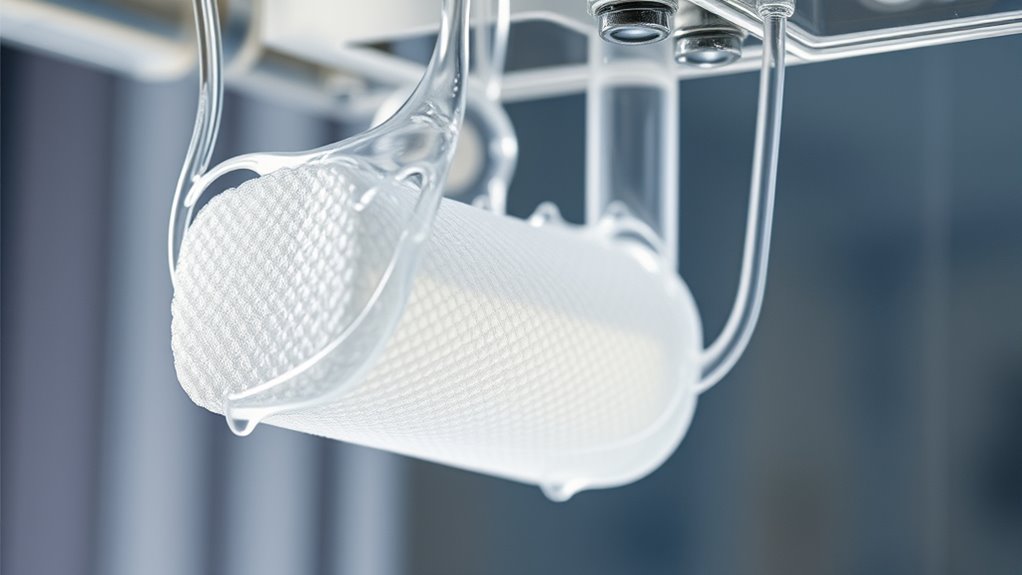
Filtration is a process that removes unwanted particles, contaminants, or impurities from liquids or gases, guaranteeing they are cleaner and safer. When choosing a filtration system, understanding how pore size impacts performance is essential. Pore size refers to the size of the openings in the filter medium, determining which particles are captured and which pass through. Smaller pores effectively trap tiny contaminants but can also restrict flow, leading to a slower flow rate. Conversely, larger pores allow for a higher flow rate but may not filter out the smallest impurities. Striking the right balance between pore size and flow rate is key to optimizing filtration efficiency for your specific needs.
Choosing the right pore size balances filtration efficiency and flow rate for optimal results.
As you select a filter, consider how the pore size impacts your process. If you’re filtering water with fine sediments or bacteria, you’ll need a filter with very small pores, often in the micrometer range. However, this can reduce the flow rate, making your process slower. On the other hand, if you’re filtering larger particles or need a high throughput, a filter with larger pores will allow more fluid to pass through quickly. Remember, a smaller pore size means tighter filtration but at the cost of decreased flow rate, so you must weigh the importance of purity versus efficiency.
Flow rate plays a critical role in how well your filtration system performs. A high flow rate means you can process larger volumes in less time, which is especially important in industrial applications. But, increasing flow rate often requires a filter with larger pores or a more open structure, which may compromise the level of filtration. Conversely, a slow flow rate can ensure thorough removal of contaminants but might create bottlenecks in your operation. To optimize performance, consider the pressure differential across the filter and how it influences flow rate. Maintaining an appropriate flow rate helps prevent clogging and prolongs the lifespan of your filter.
In depth filtration, the focus is on capturing particles within the filter material itself, often relying on a dense, layered structure that can trap contaminants throughout the medium. Membrane filtration, on the other hand, uses a thin, selective barrier with precise pore sizes to target specific particles, giving you tighter control over what gets removed. Crossflow filtration combines aspects of both, where the fluid flows tangentially across the filter surface, reducing clogging and allowing for continuous operation at higher flow rates. Each method offers advantages depending on your filtration needs, with pore size and flow rate adjustments being central to achieving the desired purity and efficiency.
Frequently Asked Questions
How Do Filtration Methods Impact Environmental Sustainability?
Filtration methods considerably impact environmental sustainability by promoting eco-friendly practices and resource conservation. When you choose efficient filtration techniques, you reduce waste and energy consumption, helping to minimize your ecological footprint. These methods enable cleaner water and air, conserving natural resources and supporting sustainable development. By prioritizing eco-conscious filtration, you contribute to a healthier environment, ensuring resources are preserved for future generations and reducing pollution from industrial processes.
What Are the Latest Innovations in Membrane Filtration Technology?
You’ll find that latest innovations in membrane filtration focus on nanofiltration advancements and membrane material innovations. These breakthroughs aim to improve efficiency, durability, and selectivity. Researchers develop new materials that resist fouling, enhance flow rates, and lower energy consumption. By adopting these cutting-edge technologies, you can achieve cleaner water, reduce environmental impact, and optimize your filtration processes, making them smarter, more sustainable, and better suited for future challenges.
How Does Filtration Efficiency Vary With Different Feedwater Qualities?
You’ll find that filtration efficiency varies markedly with feedwater variability. When your feedwater contains high levels of sediments, organic matter, or minerals, it can clog membranes and reduce filtration performance. To maintain peak efficiency, you need to adapt your filtration systems, perhaps by increasing pre-treatment or adjusting operating conditions. Monitoring feedwater quality regularly helps you anticipate issues and guarantee consistent filtration performance, regardless of changing water qualities.
Can Filtration Systems Be Customized for Specific Industrial Applications?
Yes, you can customize filtration systems like tailoring a suit to fit perfectly. With application-specific filters and a range of customization options, you can design systems that meet your exact industrial needs. Whether you’re tackling heavy contaminants or delicate processes, these tailored solutions optimize efficiency and longevity. By customizing your filtration setup, you turn a one-size-fits-all approach into a precise tool that works seamlessly for your unique application.
What Are the Maintenance Requirements for Crossflow Filtration Systems?
You need to regularly inspect and clean your crossflow filtration system to guarantee system durability and cost efficiency. Replace worn-out membranes and clean the system to prevent clogging and maintain ideal flow. Check pump performance and monitor pressure levels to identify issues early. Proper maintenance not only extends the lifespan of your system but also keeps operating costs low, ensuring reliable performance and consistent filtration quality.
Conclusion
Now that you understand depth, membrane, and crossflow filtration, you’re equipped to tackle any filtration challenge like a superhero wielding the ultimate shield. Each method offers unique strengths, making your job easier and more efficient. Remember, choosing the right filtration technique can make a difference as big as splitting the ocean! So go ahead—apply this knowledge confidently, and turn complex separation tasks into simple victories that leave others in awe of your skills.