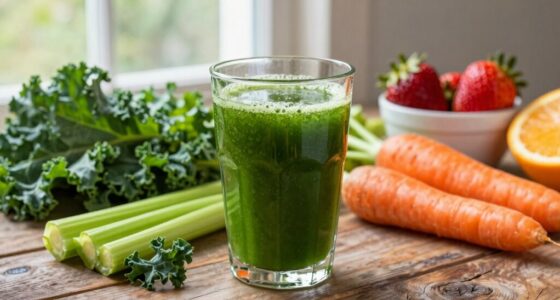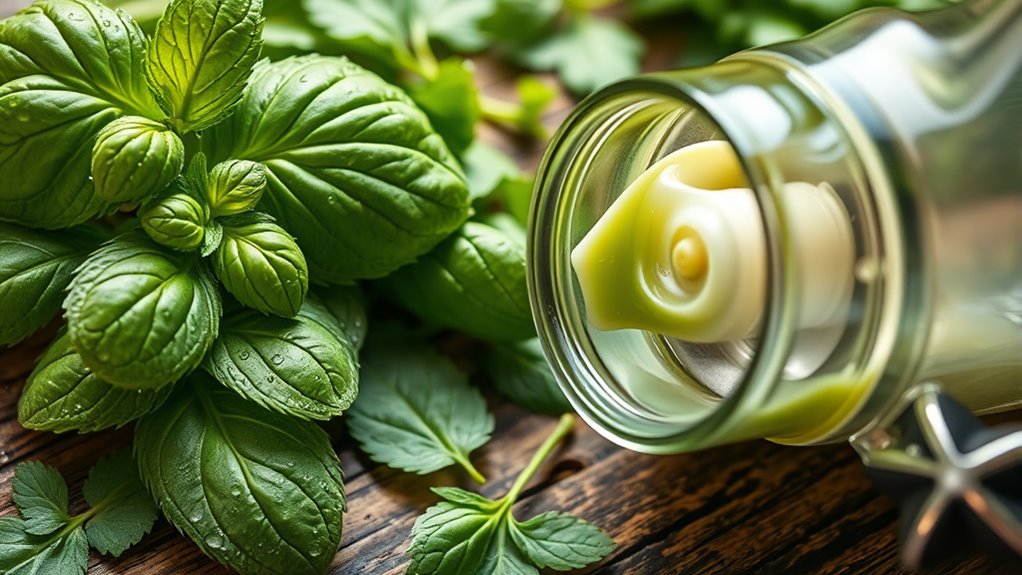

To juice herbs like basil, mint, and cilantro, start with fresh, washed leaves, gently tearing or crushing them to release their oils. Pair these herbs with citrus such as lemon, lime, or orange to enhance flavor, brightness, and aroma. Adding ingredients like honey or sparkling water can further balance and refresh your drinks. With a little practice, you’ll master techniques that bring out their vibrant flavors—keep exploring for more tips!

Get kitchen staples and gadgets delivered free — and shop member deals
- Fast, free delivery on millions of items
- Access to Prime Big Deal Days deals on October 6–7
- Prime Video, Amazon Music and more included
Key Takeaways
- Use fresh, washed herbs and gently prepare them to maximize flavor extraction.
- Tear mint leaves slightly to release essential oils before juicing.
- Pair basil, cilantro, or mint with citrus like lemon or lime to enhance aroma and brightness.
- Handle cilantro delicately and wash thoroughly to prevent grit in your juice.
- Consider adding honey or sparkling water to balance flavors and create refreshing beverages.
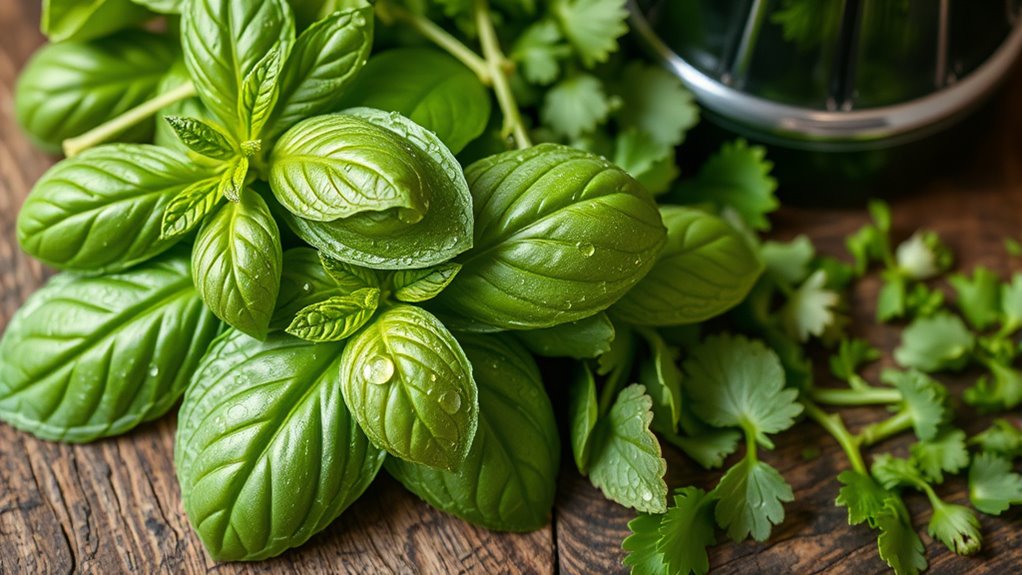
Juicing herbs is a simple way to boost your health and add fresh, vibrant flavors to your drinks. When you explore herb flavor profiles, you’ll notice how each herb contributes its unique aroma and taste, transforming your juice into a sensory experience. Basil, mint, and cilantro each bring distinct qualities that can elevate your beverages, especially when combined with the bright tang of citrus. Juicing with citrus not only enhances the flavor but also adds a invigorating acidity that balances the herbs’ sometimes potent profiles. This combination creates a lively, healthful drink that feels both invigorating and satisfying.
Starting with basil, you’ll find that its herb flavor profile is sweet, slightly peppery, and aromatic. When juicing basil, it’s best to use fresh leaves, gently washing them to remove any dirt. As you blend basil with citrus—like lemon or orange—you’ll notice how the herb’s sweetness pairs beautifully with the citrus’s tang. Juicing with citrus amplifies basil’s aromatic qualities, giving your drink a bright, zesty kick. To maximize flavor, consider adding a touch of honey or a splash of sparkling water. The citrus’s acidity not only enhances basil’s natural oils but also helps mellow its sometimes strong aroma, making for a balanced, revitalizing beverage.
Basil’s sweet, peppery aroma pairs beautifully with citrus’s bright, tangy notes for a revitalizing drink.
Mint’s flavor profile is cool, crisp, and invigorating. When juicing mint, tearing the leaves slightly before juicing releases more of its essential oils. Combining mint with citrus—especially lime or grapefruit—creates a cooling effect that awakens your palate. Juicing with citrus helps to cut through the mint’s natural oils, preventing the flavor from becoming overwhelming. As you prepare your juice, consider adding a squeeze of lime or a splash of lemon to brighten the mint’s fresh notes. The citrus’s acidity also aids in extracting the mint’s aromatic oils, resulting in a vibrant, revitalizing drink. Mint pairs wonderfully with a splash of sparkling water and a few ice cubes for a perfect summer refresher.
Cilantro offers a bold, citrus-like herb flavor profile with a hint of earthiness. When juicing cilantro, be gentle to preserve its delicate leaves, and wash thoroughly to remove any grit. Juicing with citrus—such as lemon or orange—intensifies cilantro’s bright, herbaceous qualities. The citrus complements cilantro’s natural zest, creating a harmonious, lively flavor. You can add a dash of honey or a touch of ginger to deepen the complexity. Juicing with citrus also helps to bring out cilantro’s fresh, green notes, making your beverage more vibrant and appealing. This combo works especially well in savory or slightly spicy drinks, adding a fresh, herbal punch that’s both refreshing and nourishing.
In all cases, integrating citrus when juicing herbs unblocks a new dimension of flavor, balancing the herbal intensity and creating drinks that are both flavorful and healthful. Experiment with different citrus-herb pairings, and you’ll find endless ways to enjoy your juicing adventures.
Frequently Asked Questions
Can Dried Herbs Be Used for Juicing Instead of Fresh?
You can use dried herbs for juicing as a substitution, but keep in mind they’re more concentrated. You’ll need to adjust the amount, using less dried herb to avoid overpowering your juice. Dried herbs also have a different flavor profile, so expect a more intense flavor and consider diluting or balancing with other ingredients. This way, you get the herb’s essence without overwhelming your juice’s overall taste.
How Do I Store Fresh Herbs to Prolong Their Juicing Freshness?
Keeping your herbs at their peak is like whispering secrets to nature. Wrap fresh herbs gently in a damp paper towel to maintain their herb preservation and place them in a resealable bag. Store them in the crisper drawer to support freshness maintenance. This simple technique helps your herbs stay vibrant and juicy longer, ensuring your juicing ingredients remain flavorful and full of life whenever you’re ready to blend.
Are There Specific Juicing Techniques for Delicate Herbs Like Cilantro?
Yes, for delicate herbs like cilantro, you should handle the leaves gently to prevent bruising. Use herb crushing techniques by lightly pressing or tearing the leaves before juicing. This releases more flavor without damaging the delicate leaf structure. Avoid over-packing your juicer; instead, add herbs gradually. By carefully handling and crushing, you maximize juice extraction while preserving freshness and flavor, ensuring a vibrant, aromatic result.
What Are the Best Tools for Juicing Herbs at Home?
You should use a high-quality masticating or slow juicer for herbs, as these preserve delicate herb flavor profiles and extract maximum juice. Look for equipment with easy cleaning features to simplify juicing equipment maintenance. Keep your juicer clean after each use to prevent flavor transfer and guarantee ideal performance. Using the right tools helps you enjoy fresh, vibrant herb juice while maintaining your equipment’s longevity.
Can Herb Juicing Replace Traditional Seasoning in Recipes?
Herb juicing can be a vibrant splash of flavor, but it won’t fully replace traditional seasoning. Juicing enhances herb flavor, offering a fresh burst, yet it lacks the depth dried herbs bring over time. Think of juicing as a quick spark, ideal for herb flavor enhancement, while drying provides a slow, rich fire. Use juicing for freshness and drying for complexity to balance your dishes perfectly.
Conclusion
Juicing herbs is like crafting a flavorful symphony—you get to blend fresh notes of basil, mint, and cilantro into your daily routine. With simple techniques, you unveil vibrant, aromatic juices that awaken your senses and elevate your dishes. Think of each herb as a musical instrument, playing its unique part to create a harmonious burst of freshness. So go ahead, experiment and enjoy this delicious, natural concerto in every glass!
Halloween Picks
halloween
As an affiliate, we earn on qualifying purchases.