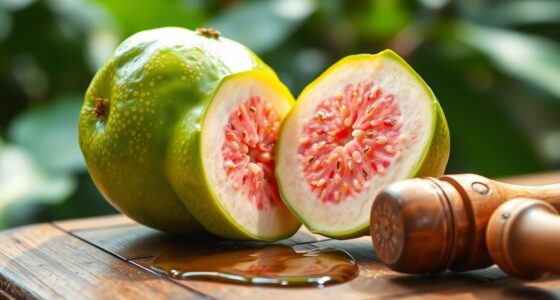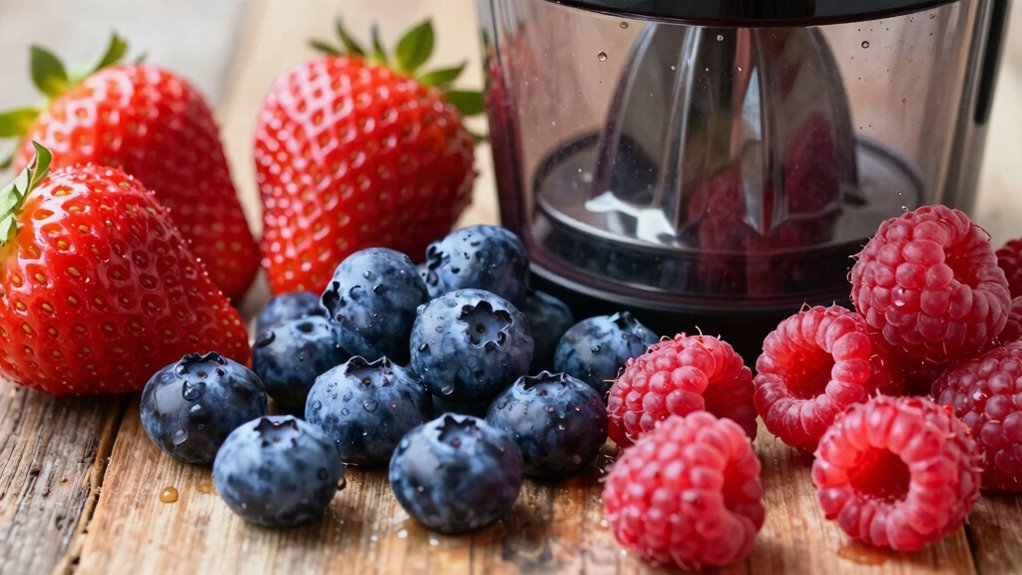

To juice soft fruits and berries without wasting half, handle them gently using a blender or masticating juicer, which minimizes cell damage and preserves nutrients. Chill the fruits beforehand for easier processing and better liquid extraction. Consider blending into smoothies or purees to retain fiber and antioxidants. Store surplus berries properly—refrigerate or freeze—to extend their shelf life. Keep these tips in mind, and you’ll discover practical ways to maximize every drop and reduce waste.
Key Takeaways
- Use gentle juicers like masticating or slow extractors to maximize yield and preserve nutrients.
- Pre-chill berries and handle them carefully to reduce cell damage and liquid loss during juicing.
- Blend berries into smoothies or purees instead of traditional juicing to retain fiber and nutrients.
- Freeze surplus berries for later use, preventing spoilage and reducing waste.
- Combine different berries to enhance flavor and nutrient content, making the most of all available fruit.
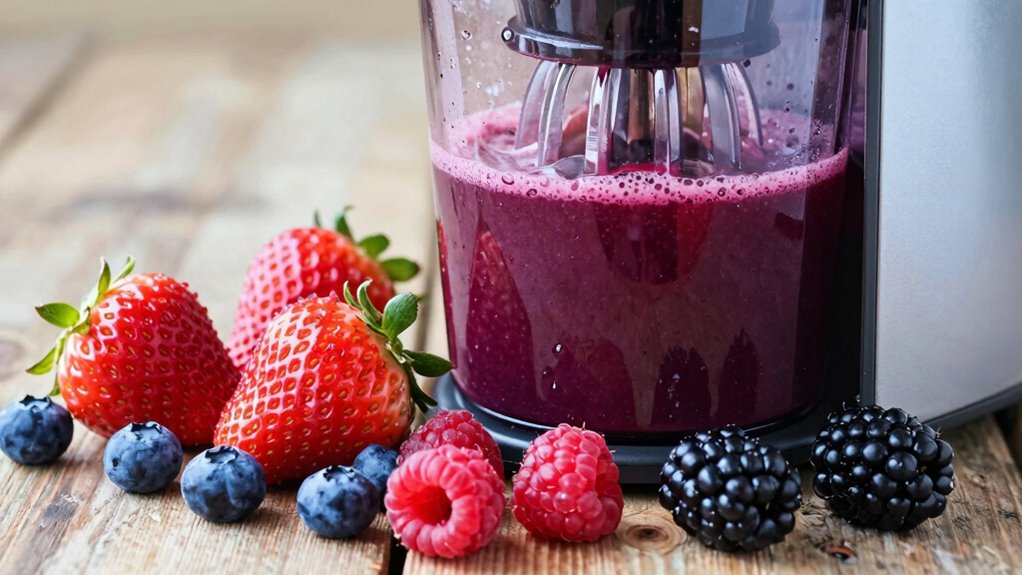
Have you ever wondered why soft fruits and berries are so popular in diets around the world? The answer often lies in their vibrant flavors, high nutrient content, and versatility. But when it comes to juicing them, many people face a common problem: waste. Soft fruits and berries tend to be delicate, juicy, and prone to losing a significant portion of their liquid and nutrients during the process. That’s where understanding fruit preservation techniques and clever berry combinations can make a real difference. With the right approach, you can maximize every drop and enjoy more of these nutritious treats without discarding half of what you start with.
Soft fruits and berries are delicious and nutritious but often wasteful; smart preservation and combinations help maximize their benefits.
The key to efficient juicing of soft fruits and berries is knowing how to conserve their flavors and nutrients. Using proper tools like a gentle blender or a masticating juicer helps reduce damage to the fruit’s delicate cell walls, extracting more juice and nutrients in the process. Also, pre-chilling your fruits can make them easier to handle and yield more liquid. To avoid wastage, consider blending the fruits into smoothies or purees instead of traditional juicing, especially if you want to preserve everything—fiber, vitamins, and antioxidants. This method ensures you’re not discarding any part of the fruit and allows you to incorporate the entire berry or soft fruit into your diet. Additionally, understanding Free Floating can help you optimize your fruit handling and storage methods to further reduce waste.
Berry combinations are another secret to making the most out of your soft fruit and berry supplies. Mixing berries like strawberries, blueberries, raspberries, and blackberries creates a richer, more complex flavor profile that can enhance your juices and smoothies. Not only does this improve taste, but it also boosts the nutritional value, as different berries contain unique antioxidants and vitamins. By experimenting with berry combinations, you can tailor your drinks to suit your taste and nutritional needs, while also reducing waste. For example, if you have slightly overripe or excess berries, combining them with other fruits can help you use everything up, preventing spoilage and making your fruit conservation efforts more effective.
Moreover, knowing how to store your soft fruits properly can prevent spoilage and waste. Keep berries refrigerated and wash them just before use to maintain freshness. Freeze any surplus berries to extend their shelf life and use them later in smoothies or sauces. This way, you conserve their nutritional value and minimize waste. When juicing, consider making batches that you can refrigerate or freeze for later, which helps you get more out of your investment and reduces the frequency of waste.
In essence, mastering fruit preservation techniques and experimenting with berry combinations allows you to juice soft fruits more efficiently. It’s about making smarter choices—using the right tools, storing properly, and blending creatively—to enjoy all the health benefits without throwing away half of what you start with.
Frequently Asked Questions
Can Soft Fruits Be Juiced With Seeds or Skins On?
Yes, you can juice soft fruits with seeds or skins on, but it’s better to use seed removal techniques to prevent bitterness and improve flavor. For example, remove large seeds from berries like strawberries or raspberries to enhance fruit preservation and taste. Using a high-quality juicer or straining the juice helps guarantee you don’t waste any valuable nutrients or pulp, making your juice smoother and more enjoyable.
What Is the Best Type of Juicer for Soft Berries?
Think of your juicing adventure as steering a river—your choice of boat matters. For soft berries, a masticating juicer acts like a gentle paddle, slowly pressing out juice and preserving nutrients, making it ideal. A centrifugal juicer, more like a speedboat, quickly spins and may waste some juice or heat the berries, risking quality. So, go for a masticating juicer for the best, most efficient berry juice.
How to Prevent Foam When Juicing Soft Fruits?
To prevent foam during juicing, focus on foam reduction by using gentle juicing techniques. Start with soft fruits at a slow speed to minimize air incorporation. Avoid overfilling your juicer and consider adding a small amount of lemon juice, which helps reduce foam. Using a fine mesh or a juice cloth to strain the liquid also helps eliminate excess foam, ensuring a smoother, clearer juice with less waste.
Are There Health Benefits to Juicing Soft Fruits?
Juicing soft fruits offers significant health benefits by preserving their nutritional value and boosting antioxidant benefits. When you juice these fruits, you get concentrated vitamins, minerals, and antioxidants that support your immune system, improve skin health, and reduce inflammation. Plus, the quick consumption of fresh juice helps your body absorb nutrients more efficiently. So, incorporating soft fruit juices into your diet can enhance your overall wellness and provide crucial health advantages.
How Long Can Fresh Berry Juice Be Stored?
You probably wonder how long fresh berry juice lasts. It’s best to consume it within 24 to 48 hours for maximum freshness and nutrients. To extend its shelf life, use preservation methods like refrigeration in an airtight container or freezing. But beware—after this window, the juice begins to lose flavor, nutrients, and safety. Don’t delay, or you might miss out on the full health benefits!
Conclusion
Now that you know how to juice soft fruits and berries without waste, imagine your kitchen transforming into a vibrant garden bursting with colorful, juicy treasures. Every squeeze becomes a gentle dance, releasing the sweet, tangy symphony locked inside each berry and fruit. With this knowledge, you turn simple ingredients into liquid gold, savoring nature’s candy without leaving any behind. Cheers to creating delicious, waste-free juices that nourish both your body and your eco-conscious soul.