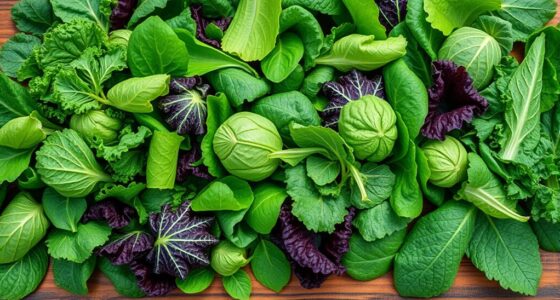
As you store kale juice, natural bacteria and enzymes kick in, initiating fermentation that boosts acidity and intensifies flavors. Exposure to air and warmer temperatures speed up this process, making the juice taste sharper and more pungent over time. Nutrient changes also occur, with some becoming more concentrated, adding to the flavor boost. If you stick around, you’ll discover how these chemical and biological shifts shape the taste and safety aspects of your stored juice.

Get kitchen staples and gadgets delivered free with Prime
- Fast, free delivery on millions of items
- Prime Video, Amazon Music and more included
- Member-only deals all year
Key Takeaways
- Fermentation by bacteria and yeasts increases acidity, intensifying the juice’s flavor over time.
- Ongoing enzymatic activity modifies compounds, resulting in a stronger taste during storage.
- Exposure to air and temperature accelerates fermentation, leading to more pronounced flavors.
- Nutrient transformations, such as chlorophyll concentration, can enhance flavor intensity.
- Longer storage allows natural processes to deepen and sharpen the juice’s flavor profile.

After storing kale juice, it’s important to understand how its quality and safety can change over time. One key reason the juice might taste stronger or more pronounced after a few days is the ongoing fermentation process. When you leave kale juice exposed to air or at room temperature, naturally occurring bacteria and yeasts begin to ferment the sugars present in the juice. This fermentation can intensify flavors, making the juice taste sharper or more pungent. While fermentation is often associated with preserving or creating new flavors, it also alters the juice’s overall profile, which might surprise you if you’re expecting a fresh, mild taste.
Another factor that contributes to the change in flavor is nutrient stability. Fresh kale juice contains delicate nutrients, such as vitamins and antioxidants, which can degrade or transform over time. During storage, some nutrients break down, while others may become more concentrated as water content slightly evaporates or as cellular structures change. This shift can make the remaining nutrients more bioavailable, but it can also lead to a stronger, sometimes more bitter taste. For instance, chlorophyll and certain polyphenols might become more pronounced, adding to the intensity of the flavor. Moreover, the nutrient transformation that occurs during storage can influence both the taste and the health benefits of the juice. Additionally, the natural enzyme activity within the juice can continue to alter its composition, further impacting flavor and nutritional value. This enzymatic activity can also contribute to flavor changes over time.
Temperature plays a crucial role here. If you store your kale juice at room temperature, the fermentation process speeds up, accelerating flavor changes and nutrient transformation. Conversely, refrigeration slows down microbial activity, helping preserve the original taste and nutrient profile for longer. But even in the fridge, some fermentation can occur gradually, especially if the juice isn’t sealed tightly. That’s why the flavor can turn stronger over time—it’s a combination of ongoing fermentation and shifting nutrient stability. The acidity from fermentation not only influences the taste but can also impact the pH level of the juice, further altering its flavor profile. For optimal freshness, it’s best to consume the juice within a few days and store it in airtight containers.
You should also be aware that as fermentation progresses, the pH of the juice drops, creating a more acidic environment. This acidity influences the taste, making the juice tangier or sharper. The increased acidity, combined with the breakdown of certain compounds, results in that stronger flavor you notice after storage. While some people enjoy the tangy, more intense flavor, others may find it less appealing. It’s essential to monitor how long you store your kale juice and how it evolves, especially if you’re consuming it for its health benefits. Proper storage techniques, such as using airtight containers and refrigeration, can help slow this process and maintain the desired flavor and nutritional quality. Recognizing fermentation signs early can help you decide whether the juice is still good to drink or better suited for cooking or composting.
airtight glass storage containers for juice
As an affiliate, we earn on qualifying purchases.
As an affiliate, we earn on qualifying purchases.
Frequently Asked Questions
Does the Type of Kale Affect Juice Strength After Storage?
Yes, the type of kale affects juice strength after storage because different kale varieties have varying levels of enzymes and nutrients, impacting juice stability. Leafy, tender varieties like curly kale tend to produce juice that maintains its strength longer, while tougher types may weaken faster. You should choose your kale carefully based on how long you plan to store the juice, as this influences overall juice stability and strength over time.
Can Adding Lemon Preserve Kale Juice’s Freshness?
Adding lemon can help preserve kale juice’s freshness by enhancing flavor and aiding nutrient retention. The acidity from lemon slows down oxidation, keeping the juice tasting fresh longer. Plus, the citrus flavor boosts overall taste, making it more enjoyable. By including lemon, you not only extend the juice’s shelf life but also preserve its vibrant nutrients and fresh flavor, ensuring you get the most health benefits with each glass.
How Does Temperature Influence Kale Juice’s Potency Over Time?
Temperature plays a vital role in kale juice’s potency over time. Cooler storage slows down nutrient degradation, helping preserve its flavor enhancement and nutritional value. If you keep your juice at higher temperatures, it’ll likely lose nutrients faster and develop a stronger, sometimes sour, taste due to fermentation. To maintain freshness and maximize health benefits, store your kale juice in the fridge, ideally between 32-40°F.
Is Fermentation Responsible for Increased Strength in Stored Kale Juice?
Absolutely, fermentation is the secret behind kale juice’s incredible strength increase! When you store kale juice, the fermentation process kicks in, turning natural sugars into powerful acids. This creates natural preservatives that boost potency and flavor, making the juice fiercer and more vibrant over time. So, yes, fermentation transforms your kale juice into an even more potent, health-boosting elixir you’ll want to savor!
Can Storage Containers Impact the Juice’s Chemical Changes?
Yes, storage containers can impact the juice’s chemical changes. Container materials like glass or BPA-free plastic help preserve the juice’s freshness, while others may react with it, speeding up fermentation or oxidation. Storage duration also matters; the longer you store kale juice, the more chemical changes occur, often intensifying its flavor and strength. Proper containers and timely consumption help maintain the juice’s quality and prevent unwanted reactions.
Conclusion
So, next time you notice your kale juice getting stronger after storage, remember it’s like a quiet storm brewing beneath the surface. The natural enzymes and chlorophyll continue working, intensifying the flavor over time. Embrace this transformation as part of the juice’s journey, knowing that patience can deepen your experience. With each sip, you’re tasting the quiet power of nature’s alchemy—an evolving symphony of health and flavor waiting to be uncovered.
Halloween Picks
halloween
As an affiliate, we earn on qualifying purchases.