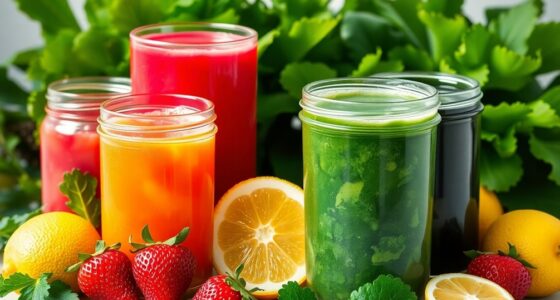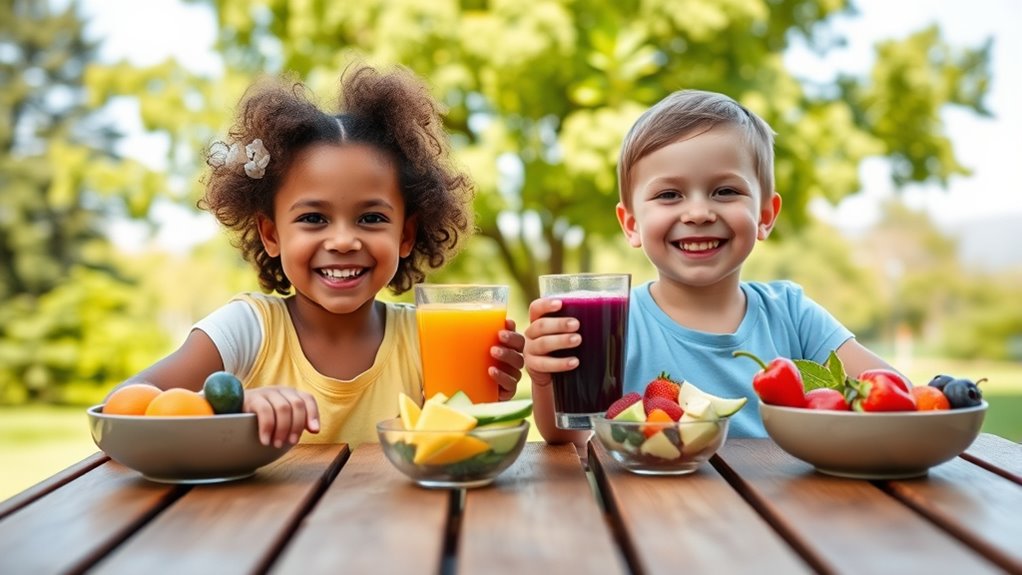

When giving kids juice, stick to recommended portion sizes: up to 4 ounces daily for ages 1-6 and 8 ounces for older children. Choose 100% juice with no added sugars and serve in small cups to promote moderation. Diluting juice with water can cut sugar content, and replacing juice with whole fruits provides fiber and essential nutrients. Keep these tips in mind to support your child’s health—more helpful insights are just ahead.
Key Takeaways
- Limit children’s juice intake to 4 oz daily for ages 1–6, and 8 oz for ages 7–18, to prevent excess sugar consumption.
- Choose 100% natural fruit juice with no added sugars to maximize nutrients and minimize added sugar intake.
- Serve juice in small cups and dilute with water to promote moderation and reduce sugar content.
- Replacing juice with whole fruits provides fiber, which helps control blood sugar spikes and increases satiety.
- Reading labels and selecting lower-sugar or no-added-sugar options supports healthier juice choices for kids.
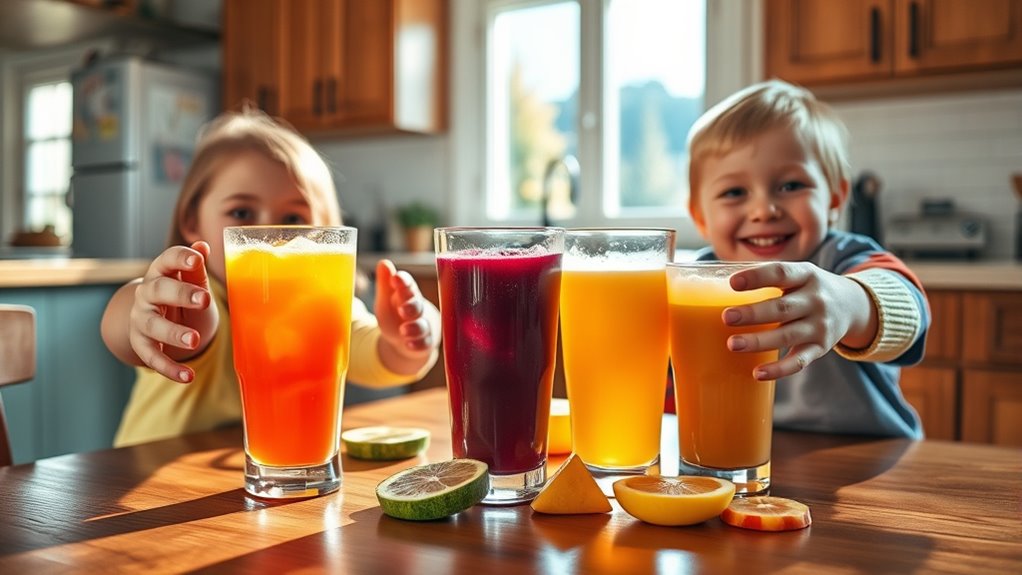
Have you ever wondered how much juice your kids should be drinking each day? It’s a common concern, especially since juice can seem like a healthy choice, but it’s easy to overdo it. When selecting juices for your children, it’s important to consider the fruit flavors and sugar content. Many fruit-flavored juices are designed to appeal to young tastes, often mimicking popular fruit combinations that kids love, like apple and berry or tropical blends. While these flavors can make juice more enticing, don’t forget that they may also mask high levels of added sugars. Some fruit-flavored drinks contain more sugar than you might expect, which can contribute to weight gain and dental issues if consumed excessively.
Understanding the sugar content in juice is key to making smarter choices. Natural fruit juices do contain sugars, but these are naturally occurring and come with beneficial nutrients like vitamins and antioxidants. However, many commercial juices, especially fruit-flavored ones, include added sugars to enhance flavor, making them much sweeter than the actual fruit. Excess sugar intake isn’t just about calories; it can also lead to energy spikes and crashes, increased risk of obesity, and dental cavities. As a parent, you should read labels carefully and look for options with no added sugars or reduced sugar content. Opting for 100% fruit juice, preferably with no added sugars, helps ensure your child gets the nutrients they need without the unnecessary sugar load.
Additionally, portion control is essential to help your child develop healthy drinking habits and prevent overconsumption of sugar. The American Academy of Pediatrics recommends that children ages 1 to 6 should have no more than 4 ounces of fruit juice daily, and children 7 to 18 should limit their intake to 8 ounces. Serving sizes are often smaller than what many kids pour themselves, especially if they’re used to drinking from larger cups or bottles. To prevent overconsumption, serve juice in small cups and dilute it with water if your child prefers a milder flavor. This not only cuts down on sugar intake but also helps your child learn moderation. Remember, whole fruits are a better option whenever possible—they contain fiber that slows sugar absorption and keeps your child feeling full longer.
Frequently Asked Questions
What Are the Best Juice Options for Children’s Health?
You should choose juice varieties that are 100% fruit juice with no added sugars for your child’s health. Opt for options like pure apple, orange, or berry juice, and limit portion sizes to reduce sugar intake. Be mindful of sugar content, as some juices can have high levels of natural and added sugars. Diluting juice with water is a good way to lower sugar concentration while keeping it tasty.
How Can Parents Encourage Kids to Drink Less Juice?
You can encourage your kids to drink less juice by practicing behavior modification techniques, like setting clear limits and offering praise when they choose water or milk. Make alternative beverages appealing by adding slices of fruit to water or serving flavored milk occasionally. Consistently reinforce these habits and model healthy drinking behaviors yourself, helping your children develop a preference for water and other nutritious options over juice.
Are There Age-Specific Juice Portion Recommendations?
Think of juice portion guidelines as your child’s well-balanced recipe. Age-specific recommendations vary: for toddlers, stick to 4 ounces daily; for preschoolers, 4-6 ounces; and for school-age kids, up to 8 ounces. Following these portion guidelines helps prevent excess sugar intake and supports healthy growth. Keep a close eye on recommended serving sizes to make certain your child enjoys juice without overdoing it.
What Are the Signs of Excessive Juice Consumption in Children?
If your child shows increased juice cravings, they might be drinking too much, which can lead to stomach discomfort like bloating or cramping. Watch for frequent bathroom visits or diarrhea, as excessive juice can cause diarrhea due to high sugar content. Also, if they seem constantly tired or irritable, it might be a sign they’re over-consuming juice and missing out on other essential nutrients.
How Does Juice Intake Impact Dental Health in Kids?
When your child drinks too much juice, it can harm their dental health by causing tooth decay and enamel erosion. The sugar in juice feeds bacteria that produce acids, which weaken tooth enamel. To protect their teeth, encourage limited juice intake, have them rinse their mouth afterward, and promote brushing twice daily. Regular dental check-ups also help catch issues early and keep their smile healthy.
Conclusion
So, when it comes to juice, remember to keep portions small—think of it as your own personal ‘Holy Grail’ for healthy habits. Choose nutrient-rich options and avoid overdoing it, or you might end up in a situation more turbulent than a Gutenberg print shop. By balancing juice intake with whole fruits and water, you’re setting your kid up for a future that’s as bright as a lighthouse in a storm. Cheers to smarter sips!

Cindy thoroughly researches juicing trends, techniques, and recipes to provide readers with practical advice and inspiration. Her writing style is accessible, engaging, and designed to make complex concepts easy to understand. Cindy’s dedication to promoting the advantages of juicing shines through her work, empowering readers to make positive changes in their lives through the simple act of juicing.