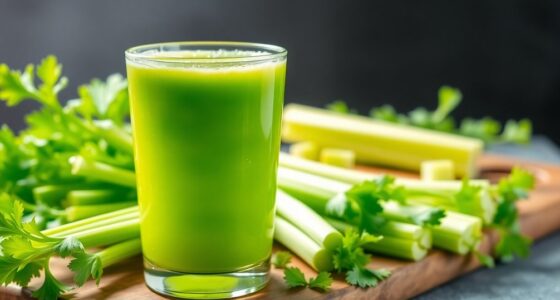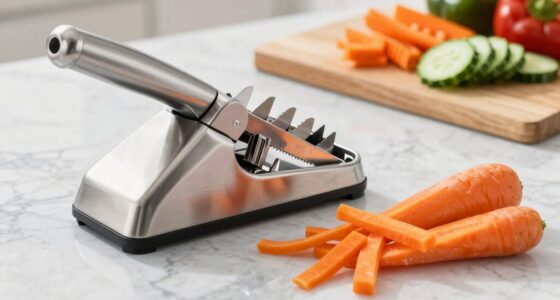
To make juicing easier in your kitchen, consider using manual presses or electric juicers. Manual presses are simple, portable, and great for small batches, helping you preserve natural flavors and nutrients without electricity. Electric models, like centrifugal or masticating juicers, speed up the process and handle larger quantities efficiently. Both options support healthier habits, so choosing the right tool depends on how often and how much you juice—keep exploring to find the best fit.
Key Takeaways
- Manual presses are compact, easy to clean, and ideal for small batches or occasional juicing.
- Electric centrifugal juicers quickly extract juice from large quantities, saving time.
- Masticating electric juicers operate at low speeds, preserving nutrients and flavor for health-conscious users.
- Choosing the right tool depends on juicing frequency, batch size, and convenience preferences.
- Using the appropriate juicing tool simplifies preparation and encourages regular consumption of fresh produce.

If you’re looking to boost your health and enjoy fresh, nutrient-rich drinks at home, investing in the right kitchen juicing tools is essential. The two main options you’ll encounter are manual presses and electric extractors, each offering unique benefits to suit your lifestyle and juicing preferences. Manual presses are straightforward devices that require your physical effort to extract juice from fruits and vegetables. They’re compact, easy to clean, and don’t need electricity, making them perfect for small kitchens or occasional juicing. With a manual press, you simply place your produce in the press, apply pressure, and extract the juice with minimal fuss. This method preserves more of the natural flavors and nutrients because it doesn’t generate heat, which can sometimes degrade delicate vitamins.
Manual presses are compact, easy to clean, and preserve nutrients by avoiding heat.
On the other hand, electric extractors are designed to make the process faster and more efficient, especially if you plan to juice frequently or in larger quantities. These machines use motorized mechanisms to grind or crush produce quickly, giving you fresh juice in a matter of seconds. Electric juicers come in various types, such as centrifugal and masticating models. Centrifugal juicers work by spinning produce at high speeds, which quickly separates juice from pulp. They’re generally faster and more convenient for everyday use, but they might produce slightly warmer juice, potentially affecting some heat-sensitive nutrients. Masticating, or slow juicers, operate at lower speeds, crushing produce gently to maximize nutrient retention and yield. They tend to be more versatile and produce higher-quality juice, but they’re usually more expensive and take a bit longer to operate.
Choosing between manual presses and electric extractors depends on your needs. If you prefer a simple, portable option and don’t mind exerting some effort, a manual press is ideal. It’s also a great choice if you want to avoid noise and electricity costs. However, if you’re serious about juicing regularly or need to juice large batches quickly, investing in an electric extractor makes more sense. It saves time and effort and often produces more juice with less waste. Additionally, modern electric juicers often feature advanced technology that can help preserve nutrients and improve juice quality.
Both types of tools can help you incorporate more fresh fruits and vegetables into your diet, making juicing an enjoyable part of your routine. Manual presses are perfect for small batches and occasional use, while electric extractors are better suited for those who want efficiency and high-volume output. Whichever you choose, you’ll find that having the right juicing tool makes preparing healthy drinks easier, more convenient, and more enjoyable.

ZONEPACK Manual Electric Bottle Capping Machine Handheld Cap Sealer Sealing Machine 10-50mm Capping Diameter Bottle Capper Sealer Screwing Sealing Machine (110V)
HANDHELD ELECTRIC CAPPING MACHINE - Voltage: AC 110V 60Hz; Power: 80W; Cap diameter: 10-50mm; Production capacity: 30-90 bottles/minute...
As an affiliate, we earn on qualifying purchases.
Frequently Asked Questions
Can I Juice Without a Dedicated Juicer?
Yes, you can juice without a dedicated juicer by using manual squeezing or blending. With manual squeezing, you press fruits like oranges or lemons to extract juice directly into a container. Alternatively, you can use a blender for juicing by blending fruits with a bit of water, then straining the mixture to remove pulp. These methods are simple and effective when you don’t have a specialized juicer on hand.
What Safety Features Should I Look for in a Juicer?
When choosing a juicer, look for safety locks to prevent accidental operation and guarantee your fingers stay safe during use. Pulp ejection features help maintain cleanliness and efficiency, making juicing easier. These safety features protect you from injuries and make cleanup simpler, so you can enjoy fresh juice without worries. Prioritizing safety locks and pulp ejection will give you peace of mind and improve your juicing experience.
How Often Should I Clean My Juicing Tools?
You should clean your juicing tools after every use to maintain ideal hygiene practices and prevent bacterial buildup. Establish a regular cleaning schedule, rinsing parts immediately after juicing and thoroughly washing with warm, soapy water. This routine ensures your equipment stays in top condition, extends its lifespan, and keeps your juice tasting fresh and safe. Don’t forget to dry all parts completely before storing to prevent mold or rust.
Are There Specific Tools for Juicing Hard vs. Soft Fruits?
Yes, there are specific tools for juicing hard versus soft fruits that improve your fruit preparation and juicing efficiency. For hard fruits like apples or carrots, use sturdy, sharp blades or a heavy-duty juicer designed to handle dense textures. Soft fruits like berries or peaches benefit from gentle tools that prevent crushing, such as a delicate strainer or a specialized juicer with adjustable settings. Selecting the right tools guarantees smoother, more efficient juicing.
Can I Use Kitchen Tools for Cold-Pressed or Masticating Juicing?
Yes, you can use kitchen gadgets for cold-pressed or masticating juicing. Think of manual extraction tools as your trusty treasure map, guiding you to nutrient-rich juice with minimal fuss. These gadgets, like masticating juicers, gently crush and squeeze fruits and veggies, preserving enzymes and flavor. They turn your kitchen into a juice lab, making cold-pressed juicing accessible and fun without needing bulky, electric machinery.

Yokoma Semi-automatic Aluminum Screw Cap Capping Machine Bottle Cap Capping Sealing Machine Wine Bottle Capper Sealer Machine 5.9-13.8" Adjuatable Height 110V
[Versatile Cap Processing] This semi-automatic screw cap capping machine handles a wide range of aluminum and metal bottle...
As an affiliate, we earn on qualifying purchases.
Conclusion
With the right kitchen tools, juicing becomes quick and enjoyable. Imagine you’re preparing a morning smoothie and easily squeeze fresh oranges with a quality citrus press—saving time and effort. Just like Lisa, who upgraded her juicing routine with a new masticating juicer, she now enjoys more nutritious drinks with less mess. Invest in the right tools, and you’ll find juicing simpler, more fun, and healthier every day.

Electric capping machine 80w, handheld electric capping machine, 10-50mm sealing diameter bottle cap sealing machine, 110v voltage
Handheld electric capping machine - Voltage: AC 110V 60Hz Power: 80W Bottle cap diameter: 10-50mm Production capacity: 30-90...
As an affiliate, we earn on qualifying purchases.

Saladulce Electric Bottle Capping Machine 60Kg/f Handheld Bottle Cap Sealer Bottle Screwing Sealing Machine for 10-50mm diameter Plastic Bottles 160W 110v
【Powerful capper】Compare with other bottle cappers, this machine has DOUBLE torque and power. It can offer strong power...
As an affiliate, we earn on qualifying purchases.

Cindy thoroughly researches juicing trends, techniques, and recipes to provide readers with practical advice and inspiration. Her writing style is accessible, engaging, and designed to make complex concepts easy to understand. Cindy’s dedication to promoting the advantages of juicing shines through her work, empowering readers to make positive changes in their lives through the simple act of juicing.