
TL;DR

Get kitchen staples and gadgets delivered free with Prime
- Fast, free delivery on millions of items
- Prime Video, Amazon Music and more included
- Member-only deals all year
Interest in Queue Theory for supermarket shopping is rising, with experts claiming it can help reduce wait times. While the theory shows promise, practical applications are still being tested.
Why Queue Theory Could Transform Grocery Shopping
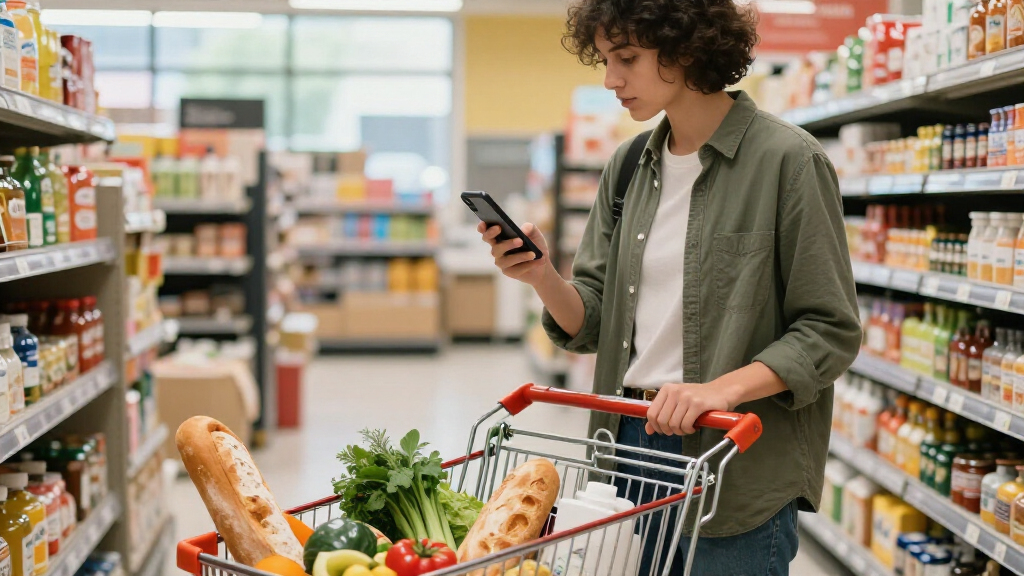
If proven effective, applying Queue Theory to supermarket checkout lines could dramatically reduce wait times, enhance customer satisfaction, and increase retailer efficiency. This approach aligns with broader trends toward data-driven retail solutions and could lead to more predictable shopping experiences. For consumers, shorter lines mean less time spent waiting, especially during peak hours. Retailers may benefit from improved throughput and reduced congestion, potentially boosting sales and customer loyalty. As shopping habits evolve and competition intensifies, adopting scientific queue management could become a key differentiator. However, the actual impact remains uncertain until formal studies or pilot programs validate these claims. The growing interest indicates a potential shift toward more sophisticated, analytics-based approaches to everyday retail operations.supermarket checkout line management tools
As an affiliate, we earn on qualifying purchases.
As an affiliate, we earn on qualifying purchases.
Emerging Interest in Queue Optimization Techniques
Queue Theory, originating from operations research, has long been used in industries like telecommunications, manufacturing, and transportation to optimize service efficiency. Recently, its principles have been discussed as a way to improve supermarket checkout lines, especially amid pandemic-related changes in shopping behavior. The idea is that by analyzing customer flow, service rates, and queue lengths, retailers could better manage lines to reduce wait times. While the theory is well-established academically, its practical application in retail settings is still in experimental stages. The current spike in coverage and online searches suggests that consumers and industry stakeholders are increasingly interested in how scientific queue management could address common frustrations with long checkout lines. No formal implementations or peer-reviewed studies have yet confirmed the effectiveness of these approaches in supermarkets, but the trend indicates a potential shift toward data-driven queue management solutions.Unconfirmed Status of Practical Applications
It is not yet clear whether supermarkets are actively testing Queue Theory-based solutions or if any pilot programs have shown measurable improvements. The current spike in interest is mainly driven by online discussions and theoretical proposals, with no official data or case studies available to confirm effectiveness.Next Steps for Research and Implementation
Researchers and retailers are expected to conduct pilot programs to test Queue Theory principles in real supermarket environments. Future developments may include data-driven queue management systems, real-time customer flow analysis, and optimized lane assignments. Monitoring these efforts will clarify whether the theory can deliver tangible benefits and reshape checkout strategies. Industry conferences and academic publications are likely to feature initial results within the coming months, providing clearer evidence of practical viability.Key Questions
What is Queue Theory?
Queue Theory is a mathematical framework used to analyze and optimize waiting lines, focusing on factors like queue length, service rate, and customer behavior to improve efficiency.
Can Queue Theory actually reduce my wait time at the supermarket?
Potentially, yes. If applied effectively, it could help retailers manage lines better, but formal proof and widespread implementation are still pending.
Are any supermarkets currently using Queue Theory-based systems?
There are no confirmed reports of widespread use; interest remains mainly theoretical and experimental at this stage.
When might we see real-world results from these ideas?
Pilot programs and studies are expected in the coming months, which will clarify whether Queue Theory can be practically applied to reduce checkout times.
What are the main challenges in applying Queue Theory to supermarkets?
Challenges include accurately modeling customer flow, integrating real-time data systems, and adapting solutions to different store layouts and customer behaviors.
Source: rss
NFL season / tailgating Picks
team gear
As an affiliate, we earn on qualifying purchases.