NFC juice keeps more nutrients and natural flavor because it undergoes minimal processing, while juice from concentrate involves extraction, evaporation, and reconstitution, which can degrade vitamins, enzymes, and antioxidants like vitamin C. Concentrate juice often has a less fresh taste and shorter shelf life but offers easier storage. Choosing NFC means enjoying a higher-quality, nutrient-rich beverage, but you’ll discover additional details about how these differences impact your health and flavor options as you explore further.
Key Takeaways
- NFC juice retains more vitamins, enzymes, and antioxidants due to minimal processing.
- Juice from concentrate loses heat-sensitive nutrients like vitamin C during evaporation.
- NFC preserves a more complete nutritional profile compared to concentrate juice.
- Concentrate juice’s processing degrades some nutrients, reducing overall nutritional quality.
- NFC generally offers higher nutritional integrity and health benefits than juice from concentrate.

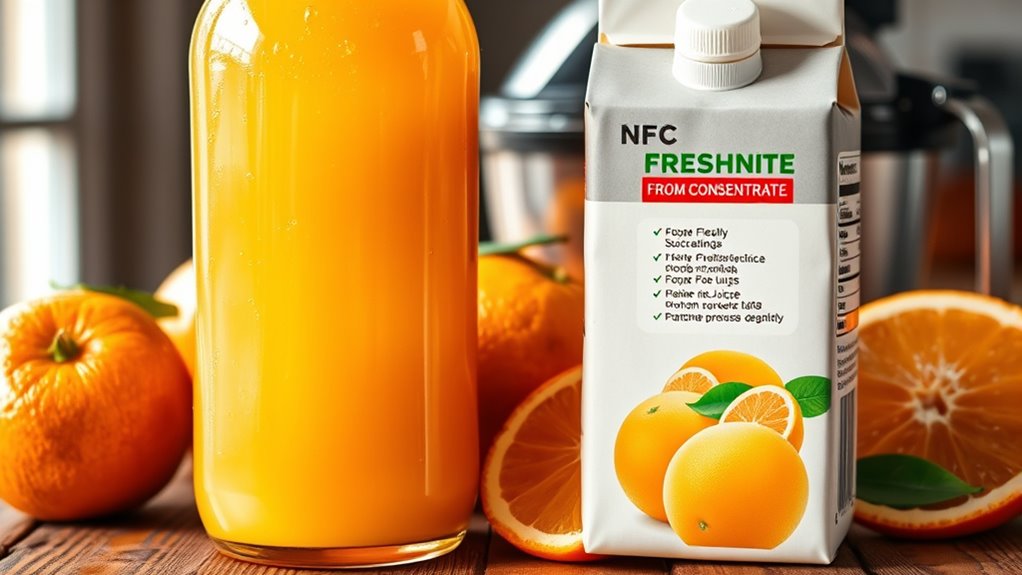
When choosing between NFC (Not From Concentrate) and juice made from concentrate, understanding the differences can help you make a better-informed decision. One of the key factors to weigh is juice quality, which is heavily influenced by processing methods. NFC juice generally retains more of the fruit’s natural flavors, nutrients, and aroma because it undergoes minimal processing. It’s often pressed directly from fresh fruit, then packaged without extensive heating or concentration steps. This process helps preserve vitamins, enzymes, and antioxidants, making NFC juice a more nutritious and authentic option. In contrast, juice made from concentrate involves a more complex processing method. The fruit juice is first extracted and then concentrated by removing water, usually through evaporation at high temperatures. Later, water is added back to reconstitute the juice to its original volume. This process can degrade some sensitive nutrients and alter the juice’s natural flavor profile, potentially resulting in a product that tastes more processed and less vibrant. Additionally, NFC juice is often favored by consumers seeking minimal processing, which supports its reputation for higher quality. The differences in processing methods directly impact juice quality. NFC juice is often perceived as fresher and closer to the original fruit because it’s subjected to fewer steps. Since it doesn’t undergo concentration and reconstitution, it’s less likely to contain additives or preservatives, although some brands might still include minimal preservatives for shelf stability. Because of its minimal processing, NFC juice also typically has a shorter shelf life, so you’re more likely to consume it soon after purchase. Conversely, juice from concentrate can be stored longer and is easier to transport and package, making it a more economical choice for manufacturers. However, this extended processing can lead to a slight reduction in nutritional value, especially in heat-sensitive nutrients like vitamin C. From a nutritional standpoint, NFC juice often provides a more complete profile of vitamins and antioxidants, offering you more health benefits. The processing methods used for NFC help preserve these nutrients better than concentrated juice, which can lose some of its nutritional content during heat and evaporation. If you’re seeking juice with the highest juice quality and nutritional integrity, NFC is generally the better choice. But keep in mind, the differences in processing can also influence taste and shelf life, which might sway your decision depending on your priorities. Ultimately, understanding how processing methods affect juice quality allows you to select a product that aligns with your health goals and taste preferences.
Frequently Asked Questions
How Does NFC Juice Impact Allergy Sufferers Compared to Concentrate?
If you’re allergy-sensitive, NFC juice might be better for you because it’s less processed and retains more natural enzymes and nutrients. This can support your immune response and reduce the risk of allergic reactions caused by preservatives or additives often found in concentrate juice. By choosing NFC, you’re likely consuming a product closer to the fresh fruit, which can help your body better handle allergy sensitivities and maintain a stronger immune response.
Are There Flavor Differences Between NFC and Concentrate Juices?
You might notice a flavor difference between NFC and concentrate juices. NFC juices typically have a fresher, more vibrant flavor profile with a natural sweetness that’s closer to fresh fruit, because they’re minimally processed. Concentrate juices often have a milder, sometimes slightly altered taste due to added preservatives or flavorings. If you prefer a richer, more authentic fruit flavor, NFC juice is likely the better choice for you.
Which Type of Juice Has a Longer Shelf Life?
You’ll find that concentrate juices generally have a longer shelf life than NFC juices due to their shelf stability, thanks to preservation methods like pasteurization and removal of water. These techniques slow spoilage and maintain quality longer. NFC juices, being less processed, tend to spoil faster and require refrigeration. So, if you’re looking for extended storage, concentrate juice is your best bet, thanks to effective preservation methods.
Does NFC Juice Contain Added Preservatives?
NFC juice generally doesn’t contain added preservatives, so you don’t have to worry about preservative concerns or additive presence. Since it’s minimally processed and pasteurized, it maintains its freshness naturally. However, always check the label because some brands might add preservatives or other additives. If you prefer pure juice without preservatives, NFC options are typically a good choice, but always verify the ingredients to be sure.
What Are the Environmental Impacts of Producing NFC Versus Concentrate?
You’ll find that NFC juice generally has a lower environmental impact than concentrate because it uses less water during production, supporting sustainable farming practices. NFC production typically involves minimal processing, which reduces energy consumption and waste. In contrast, concentrate requires extensive water removal and transportation, increasing its carbon footprint. By choosing NFC, you help promote more eco-friendly methods that conserve water and reduce environmental strain.
Conclusion
So, next time you’re choosing between NFC and concentrate juice, think of it like picking fresh fruit over a stored jar—you’ll get more of the natural goodness. I once tried freshly squeezed orange juice and felt a noticeable boost in flavor and vigor, much like discovering a secret treasure. Remember, choosing NFC can be like savoring that treasure daily, offering you more nutrients and a fresher taste. Make your pick wisely for better health and flavor.

Cindy thoroughly researches juicing trends, techniques, and recipes to provide readers with practical advice and inspiration. Her writing style is accessible, engaging, and designed to make complex concepts easy to understand. Cindy’s dedication to promoting the advantages of juicing shines through her work, empowering readers to make positive changes in their lives through the simple act of juicing.