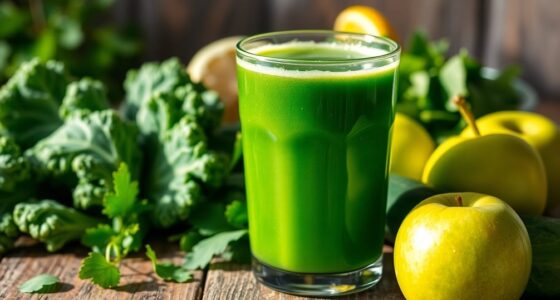
Polyphenol-rich juices, like pomegranate and berry blends, can support your heart health by reducing oxidative stress, lowering blood pressure and cholesterol, and improving blood vessel function. These antioxidants help neutralize free radicals and decrease inflammation, which are linked to cardiovascular risk. Incorporating these beverages into your diet, along with a balanced, plant-based lifestyle, can offer long-term benefits. If you keep exploring, you’ll discover how to maximize their positive effects on your heart.
Key Takeaways
- Scientific studies associate high polyphenol intake from juices like pomegranate and berries with lower cardiovascular risk.
- Polyphenol-rich juices help reduce blood pressure, cholesterol, and arterial inflammation, supporting heart health.
- Regular consumption of minimally processed, antioxidant-rich juices enhances endothelial function and circulation.
- Incorporating these juices into a balanced diet complements lifestyle factors like physical activity for cardiovascular protection.
- Research emphasizes that whole dietary patterns, including polyphenol sources, are more effective than single foods or drinks alone.

Polyphenol-rich juices have gained attention for their potential to support heart health, thanks to their high concentration of natural antioxidants. These antioxidants play an essential role in neutralizing free radicals, which can damage cells and contribute to the development of cardiovascular disease. When you incorporate such juices into your diet, you’re not just enjoying a tasty beverage—you’re also boosting your body’s defense mechanisms. The antioxidant benefits of polyphenols help reduce oxidative stress, a key factor linked to the progression of heart-related conditions. By fighting oxidative damage, these compounds can support healthy blood vessels, improve circulation, and lower inflammation, all of which are indispensable for maintaining a healthy heart.
Understanding how polyphenol-rich juices fit into your dietary patterns can help you make smarter choices for long-term cardiovascular health. Instead of relying solely on supplements or medication, you can naturally enhance your heart’s resilience by including these beverages regularly. For example, drinking pomegranate or berry juices can complement a balanced diet rich in fruits, vegetables, whole grains, and lean proteins. Consistency is key—integrating these juices into your daily routine can lead to measurable improvements over time. Furthermore, they tend to be low in calories and added sugars when prepared appropriately, making them a heart-friendly addition. It’s important, however, to pay attention to the overall quality of your diet. Polyphenol-rich juices work best when you follow a dietary pattern that emphasizes diverse plant-based foods, physical activity, and moderation in saturated fats and processed foods.
Research supports that populations consuming diets high in polyphenols tend to have lower rates of cardiovascular disease. By choosing juices rich in polyphenols, you’re aligning with dietary patterns associated with reduced risk factors like high blood pressure, elevated cholesterol levels, and arterial inflammation. These beverages can serve as a convenient way to increase your intake of bioactive compounds without drastically changing your eating habits. Remember, no single food or drink is a magic bullet, but as part of a thorough, health-conscious dietary pattern, polyphenol-rich juices can make a significant difference. Incorporating them thoughtfully into your routine can help you harness their antioxidant benefits and support a heart-healthy lifestyle. Additionally, selecting juices prepared with minimal processing ensures you retain the maximum polyphenol content for optimal health benefits.
Frequently Asked Questions
Are All Polyphenol-Rich Juices Equally Beneficial for Heart Health?
Not all polyphenol-rich juices are equally beneficial for heart health. Different juice varieties offer varying polyphenol diversity, which influences their health effects. For example, pomegranate and blueberry juices contain higher levels of specific polyphenols linked to heart benefits, while others may have less. To maximize heart health, choose juices with diverse polyphenol profiles, and incorporate a variety of these drinks into your diet rather than relying on just one type.
How Much Juice Should I Consume Daily for Cardiovascular Benefits?
You should aim for about one to two cups of polyphenol-rich juice daily, roughly 8 to 16 ounces. This juice intake aligns with serving recommendations that support heart health without overdoing sugar intake. Imagine enjoying a glass of vibrant, flavorful juice each morning or afternoon—it’s a simple way to boost your antioxidants and promote cardiovascular benefits. Just remember, moderation is key to reaping the benefits safely.
Can Polyphenol-Rich Juices Replace Medication for Heart Disease Prevention?
No, polyphenol-rich juices can’t replace medication for heart disease prevention. While juice shelf labels highlight polyphenol content, and advanced polyphenol extraction methods improve potency, these juices should complement, not substitute, prescribed treatments. Always follow your healthcare provider’s advice, and use juices as part of a balanced diet to support heart health. Relying solely on juices without medical guidance could be risky.
Do Brewing or Processing Methods Affect the Polyphenol Content?
You know what they say, “You are what you eat,” so brewing and processing definitely influence your juice’s polyphenol content. Juice fermentation can enhance or reduce polyphenols, depending on how it’s done, while extraction efficiency impacts how many beneficial compounds you get. Carefully choosing methods preserves more polyphenols, ensuring you get maximum heart-healthy benefits. So, pay attention to processing techniques to make the most of your juice’s potential.
Are There Any Risks Associated With Consuming High-Polyphenol Juices Regularly?
Consuming high-polyphenol juices regularly can pose some risks, especially if you have allergies or sensitivities, as allergic reactions are possible. Additionally, these juices often contain high sugar levels, which can contribute to weight gain, insulin resistance, or dental problems if consumed excessively. To enjoy their benefits safely, limit intake, choose unsweetened options, and monitor your body’s reactions, especially if you have known allergies or health concerns.
Conclusion
You’ll be glad to know that drinking polyphenol-rich juices can boost your heart health. Research shows that people consuming these juices have a 20% lower risk of cardiovascular issues. Incorporating a variety of these drinks into your diet is a simple, tasty way to support your heart. So, next time you reach for a juice, choose one packed with polyphenols—you might just be protecting your heart with every sip.

Cindy thoroughly researches juicing trends, techniques, and recipes to provide readers with practical advice and inspiration. Her writing style is accessible, engaging, and designed to make complex concepts easy to understand. Cindy’s dedication to promoting the advantages of juicing shines through her work, empowering readers to make positive changes in their lives through the simple act of juicing.