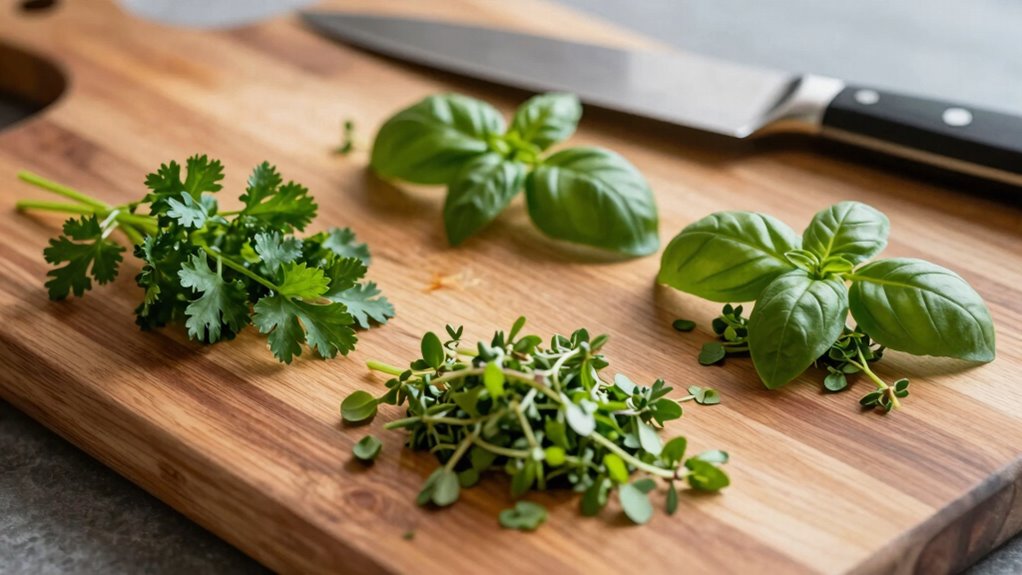

To prevent herb bits from overpowering the finish, focus on proper storage, precise chopping, and strategic timing. Use a sharp knife for even, controlled cuts, and avoid overprocessing herbs to keep bits manageable. Add delicate herbs like basil and parsley at the end of cooking to preserve their fresh flavor, while heartier herbs like thyme can go in earlier. Balancing these techniques guarantees your dish’s final flavor remains harmonious—if you want to master this art, there’s more to discover below.

Get kitchen staples and gadgets delivered free with Prime
- Fast, free delivery on millions of items
- Prime Video, Amazon Music and more included
- Member-only deals all year
Key Takeaways
- Finely chop herbs to release essential oils gradually, preventing sudden overpowering bursts.
- Add delicate herbs late in cooking to preserve their bright, subtle flavors.
- Use a sharp knife for uniform, controlled chopping to avoid overly small bits.
- Balance herb quantities carefully, avoiding excessive amounts that can dominate the dish.
- Incorporate herbs gradually and taste frequently to adjust and prevent overpowering flavors.
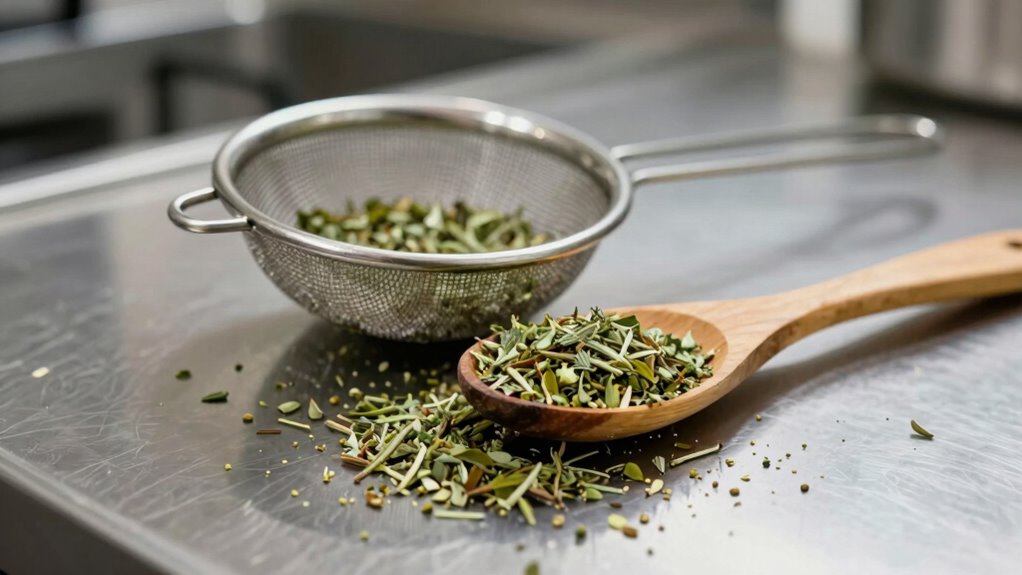
Herb bits can add vibrant flavor to your dishes, but if you’re not careful, they can also overpower the finish of your meal. When herbs are chopped or minced too finely or added at the wrong moment, they tend to linger on the palate, overshadowing the subtle notes you’ve carefully crafted. To prevent this, you need to pay close attention to herb storage and finish compatibility. Proper herb storage keeps herbs fresh, vibrant, and less likely to break down into overpowering bits, while understanding finish compatibility ensures you add herbs at the right time, enhancing rather than overwhelming your dish’s final impression. Proper chopping techniques, such as using a sharp knife and avoiding overprocessing, can also make a difference in controlling the size of the herb bits and their impact on the finish. Start with herb storage. Keep your herbs fresh by storing them properly, ideally in a cool, damp environment like the refrigerator crisper or in a jar with water, similar to flowers. Fresh herbs retain their essential oils and delicate flavors longer when stored correctly, reducing the risk of bitterness or overly pungent bits that can dominate the finish. Dried herbs, on the other hand, tend to be more concentrated and can easily overpower if not used sparingly. Always check for signs of spoilage before chopping, as wilted or spoiled herbs release off-flavors that can ruin the finish of your dish. Proper storage also makes herbs easier to chop evenly, ensuring a balanced distribution that prevents any single flavor from dominating. Additionally, herb freshness plays a crucial role in maintaining balanced flavors, so always select the healthiest herbs available. When selecting herbs, consider how their flavor profile will interact with other ingredients in your dish, which can influence how they should be added. Knowing how to balance flavors effectively is key to preventing overpowering herbal notes in your final dish. Next, consider finish compatibility. The timing of herb addition is vital; some herbs are best added early in cooking to infuse flavors, while others should be used as a finishing touch. For example, delicate herbs like basil and parsley are often added at the end, so their fresh, bright notes shine through without overpowering. Conversely, heartier herbs like thyme or rosemary can withstand longer cooking, blending into the dish’s foundation. When you incorporate herbs at the right stage, you prevent bits from becoming sharp, overpowering accents that distract from the overall harmony. Keep in mind that finely chopping herbs releases more essential oils, which can intensify their presence. Use a sharp knife to chop herbs uniformly, and consider a gentle touch to avoid creating overly small bits that might dominate the finish. Additionally, understanding the role of herbs in cooking can help guide you on how to balance their flavors effectively and prevent overpowering. Ultimately, balancing herb bits requires mindful storage and strategic timing. Proper herb storage preserves the delicate flavors you want to highlight, and understanding finish compatibility guides you on when to add herbs, ensuring they complement rather than compete with the rest of your dish. Paying attention to herb preparation techniques can greatly improve your control over how herbs influence your final flavors. By paying attention to these details, you create a well-rounded flavor profile that leaves a pleasant, lasting impression, instead of an overpowering herbal aftertaste.
Products Worth Considering

Vitamix 5200 Professional-Grade Blender, 64 oz. Container, Black

Ninja PossibleCooker Pro Plus 8.5 qt Bone & Champagne

Instant Pot Pro Plus 6 Qt 10-in-1 Electric Pressure Cooker, Black
As an affiliate, we earn on qualifying purchases.
Frequently Asked Questions
Can the Type of Herb Affect the Finishing Process?
Yes, the type of herb can affect the finishing process. Different herbs have varying potency levels, which influence how they release flavors during finishing. Stronger herbs may overpower the dish if not handled carefully, so you need to regulate herb potency to preserve flavor retention. By selecting herbs suited to your recipe and adding them at the right stage, you guarantee the finish is balanced, and flavors stay vibrant without overwhelming your dish.
How Long Should Herbal Bits Be Soaked Before Finishing?
You should soak herbal bits for about 30 minutes to guarantee proper extraction without overpowering the finish. The soaking duration influences herb potency, so avoid over-soaking, which can lead to excessive flavor or bitterness. Keep an eye on the herbal bits during this time, and remove them once they’ve fully infused your mixture. This balance helps you achieve the desired flavor profile without overpowering the finish.
Are There Specific Tools Recommended for Applying Herbal Finishes?
You should use soft brushes or applicators designed for delicate finishes to apply herbal scents. These tools help you control the application techniques, ensuring the herbal scent isn’t overpowering. Use a gentle, even stroke to distribute the herbal bits, avoiding excess buildup. Cleaning your tools thoroughly after each use prevents residue from affecting subsequent applications. Proper tools and technique keep your finish balanced, highlighting the herbal aroma without overwhelming the piece.
What Are Common Mistakes That Cause Overpowering Herbal Bits?
Common mistakes that cause overpowering herbal bits often relate to poor application technique and misjudging herb potency. If you apply too much herb or don’t evenly distribute it, the bits can become overwhelming. Rushing the process or not properly preparing your herbs can also lead to overpowering finishes. To avoid this, use a precise application technique, measure herb amounts carefully, and understand the herb’s potency to guarantee a balanced, refined result.
How Do Environmental Factors Influence Herbal Finish Application?
Environmental factors critically influence your herbal finish application. High humidity can hinder herb potency, causing herbs to clump or become uneven, which leads to overpowering herbal bits. Conversely, low humidity dries herbs too quickly, risking uneven coverage. To master the finish, monitor environmental humidity carefully and adjust your technique accordingly. Consistent conditions guarantee herbs blend smoothly, preserving the delicate balance needed for a refined, harmonious herbal finish.
Conclusion
Think of your finish as a delicate garden, where each herb bit is like a bold, bright flower. If you let one bloom overpower the others, the beauty is lost. To keep your garden harmonious, prune the bold blooms and nurture the subtle ones. By balancing your herbs and finishing techniques, you create a masterpiece where every element plays its part—like a well-tended garden, your work will shine with vibrant, harmonious beauty.