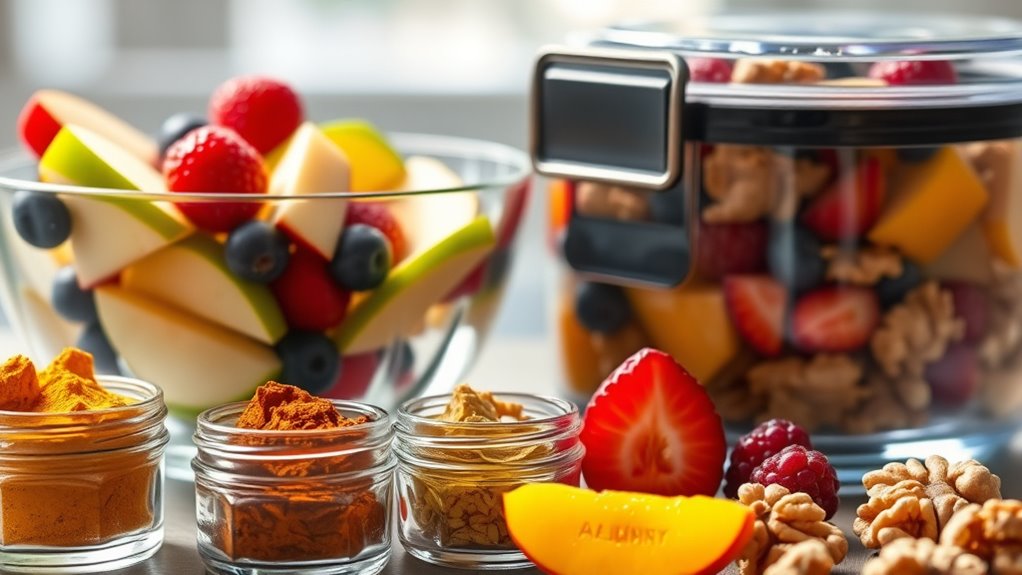

To prevent oxidation of your antioxidant add-ins, store them in airtight containers and keep them away from light, heat, and moisture. Use dark glass bottles for oils and vacuum-sealed bags for herbs and produce to lock in freshness. Keep dried ingredients in cool, dark cabinets, and refrigerate delicate items like berries and greens to slow deterioration. Proper storage extends shelf life and preserves their health benefits—keep exploring to learn more tips for ideal preservation.
Key Takeaways
- Store antioxidant add-ins in airtight, light-proof containers to minimize oxygen and light exposure.
- Keep oils and delicate ingredients refrigerated to slow oxidation and preserve freshness.
- Use dark glass bottles for oils and extracts to protect against light-induced deterioration.
- Maintain dry, cool storage environments to prevent moisture and temperature fluctuations that accelerate oxidation.
- Handle ingredients carefully, drying fresh produce thoroughly and consuming promptly to maximize antioxidant benefits.
Adding antioxidant-rich ingredients to your foods can boost their health benefits, but how you store these add-ins is just as important. When you incorporate natural preservatives and antioxidant rich ingredients into your meals, you want to make sure they retain their potency and freshness for as long as possible. Proper storage techniques help prevent oxidation, which can degrade these beneficial compounds and diminish their nutritional value. If you neglect storage, your carefully chosen ingredients might lose their antioxidant properties quickly, rendering your efforts less effective and potentially leading to food waste.
Proper storage preserves the antioxidant potency and freshness of your healthy ingredients.
First, consider the significance of airtight containers. Oxygen exposure accelerates oxidation, so sealing your antioxidant-rich ingredients in airtight jars or bags minimizes contact with air. For herbs, spices, or chopped produce, use containers with tight-fitting lids or vacuum-sealed bags. This simple step creates a barrier that preserves the natural freshness and potency of your ingredients. When storing oils infused with antioxidants, such as rosemary or garlic oils, keep these in dark glass bottles to block light, which can also accelerate deterioration. Light exposure can break down delicate compounds in natural preservatives, reducing their effectiveness over time.
Temperature plays a vital role as well. Store antioxidant-rich ingredients in cool, dark places—such as a pantry or refrigerator—depending on the specific item. Fresh berries and leafy greens should go in the fridge to slow oxidation and bacterial growth, while dried herbs and spices fare well in a cool, dark cabinet. For oils and other lipid-based ingredients, refrigeration can extend their shelf life by preventing rancidity caused by oxidation. Keep in mind that fluctuating temperatures can cause condensation inside containers, promoting spoilage. Consistent storage conditions help maintain the integrity of your natural preservatives and antioxidant-rich ingredients.
Light exposure and humidity are also key considerations. Sunlight can degrade antioxidants, so always store your ingredients away from windows or direct light sources. Similarly, high humidity encourages mold and spoilage, especially for dried goods. Use moisture-proof containers and ensure your storage area remains dry. When handling fresh produce or chopped ingredients, dry them thoroughly before storage to prevent mold growth, and consume them promptly to maximize their antioxidant benefits. Additionally, incorporating AI in Education concepts like data privacy and security can remind you to choose storage solutions that protect your ingredients from contamination and spoilage.
Ultimately, how you store your antioxidant-rich ingredients affects their ability to prevent oxidation and preserve their health-promoting qualities. By choosing airtight containers, controlling temperature, and shielding your ingredients from light and moisture, you ensure they stay fresh longer and retain their natural preservative properties. Proper storage not only extends the lifespan of your ingredients but also guarantees that every bite delivers the maximum antioxidant benefits, helping you maintain a healthier diet and reduce waste.
Frequently Asked Questions
Can Antioxidant Add-Ins Affect the Flavor of My Food?
Yes, antioxidant add-ins can affect your food’s flavor, sometimes causing flavor alteration. Some antioxidants have a mild taste that blends well, while others might introduce a slight bitterness or metallic note. To avoid flavor issues, verify their add-in compatibility with your recipe and test small quantities first. By doing so, you can maintain the desired flavor profile while benefiting from the antioxidant’s protective effects.
Are There Natural Versus Synthetic Antioxidant Options?
Yes, you can choose between natural sources like vitamin E from nuts and seeds or synthetic alternatives such as BHT and BHA. Natural antioxidants often have fewer additives and may be preferred for clean eating, but synthetic options are typically more stable and cost-effective. Your choice depends on your preference for natural ingredients versus practicality, and both can effectively help prevent oxidation in your food.
How Long Do Antioxidant Effects Last in Stored Foods?
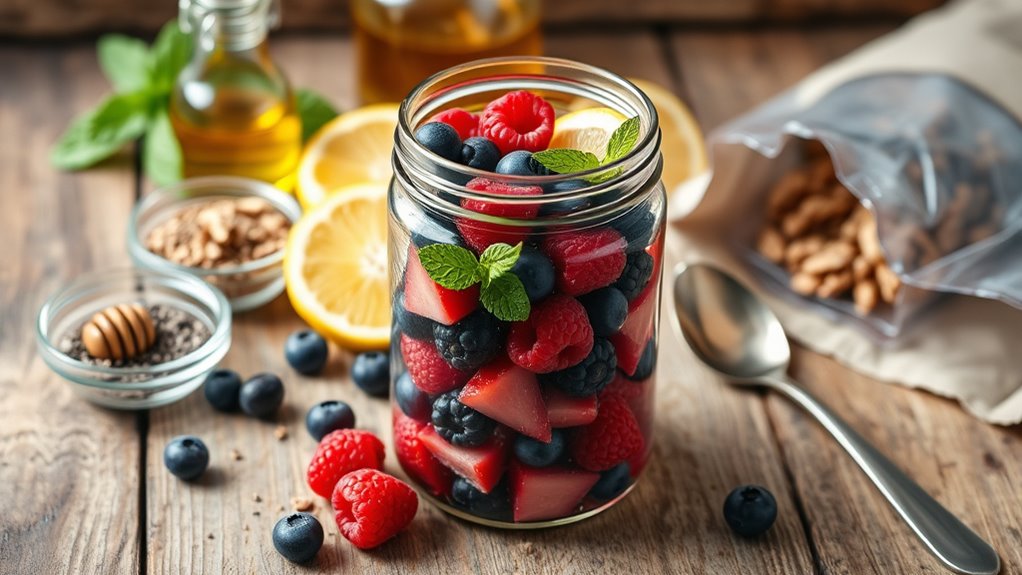
Imagine a jar of vibrant berries, fresh and bursting with color. The antioxidant effects in stored foods typically last from a few days to several weeks, depending on factors like temperature and light. You can slow oxidation rate by keeping foods cool, dark, and airtight. Proper storage extends shelf life, ensuring antioxidants continue to protect your food from spoilage longer, keeping it fresh and nutritious for as long as possible.
Can Antioxidants Prevent Browning in Fresh Produce?
Yes, antioxidants act as oxidation inhibitors and can prevent browning in fresh produce. When you apply them, they slow down enzymatic reactions that cause oxidation, maintaining the produce’s appearance and freshness. To maximize preservative effectiveness, use appropriate antioxidant solutions or coatings, ensuring even coverage. This simple step helps you keep fruits and vegetables looking vibrant longer, reducing waste and extending shelf life naturally.
Do Antioxidant Add-Ins Work Equally Across All Food Types?
Antioxidant add-ins don’t work equally across all food types because their effectiveness depends on food pairing and antioxidant stability. Some antioxidants may work well with fruits but less so with vegetables or meats. You need to take into account how stable the antioxidant is in different environments and how it interacts with specific foods. Proper pairing and understanding antioxidant stability ensure you get the best protection against oxidation for various foods.
Conclusion
To keep your food fresh and flavorful, adding antioxidants like vitamin C or E can considerably slow oxidation. Proper storage in airtight containers also makes a difference. Did you know that oxidation causes up to 90% of food spoilage? By combining antioxidant add-ins with smart storage, you can extend your produce’s freshness and enjoy healthier, tastier meals longer. Start incorporating these simple tips today and enjoy the benefits of fresher food for days to come.

Cindy thoroughly researches juicing trends, techniques, and recipes to provide readers with practical advice and inspiration. Her writing style is accessible, engaging, and designed to make complex concepts easy to understand. Cindy’s dedication to promoting the advantages of juicing shines through her work, empowering readers to make positive changes in their lives through the simple act of juicing.