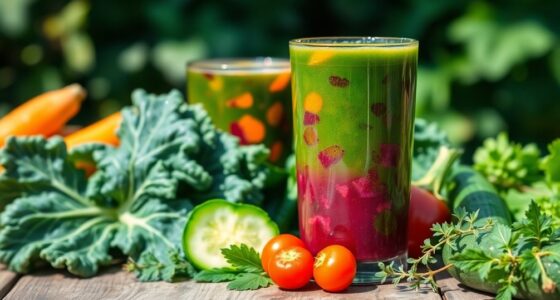

Vegetable juices typically contain minimal protein, usually just a few grams per cup, depending on the vegetables used. For example, spinach offers about 5 grams of protein per cup, but most other vegetables provide even less. Because of this, relying solely on vegetable juices won’t meet your daily protein needs. If you keep exploring, you’ll discover how to boost your intake and balance your diet effectively.
Key Takeaways
- Vegetables generally contain low protein amounts, with about 1-5 grams per cup, depending on the type.
- Leafy greens like spinach provide roughly 5 grams of protein per cup, but most vegetables are lower.
- Vegetable juices typically do not significantly contribute to daily protein needs due to their low protein content.
- Adding protein-rich ingredients such as legumes, tofu, or protein powders can increase the protein level of vegetable juices.
- For adequate protein intake, vegetable juices should be complemented with other dietary sources of protein.

Many people turn to vegetable juices for their health benefits, but they often wonder if these drinks provide enough protein to support their dietary needs. While vegetables are packed with essential vitamins, minerals, and antioxidants, they typically contain minimal amounts of protein. This means that relying solely on vegetable juices for your protein intake might not meet your daily requirements, especially if you’re active or trying to build muscle. However, these juices are still valuable for their nutritional benefits, offering a concentrated source of nutrients that support overall health. They can serve as a invigorating way to boost your intake of fiber, vitamins A and C, potassium, and other essential compounds, without loading up on calories or sugar.
One of the key advantages of vegetable juices is their ability to enhance flavor and make healthy eating more enjoyable. Freshly pressed juices can be quite flavorful on their own, but you can also add herbs, spices, or small amounts of fruit to improve taste without considerably increasing sugar content. This flavor enhancement encourages consistent consumption and helps you incorporate more vegetables into your diet, which is essential since many people fall short of their daily vegetable intake. As you experiment with different combinations, you’ll find that vegetable juices can be both nutritious and delicious, making them an appealing part of your routine. Additionally, incorporating ingredients like electric bikes can motivate you to stay active and maintain a healthy lifestyle alongside your nutritional efforts.
When it comes to protein content, the reality is that vegetables generally contribute only small amounts compared to other protein sources like legumes, dairy, or meat. For example, a cup of spinach might contain about 5 grams of protein, but you’d need a substantial volume to markedly impact your daily needs. If you’re seeking higher protein levels, consider adding protein-rich ingredients such as legumes, tofu, or protein powders to your vegetable juices. These additions can help bridge the gap, making your drinks more balanced and satisfying. Remember, vegetable juices alone are unlikely to provide enough protein for muscle repair or growth, so they should be viewed as complementary to other protein sources in your diet.
Frequently Asked Questions
Does Blending Vegetables Reduce Their Protein Content?
Blending vegetables doesn’t substantially reduce their protein content if you use proper blending techniques. The key is nutrient retention; blending preserves most nutrients, including protein, because it minimizes nutrient loss compared to cooking. To maximize protein retention, blend gently and avoid overheating the mixture. Keep the blades sharp and blend for a short time to prevent nutrient degradation, ensuring you get the most nutritional value from your vegetable juices.
Which Vegetable Juices Have the Highest Protein Levels?
Think of leafy greens and legume juices as hidden treasures in your diet. Spinach, kale, and pea juice top the list for high protein levels, acting as powerful symbols of strength and energy. These juices pack a punch that fuels your body, making them your go-to choices for a nutrient boost. Incorporate these vibrant, leafy symbols into your daily routine to access their full health potential.
How Does Cooking Affect Vegetable Protein Availability?
Cooking can enhance protein digestion and nutrient absorption in vegetables by breaking down cell walls and proteins, making them easier for your body to process. However, overcooking may reduce the overall nutrient content, including some amino acids. To maximize protein availability, lightly steam or sauté your vegetables. This way, you improve digestion and nutrient absorption, ensuring you get the most benefit from your vegetable intake.
Can Vegetable Juices Meet Daily Protein Requirements?
Vegetable juices alone can’t meet your daily protein requirements, but they can complement your protein supplement and boost dietary benefits. While juices provide vitamins and minerals, they lack sufficient protein to support muscle growth and overall health. Incorporate other protein-rich foods like legumes, nuts, or lean meats to guarantee you meet your daily needs. Juices are a great addition but shouldn’t be relied on solely for protein intake.
Are There Any Additives That Increase Protein in Vegetable Juices?
Yes, you can find additives that boost protein in vegetable juices. These often include plant-based proteins like pea, rice, or hemp protein powders, which enhance protein content naturally. You add these to your juice for a simple, effective protein enhancement. You choose these options to increase your intake, to make your juice more nutritious, and to support your health goals—all while enjoying the vibrant flavors of your veggie blend.
Conclusion
Now that you know how much protein veggie juices can pack, you might wonder just how much you’re truly getting with each sip. Could these vibrant drinks be a secret weapon for your diet? Or is there more to uncover about their nutritional power? Stay curious—there’s always more to learn about the hidden benefits of your favorite vegetable juices. Keep exploring, because what you discover next might just change the way you see these colorful drinks forever.

Cindy thoroughly researches juicing trends, techniques, and recipes to provide readers with practical advice and inspiration. Her writing style is accessible, engaging, and designed to make complex concepts easy to understand. Cindy’s dedication to promoting the advantages of juicing shines through her work, empowering readers to make positive changes in their lives through the simple act of juicing.