
To understand a premium juice label, look at the ingredient list from top to bottom. The first ingredients are in the largest amounts, so if water or fruit juice appears first, it’s mostly water and fruit. Smaller items like sweeteners or flavorings come later. Pay attention to terms like organic, added vitamins, or preservatives to gauge quality. Keep reading to learn more tips for selecting the best juice based on its label.

Get kitchen staples and gadgets delivered free with Prime
- Fast, free delivery on millions of items
- Prime Video, Amazon Music and more included
- Member-only deals all year
Key Takeaways
- The ingredients are listed in order by weight, starting with the most abundant component.
- Water often appears first if it’s the main ingredient, indicating a high juice concentration.
- Smaller amounts of additives or flavorings are listed toward the end of the ingredient list.
- Organic labels and certification can confirm the use of natural, pesticide-free ingredients.
- Check for preservatives or processing terms to assess the juice’s natural quality and shelf stability.
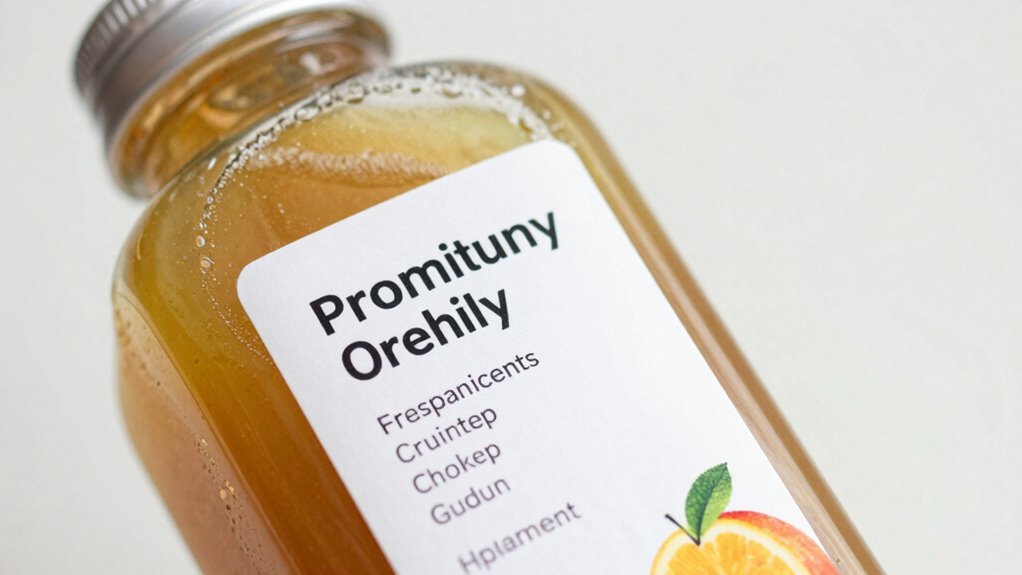
When you pick up a food package, understanding the ingredient list can seem tricky, but it’s actually straightforward once you know how it’s organized. For premium juices, the ingredient list isn’t just about what’s inside; it also reveals how the juice is preserved and whether it meets organic standards. Starting from the top, the ingredients are listed in order by weight, with the most abundant ingredient appearing first. This means if water is listed first, it’s likely the main component, while smaller amounts of sweeteners or flavorings come later. Recognizing this helps you determine the juice’s true composition and quality.
Ingredients are listed by weight, revealing the main components and overall quality of your juice.
Juice preservation methods are often reflected in the ingredients. For example, if you see preservatives like sodium benzoate or potassium sorbate, it indicates the juice has undergone processes to extend shelf life. On the other hand, many premium juices aim for minimal processing, often relying on pasteurization or high-pressure processing instead of chemical preservatives. When reading labels, look for terms like “flash pasteurized” or “cold-pressed,” which suggest fresher juice with fewer additives. These methods help retain nutrients and flavor without compromising juice preservation. Additionally, understanding processing methods can help you identify juices that prioritize natural quality over chemical additives.
Organic certification is another essential element to consider. If you want a juice made from organic ingredients, check for official organic labels, such as USDA Organic or similar certifications relevant to your region. These certifications guarantee that the ingredients were grown without synthetic pesticides, fertilizers, or genetically modified organisms. Organic certification also often implies that the juice was produced under strict standards, supporting environmentally friendly practices and healthier options. When ingredients are listed as “organic apple juice” or “organic concentrate,” and backed by certification, you can trust that the product aligns with organic principles. Understanding the organic standards behind these certifications can further help you make informed choices.
Additionally, the ingredient list on premium juice labels may include added vitamins, minerals, or natural flavorings. These additions should be clearly labeled and usually appear toward the end of the list, reflecting their smaller quantities. If you’re concerned about sugar content, check whether the juice contains added sugars or relies solely on the natural sugars from the fruit. Organic certification doesn’t necessarily mean the juice is low in sugar, but it does confirm that the fruit used was grown without synthetic chemicals. Being aware of ingredient transparency helps consumers make more informed choices about their health and environmental impact. Moreover, understanding the labeling standards can help you distinguish between genuine organic products and those that merely carry the label without meeting strict criteria. In addition, paying attention to the nutritional information can provide insights into the overall healthfulness of the juice.
As an affiliate, we earn on qualifying purchases.
Frequently Asked Questions
Why Are Some Ingredients Listed With Different Units or Quantities?
You notice some ingredients listed with different units or quantities because manufacturers aim for ingredient transparency and label accuracy. They might use weight, volume, or percentage to reflect each ingredient’s true contribution, especially when ingredients vary in density. This helps you understand the product better and guarantees brands are honest about what’s in their juice. Keep in mind, clear labeling builds trust and shows they prioritize transparency.
How Does Ingredient Order Vary Between Organic and Non-Organic Juices?
You might think organic and non-organic juices are worlds apart, but their ingredient order can surprise you. Organic juices often list whole, natural ingredients first, highlighting pure flavor profiles and shelf stability concerns. Non-organic options might include fillers or additives, yet still showcase fresh ingredients upfront. So, whether organic or not, the order reveals how each juice balances flavor, shelf life, and quality, revealing more than just what’s in the bottle.
Are Artificial Sweeteners Included in the Ingredient List?
Artificial sweeteners are often listed if they’re included, but many people believe in artificial sweetener myths, thinking they’re always harmful. In reality, labels clearly specify whether natural or artificial sweeteners are used. When comparing natural vs artificial, check the ingredient list for terms like aspartame or sucralose. If you prefer avoiding artificial ingredients, look for juices with natural sweeteners listed first, ensuring you know exactly what you’re consuming.
What Does It Mean if an Ingredient Is Listed Multiple Times?
If an ingredient is listed multiple times, it indicates that it appears in different forms or amounts throughout the product, which can affect ingredient sequencing and label transparency. You should check the order carefully, as repeated ingredients might suggest varying concentrations or added components at different stages. This helps you better understand what’s truly in your juice, ensuring transparency and that you’re making an informed choice based on the ingredient sequencing.
How Often Do Ingredient Labels Get Updated or Changed?
Oh, your favorite juice label’s just playing hide and seek! Labels are updated whenever manufacturers feel like it, but legally, they must stay compliant with regulations for ingredient transparency. Expect updates when new ingredients are added or formulations change—usually annually or with new product launches. Staying vigilant keeps you informed, ensuring you’re not drinking a mystery potion. So, check those labels often; they’re the key to ingredient honesty!
Conclusion
Now that you know how to read the ingredient order, imagine holding a glass of vibrant, freshly pressed juice. Each sip bursts with the flavors of the ingredients listed, layered like a colorful mosaic. By understanding what’s inside, you can truly appreciate the craft behind your drink. The next time you reach for that bottle, you’ll see beyond the label—envisioning the natural goodness and careful selection that makes every drop worth savoring.
NFL season / tailgating Picks
team gear
As an affiliate, we earn on qualifying purchases.