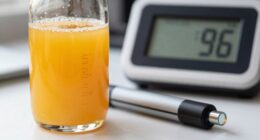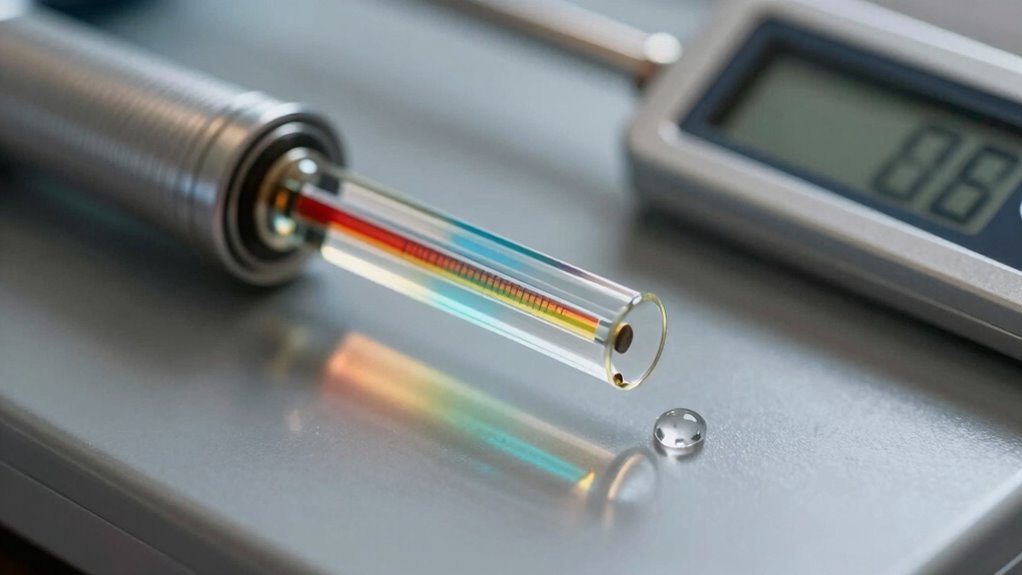
Regularly calibrating your refractometer in just two minutes is essential to keep your measurements accurate and reliable. By applying a calibration solution and quickly adjusting the device, you prevent costly errors that could ruin batches or compromise quality. Skipping this step risks inaccurate data and waste. Incorporating this simple routine into your workflow ensures consistency and confidence in your results. Keep going to discover more proven tips to protect your batch and optimize your process.
Key Takeaways
- Regularly calibrate your refractometer with a known solution to ensure measurement accuracy.
- Use a few drops of calibration solution and adjust the dial until the reading matches the known index.
- Perform calibration daily or before each batch to prevent sensor drift and measurement errors.
- Thoroughly clean the prism before and after calibration to avoid contamination affecting results.
- Incorporating this quick 2-minute step helps maintain consistent product quality and reduces costly batch errors.
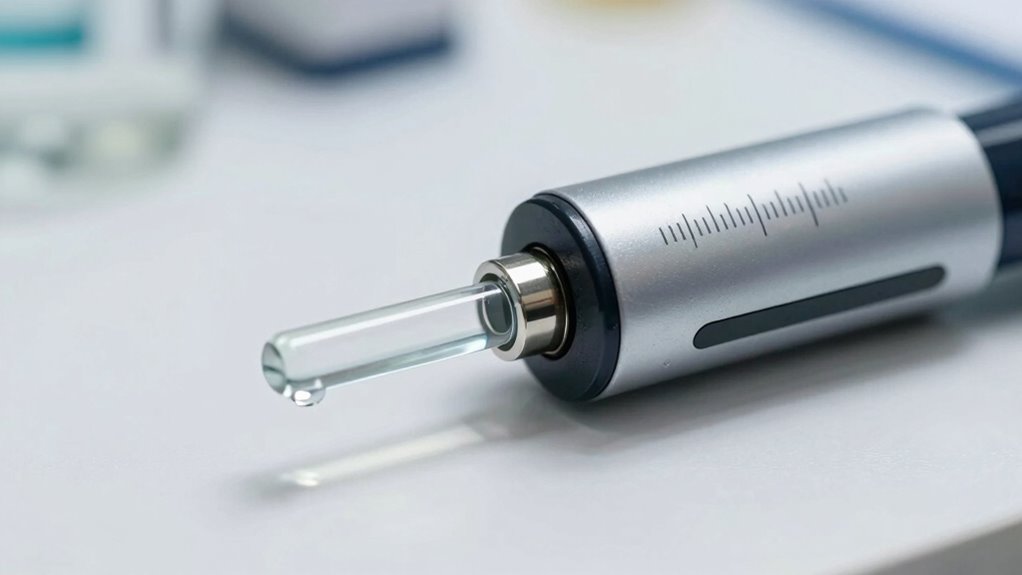
Calibrating your refractometer is essential to guarantee accurate measurements in your testing process. When you ensure proper calibration, you maintain sensor accuracy, which directly impacts the reliability of your readings. Regular calibration isn’t just a routine; it’s a crucial step to prevent costly errors that could spoil batches or lead to inconsistent product quality. Understanding the importance of calibration frequency helps you strike the right balance—too infrequent, and your readings drift; too often, and it becomes unnecessary hassle. The key is to establish a routine that matches your usage level and the conditions in which you operate.
Proper calibration ensures accurate, reliable readings and prevents costly errors in your testing process.
The goal is to keep your refractometer’s sensor accuracy at its peak. Over time, sensors can drift due to temperature fluctuations, handling, or environmental factors, leading to skewed measurements. By adhering to a consistent calibration schedule—whether daily, weekly, or before each batch—you ensure your device provides precise readings every time. This regularity minimizes the risk of errors, saving you from producing batches that are off‑spec or wasted. Calibration frequency depends on how often you use the instrument, the nature of your product, and environmental conditions. For example, high-volume or sensitive applications demand more frequent checks.
To calibrate effectively, you need a high-quality calibration solution that matches your measurement needs, such as a standard liquid with a known refractive index. When calibrating, you start by placing a few drops of the calibration solution on the prism, then adjust the dial until the reading aligns with the known value. This simple process should take only a couple of minutes but offers immense benefits. It resets the sensor’s baseline, compensating for any drift and ensuring your measurements stay accurate. Always remember to clean the prism thoroughly before and after calibration to prevent contamination, which can affect sensor accuracy.
Incorporating routine calibration into your workflow might seem like an extra step, but it’s a small investment of time that pays off by preventing larger issues down the line. Skipping calibration or delaying it can lead to inaccurate data, which might result in product inconsistencies, rework, or wasted ingredients. Regularly checking and calibrating your refractometer keeps your sensor accuracy intact and your process dependable. Sensor drift can be subtle but significantly impact your readings if left unchecked. Ultimately, this simple 2-minute task is a safeguard for your batch quality, ensuring you produce consistent, high-quality products every time.
Frequently Asked Questions
How Often Should I Calibrate My Refractometer?
You should calibrate your refractometer daily or before each use to guarantee accuracy. Calibration frequency depends on your user maintenance routine and how often you use it. If you notice inconsistent readings, recalibrate immediately. Regular calibration helps prevent batch errors. Keep your device clean and store it properly to maintain precision. Properly calibrated refractometers save you time, money, and ensure quality in every batch.
Can Temperature Affect Calibration Accuracy?
Imagine a delicate dance where temperature stability guides your steps—yes, temperature can affect calibration accuracy. Fluctuating temps alter the refractometer’s readings, just like shifting sands beneath your feet. To guarantee measurement precision, keep your device at a consistent temperature before calibration. This simple act preserves accuracy, preventing costly errors. Always check temperature conditions, so your readings stay true, and your batches come out perfect every time.
What Calibration Solutions Are Best for My Refractometer?
You should use calibration standards like distilled water or specific calibration solutions recommended by your refractometer’s manufacturer. These guarantee accuracy and consistency. Store your calibration solutions in airtight containers, away from light and extreme temperatures, to maintain their integrity over time. Regularly check and replace your calibration standards as needed, and always calibrate your refractometer with fresh solutions for precise readings.
Is Digital Calibration More Reliable Than Manual?
Digital calibration generally offers better digital accuracy since it minimizes human error, providing consistent and reliable results. However, manual precision can be just as effective if you carefully follow calibration procedures and use proper solutions. You’re in control with manual methods, but digital tools simplify the process and reduce mistakes. Ultimately, choosing depends on your skill level and the importance of accuracy in your batch.
How Do I Know if My Refractometer Is Out of Calibration?
Think of your refractometer like a finely tuned instrument; if it’s out of calibration, it’s like a musician playing off-key. To check, compare its readings against a known standard or calibration solution regularly. Remember, temperature influence can throw off accuracy, so always calibrate frequently, especially if conditions change. If readings seem inconsistent or drift from expected values, it’s time to recalibrate and guarantee your measurements stay spot-on.
Conclusion
Imagine your batch shimmering with perfect clarity, every drop calibrated for success. Just two minutes of calibration is all it takes to guarantee your refractometer hits the mark, turning a simple step into a safeguard against costly errors. As you gently wipe and calibrate, feel the confidence grow—your quality, your reputation, all in the palm of your hand. Don’t underestimate this tiny act; it’s the bright spark that keeps your batch flawless and your confidence unwavering.