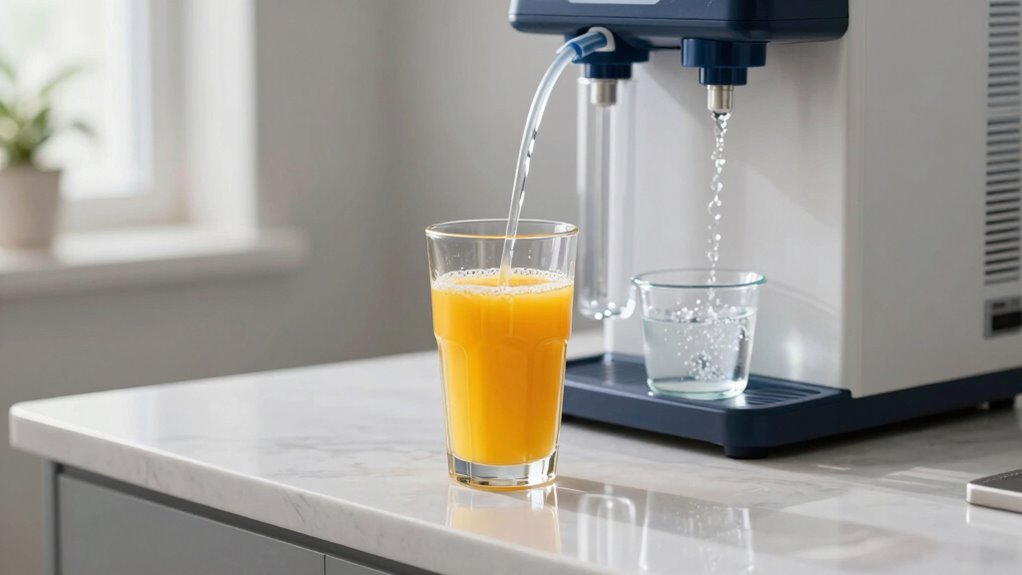

Using reverse osmosis water gives you a pure, contaminant-free base that makes your juice cleaner and crisper. However, it also strips away beneficial minerals like calcium and magnesium, which can cause your juice to taste flatter and less vibrant. To avoid a dull flavor, you might want to add mineral drops or choose mineral-rich water afterward. Want to find out how to get the best flavor balance? Keep exploring for more tips.

Get kitchen staples and gadgets delivered free with Prime
- Fast, free delivery on millions of items
- Prime Video, Amazon Music and more included
- Member-only deals all year
Key Takeaways
- Reverse osmosis water provides a pure, impurity-free base that enhances clarity and overall flavor vibrancy in juice.
- Mineral removal can lead to flatter, less complex flavors, diminishing the natural richness of fruits and vegetables.
- Adding minerals post-filtration can restore flavor depth without sacrificing water purity.
- For a crisp, clean taste, RO water is ideal; for richer flavors, mineral supplementation may be necessary.
- Balancing purity and mineral content optimizes juice flavor and ensures a satisfying taste experience.
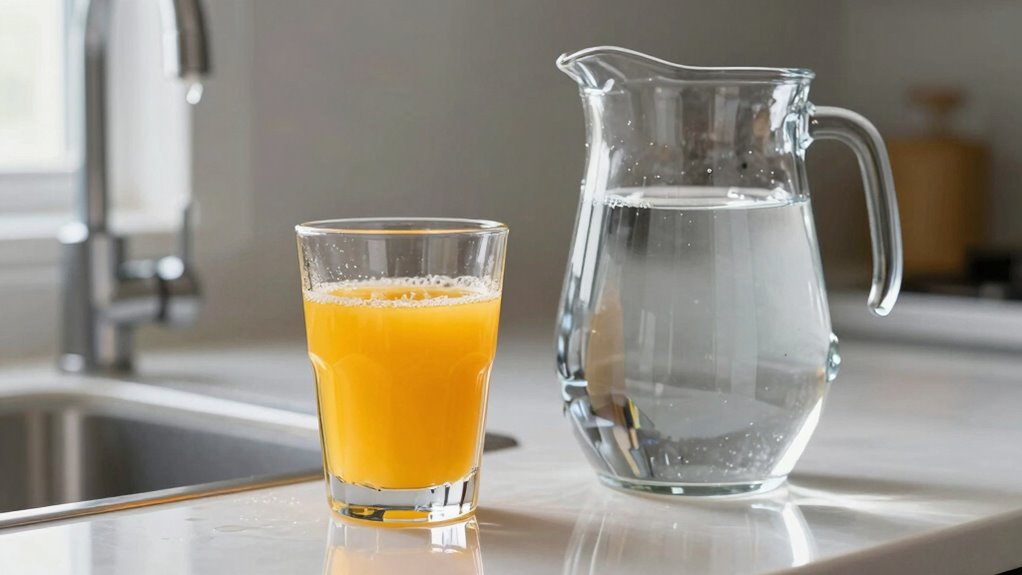
If you want your juice to taste pure and fresh, using reverse osmosis water can make a significant difference. This filtration process removes impurities and contaminants, providing a cleaner base that allows the true flavors of your fruits and vegetables to shine through. By eliminating chlorine, sediment, and other unwanted substances, reverse osmosis water can enhance the overall flavor profile of your juice, making it more vibrant and crisp. However, there’s a flip side to contemplate. Since reverse osmosis is so effective at stripping water of impurities, it also removes beneficial minerals like calcium and magnesium. These minerals aren’t just good for your health; they also play a vital role in flavor enhancement. Without them, your juice might taste flatter or more muted, lacking the natural complexity that minerals add.
Using mineral-deficient water for juicing can lead to a less satisfying taste experience. Fruits and vegetables naturally contain their own flavor compounds, and the minerals in water can help bring those out. When those minerals are absent, the juice’s taste may become dull or overly subdued, making it harder to appreciate the full spectrum of flavors. If you’re aiming for a vibrant, lively juice, you might find that reverse osmosis water, though clean, can sometimes work against your goal of flavor enhancement unless you take steps to reintroduce minerals. Some people add mineral drops or use mineral-rich water after filtration to combat this issue, restoring the balance needed for a richer taste. Additionally, understanding the effects of mineral removal can help you make better choices for your juicing process. Incorporating knowledge about water mineral content can also guide you in selecting the most suitable filtration method for your desired flavor profile.
It’s worth pondering whether your primary goal is purity and clarity or ideal flavor. If you prioritize a clean, neutral base that doesn’t interfere with the fruit’s natural essence, reverse osmosis water is an excellent choice. But if you crave a juice with depth and complexity, you may need to supplement the mineral content or choose alternative filtration methods that retain some beneficial minerals. Just keep in mind that the removal of minerals isn’t inherently a flaw; it’s about understanding how it impacts flavor. Overall, reverse osmosis water provides a cleaner, purer foundation for your juice, but it also requires some attention to mineral content if you want that flavor to truly pop. Recognizing the impact of mineral removal can help you optimize your juicing process to achieve the best possible taste.
reverse osmosis water filter for juicing
As an affiliate, we earn on qualifying purchases.
As an affiliate, we earn on qualifying purchases.
Frequently Asked Questions
Does Reverse Osmosis Remove Beneficial Minerals From Water?
Yes, reverse osmosis removes beneficial minerals from water, leading to mineral depletion. This process enhances water purity by eliminating contaminants, but it also strips away essential minerals like calcium and magnesium. While you get cleaner water, you might miss out on these nutrients that support your health. To compensate, consider mineral supplements or mineralized water to restore the mineral content and enjoy both purity and nourishment.
How Does RO Water Affect the Nutritional Content of Juice?
Using RO water can impact the nutritional content of your juice by reducing mineral levels, which may affect nutrient preservation. However, it can also enhance flavor by providing a cleaner, purer base, making your juice taste fresher. If you’re concerned about nutrient retention, consider adding back beneficial minerals or using mineral-rich water. Overall, RO water offers a cleaner base but might require adjustments for maximum flavor enhancement and nutrition.
Can RO Water Alter the pH Level of Fruit Juices?
A wise man once said, “You are what you eat,” and that’s true when it comes to pH balance. Using reverse osmosis (RO) water can alter the pH level of your fruit juices, making them more acidic or basic. While it may offer flavor enhancement by reducing contaminants, it can also cause mineral depletion, which might impact the natural acidity and overall taste. Adjusting pH with minerals can help maintain balance.
Is RO Water Suitable for All Types of Juice Recipes?
You might find that RO water isn’t suitable for all juice recipes, especially if you want flavor enhancement and texture consistency. Its purity can strip away minerals that contribute to rich flavors and mouthfeel. For some fruit juices, using mineral-enriched water helps preserve the intended taste and texture. So, consider the specific juice and desired outcome before universally applying RO water, as it could flatten the flavor profile.
How Does the Cost of Using RO Water Compare to Tap Water?
Did you know that reverse osmosis (RO) water can cost up to ten times more than tap water? When you compare costs, RO water is generally pricier due to the filtration process, but it offers superior water purity. So, your choice depends on your priorities: if you want cleaner water for your juice and don’t mind the extra expense, RO is worth it. Otherwise, tap water remains a budget-friendly option.
Conclusion
Considering reverse osmosis water for your juice, you can enjoy a cleaner, purer base, but be mindful it might lead to a flatter taste. Imagine drinking a glass of juice with 99% of its impurities removed—it’s like tasting the essence of fruit itself. While purity offers health benefits, over-filtering can diminish the fruit’s natural vibrancy. Striking a balance ensures your juice stays invigorating and full of flavor, making every sip truly satisfying.
Halloween Picks
halloween
As an affiliate, we earn on qualifying purchases.