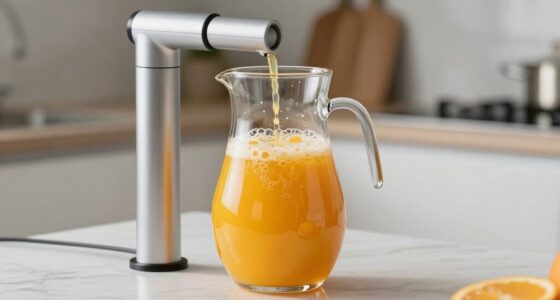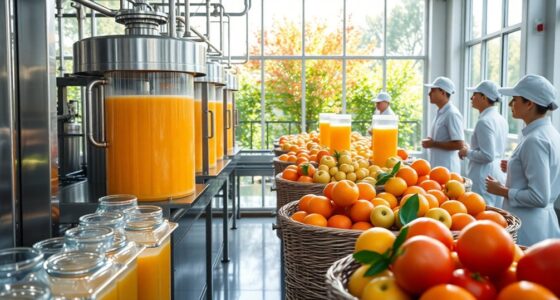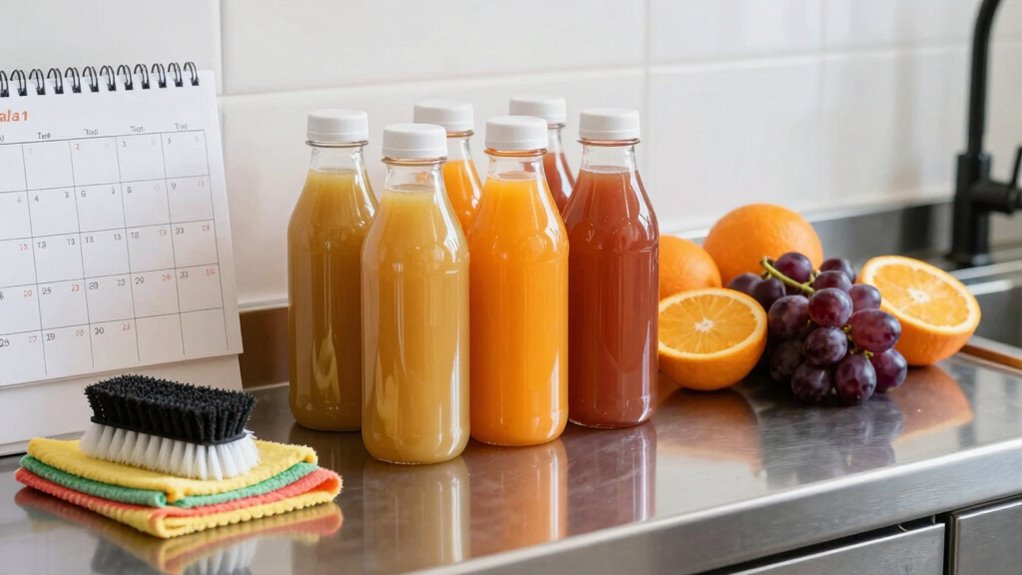

A well-planned sanitation schedule helps you keep your juice safe and high-quality by regularly removing bacteria, mold, and pesticide residues that can cause spoilage or health issues. Consistent cleaning prevents buildup on equipment, reducing microbial growth and ensuring each batch meets safety standards. It also maintains equipment performance and extends its lifespan. By following a thorough routine, you minimize contamination risks and produce consistently excellent juice. Keep going to discover more ways a solid sanitation plan impacts your results.

Get kitchen staples and gadgets delivered free with Prime
- Fast, free delivery on millions of items
- Prime Video, Amazon Music and more included
- Member-only deals all year
Key Takeaways
- Consistent sanitation schedules prevent microbial growth, reducing spoilage and ensuring juice safety and freshness.
- Regular cleaning removes residues and contaminants that can alter juice flavor, color, and nutritional value.
- Proper scheduling maintains equipment hygiene, ensuring consistent juice quality and preventing off-flavors.
- Adhering to sanitation routines helps meet industry standards, ensuring high-quality, compliant juice production.
- Preventive maintenance through scheduled cleaning extends equipment lifespan, supporting reliable juice quality over time.

Maintaining a strict sanitation schedule is essential for ensuring the quality of your juice. When you prioritize cleanliness, you significantly reduce the risk of fruit contamination, which can compromise both the safety and taste of your product. Fruit contamination can occur at any stage—from the orchard to your processing area—if proper sanitation isn’t maintained. Falling behind on cleaning routines allows bacteria, mold, or pesticide residues to linger on the fruit, which can lead to spoilage or health issues. Consistent sanitation minimizes these risks by removing dirt, bacteria, and residues before they make their way into your juice. Proper sanitation practices are supported by cleaning routines, which help you stay on top of necessary tasks and maintain high standards. Implementing a sanitation schedule ensures that all critical steps are completed regularly, reducing the chances of oversight.
Equally important is diligent equipment maintenance. Your juicing machines and other tools need regular cleaning to prevent the buildup of pulp, oils, and other residues that can harbor bacteria. If equipment isn’t properly maintained, even small amounts of leftover material can become breeding grounds for microorganisms, affecting juice quality. A well-maintained setup ensures that your equipment functions efficiently, producing consistent results every time. It also extends the lifespan of your machinery, saving you money in the long run. When you stick to a sanitation schedule, you’re not just cleaning for cleanliness’s sake—you’re actively preventing cross-contamination between different batches, which helps maintain uniformity and freshness in your juice. Regular maintenance also minimizes downtime caused by equipment breakdowns, ensuring your production remains smooth and reliable. Incorporating routine inspections can further help identify potential issues before they impact the quality of your product.
Creating a routine for sanitation means you’re less likely to overlook critical cleaning tasks. You can develop a checklist to ensure every part of your process gets proper attention—wash the fruit thoroughly, sanitize your work surfaces, and disassemble and clean your equipment regularly. This discipline prevents the build-up of residues that can alter the taste, color, or nutritional content of your juice. Even small lapses can introduce off-flavors or microbial growth that degrade your product’s quality. Moreover, a clean workspace boosts your efficiency and confidence, knowing that each batch meets safety standards. Consistent sanitation also helps you comply with industry regulations, avoiding potential fines or shutdowns. Implementing proper sanitation protocols is crucial to maintaining high-quality juice and meeting industry standards.
commercial juice machine cleaning kit
As an affiliate, we earn on qualifying purchases.
As an affiliate, we earn on qualifying purchases.
Frequently Asked Questions
How Often Should Sanitation Schedules Be Reviewed for Effectiveness?
You should review sanitation schedules regularly, ideally every three to six months, to guarantee they remain effective. Schedule adjustments may be necessary if you notice recurring issues or after cleanliness audits reveal areas needing improvement. Regular reviews help you identify gaps, reinforce best practices, and maintain high hygiene standards. Staying proactive ensures your juice quality stays consistent, safe, and compliant with industry regulations.
What Are the Consequences of Inconsistent Sanitation Practices?
If you neglect consistent sanitation practices, you’ll open the door to fruit contamination and equipment corrosion. These issues can turn your clean plant into a breeding ground for bacteria, risking product safety and customer trust. Inconsistent cleaning also accelerates equipment wear, leading to costly repairs. Keep your sanitation schedule tight to avoid these pitfalls—otherwise, you’re just asking for trouble that could spoil your juice and reputation.
Can Sanitation Schedules Impact Flavor Preservation in Juice?
Yes, sanitation schedules directly impact flavor retention in juice by ensuring microbial control. When you stick to a regular cleaning routine, you prevent bacteria and mold from contaminating the equipment, which can alter the juice’s natural flavor. Consistent sanitation preserves the quality and freshness of your juice, maintaining its intended taste and aroma. Skipping or delaying cleaning compromises flavor retention, leading to off-flavors and spoilage that diminish customer satisfaction.
How Do Sanitation Methods Vary for Different Types of Juice?
You might think all juices need the same sanitation methods, but they actually vary based on fruit contamination levels and equipment sterilization needs. For acidic citrus, you focus on thorough cleaning to prevent spoilage, while delicate berry juices require gentler methods to preserve flavor. Proper sanitation guarantees no cross-contamination, maintains juice quality, and keeps your production safe, regardless of fruit type. Tailoring these methods is key to ideal juice safety and taste.
What Training Is Essential for Staff on Sanitation Protocols?
You need to train your staff on proper sanitation protocols, emphasizing staff hygiene and equipment maintenance. Teach them how to thoroughly clean and sanitize all tools and surfaces, stressing the importance of handwashing and proper PPE use. Regularly update training to cover new methods or equipment. Ensuring staff understand these practices helps prevent contamination, maintains juice quality, and keeps your production environment safe and compliant with health standards.
Conclusion
By sticking to a strict sanitation schedule, you’re like a gardener tending to delicate fruit—each careful step guarantees the juice you produce is pure and vibrant. When you prioritize cleanliness, you’re planting seeds for quality, nurturing each batch with precision. Remember, neglecting sanitation is like leaving weeds to overrun a garden—eventually, it ruins the whole crop. Keep your routines steady, and your juice will shine as bright as a well-tended orchard at harvest time.
NFL season / tailgating Picks
team gear
As an affiliate, we earn on qualifying purchases.