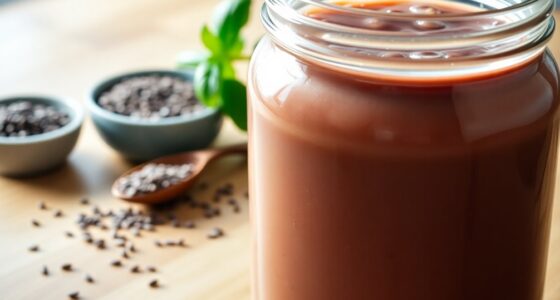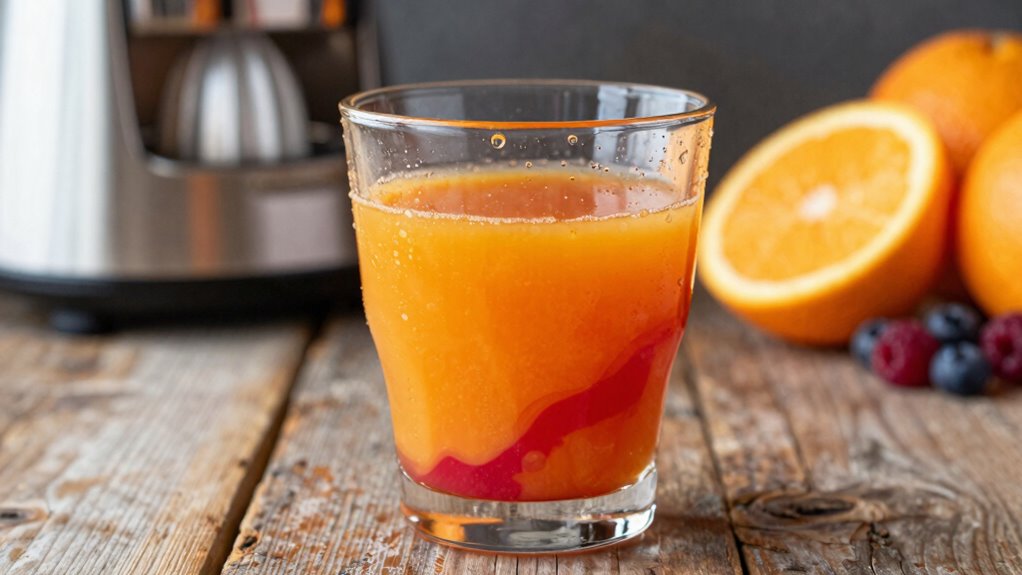
To avoid puree-like pulp when juicing soft fruits, select a high-quality, slow, cold-press juicer that offers pulp control features. Properly prepare your fruits by peeling or removing soft spots, and strain the juice through a fine mesh sieve or cheesecloth afterward. Using the right equipment and techniques guarantees a smoother, clearer juice. Keep your fruits fresh and handle them carefully, and you’ll achieve better results—there’s more to discover about perfecting your juicing process.

Get kitchen staples and gadgets delivered free with Prime
- Fast, free delivery on millions of items
- Prime Video, Amazon Music and more included
- Member-only deals all year
Key Takeaways
- Use a slow, masticating or cold-press juicer to produce smoother juice with less pulp.
- Peel soft fruits like peaches or melons to reduce pulp content.
- Strain the juice through a fine mesh sieve or cheesecloth after extraction for extra clarity.
- Adjust pulp control settings on your juicer to minimize pulp inclusion during extraction.
- Store fruits properly and use fresh, ripe produce to prevent excess pulp from softening and releasing.

When it comes to juicing equipment, not all machines are created equal. A high-quality juicer with a slow, masticating or cold-press design tends to produce smoother juice with less pulp, compared to centrifugal juicers, which can shear the fruit and release more pulp and foam. Investing in the right juicing equipment is key; look for models with adjustable pulp control or fine strainers that can filter out unwanted pulp and seeds. These features help you achieve a cleaner, more refined juice. Additionally, some juicers come with built-in filters that separate the pulp during extraction, giving you a clearer liquid without sacrificing flavor.
Another tip to avoid a puree-like consistency is to prepare your fruits properly before juicing. Cut away any damaged or overly soft spots, and consider peeling fruits like peaches or melons if you want to minimize pulp. Straining your juice through a fine mesh sieve or cheesecloth after extraction can further remove residual pulp, leaving you with a smooth finish. Keep in mind that the consistency you desire depends on your preferences, so don’t hesitate to experiment with different straining techniques or juicing settings. Using the appropriate juicing techniques can also significantly influence the final texture and clarity of your juice. Employing proper fruit preparation methods can help reduce pulp and improve overall juice quality. Understanding how different juicing methods affect pulp content can also help you tailor your process for optimal results. Additionally, understanding how to balance your juicing process with fruit preservation techniques can help you maintain best fruit quality and juice clarity. Proper fruit storage can prevent overripe fruits from releasing excess pulp during juicing, ensuring a cleaner final product. To further enhance the clarity and quality, consider using a pulp control feature if your juicer includes one, which allows for more precise adjustments during extraction. Store your fruits in a cool, dry place or refrigerate them promptly to prevent spoilage. Use fresh, ripe fruits quickly to maximize flavor and minimize pulp release. By selecting the right juicing equipment and handling your fruit properly, you’ll be able to enjoy fresh, smooth juice that’s free from unwanted pulp, highlighting the natural sweetness and vibrant flavors of your favorite soft fruits.
slow cold press juicer with pulp control
As an affiliate, we earn on qualifying purchases.
As an affiliate, we earn on qualifying purchases.
Frequently Asked Questions
Which Soft Fruits Produce the Least Pulp When Juiced?
You’ll find that berries like strawberries, blueberries, and blackberries produce the least pulp when juiced. These fruits contain less fiber, reducing the pulp texture in your juice. Raspberries also yield a smoother juice with minimal fiber, making them ideal for a pulp-free drink. By choosing soft fruits low in fruit fiber, you can enjoy a clearer juice without that thick, puree-like consistency.
Can Specific Juicers Reduce Pulp in Soft Fruit Juices?
Did you know certain juicer types can actually help reduce pulp? If you want less pulp in your soft fruit juice, opt for masticating or centrifugal juicers with pulp control features. These juicers are designed to separate more juice from pulp, giving you a smoother drink. By choosing the right juicer type, you can enjoy soft fruit juices without that puree-like texture you’re trying to avoid.
How Does Fruit Ripeness Affect Pulp Content?
You’ll notice that riper fruits tend to produce more pulp because their softer texture releases more juice and fiber. Ripeness indicators like color, aroma, and firmness help you judge fruit quality; overripe fruit often results in a thicker, puree-like texture. For a smoother juice, choose fruits that are ripe but still firm, ensuring a balanced pulp content that isn’t too thick or watery.
Are There Any Additives to Minimize Pulp Naturally?
Imagine you’re a modern-day alchemist, blending natural sweeteners and pulp filtering techniques. To naturally minimize pulp, try adding a splash of lemon juice or a tiny bit of honey, which helps break down fibers. Use a fine mesh or nut milk bag for pulp filtering, allowing juice to pass through smoothly. These additives and methods keep your juice clear and delicious without resorting to anything artificial.
What’s the Best Way to Store Soft Fruit Juice Without Pulp?
To store soft fruit juice without pulp, you should use a fine-mesh strainer or cheesecloth to separate the pulp during the juicing process. For preservation, transfer the clear juice into airtight bottles or glass containers, leaving some headspace. Keep the containers refrigerated to slow spoilage, and consume within a few days. Proper pulp separation and fruit preservation techniques guarantee your juice remains smooth and fresh longer.
Conclusion
So, next time you’re tempted to turn your soft fruits into a pulp mess, remember: all that effort might just give you a smoothie you didn’t ask for. With a little patience and the right technique, you’ll enjoy perfectly smooth juice—no puree-like pulp required. Ironically, the secret to avoiding a pulp disaster is simply taking your time. After all, isn’t it sweet victory when your juice stays invigoratingly smooth? Cheers to pulp-free perfection!
NFL season / tailgating Picks
team gear
As an affiliate, we earn on qualifying purchases.