
To prevent risky sprouts, the most important food safety rule is to thoroughly sterilize your seeds before sprouting and ensure your sprouting machine is properly calibrated. Sterilizing eliminates harmful bacteria like Salmonella and E. coli, while correct calibration maintains ideal temperature, humidity, and airflow to inhibit bacterial growth. Combining these practices reduces contamination risk and guarantees safe, healthy sprouts. Keep these safety steps in mind, and you’ll learn how to maintain consistently clean and safe sprouting conditions.

Get kitchen staples and gadgets delivered free with Prime
- Fast, free delivery on millions of items
- Prime Video, Amazon Music and more included
- Member-only deals all year
Key Takeaways
- Proper seed sterilization eliminates harmful bacteria and reduces contamination risk in sprouting.
- Correct machine calibration ensures optimal temperature, humidity, and airflow for safe sprout production.
- Routine verification of equipment settings prevents bacterial growth due to incorrect environmental conditions.
- Thorough cleaning and maintenance of sprouting machines prevent mold and bacterial buildup.
- Combining seed sterilization with proper calibration is essential for consistent, safe sprout production.
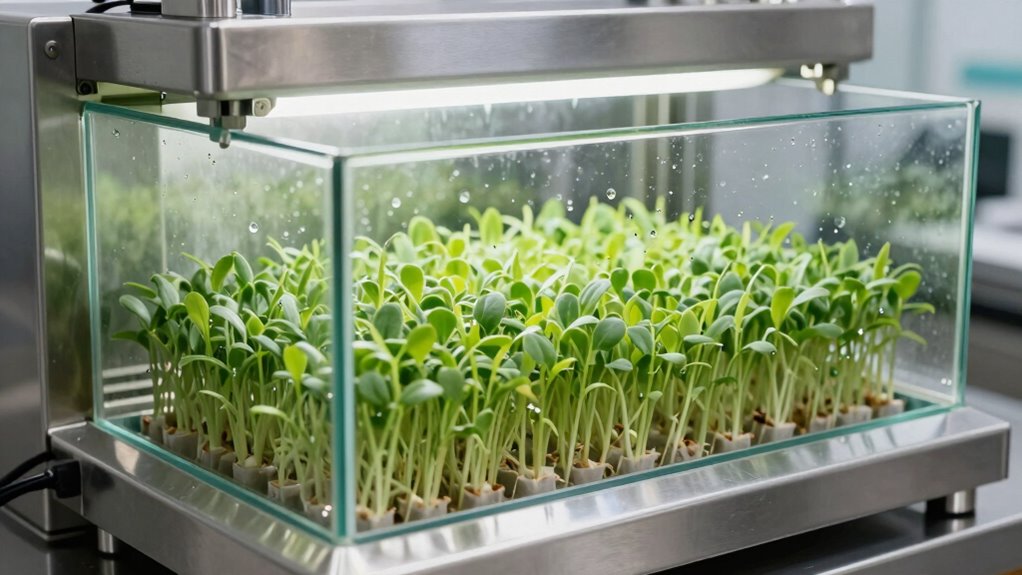
Sprouting machines have revolutionized how you grow fresh, nutritious sprouts quickly and efficiently. They make it simple to produce healthy greens at home or on a small scale, but safety measures are essential to prevent contamination. One critical step is seed sterilization, which eliminates harmful bacteria that might be present on raw seeds. Before placing seeds into the machine, you should thoroughly sterilize them using a proper method—such as soaking in a dilute vinegar solution or using commercial seed sterilizers. This process drastically reduces the risk of foodborne illnesses caused by pathogens like Salmonella or E. coli. Most sprouting machines are designed for easy seed loading, but to guarantee safety, you need to follow best practices for seed sterilization consistently. This step is essential because no matter how advanced your machine is, contaminated seeds can compromise the entire batch.
Another essential factor in guaranteeing safe sprouting is machine calibration. Proper calibration guarantees that your sprouting machine maintains the correct temperature, humidity, and airflow—parameters that influence both sprout quality and safety. If your machine isn’t correctly calibrated, it might not provide the best environment for sprout growth or could create conditions conducive to bacterial growth. Regularly checking and adjusting the calibration ensures the machine operates at its intended settings, minimizing risk. Many modern sprouting machines come with built-in sensors and control systems to assist with calibration, but you should also verify these settings periodically with a reliable thermometer or hygrometer. When calibrating, pay attention to the manufacturer’s instructions, and don’t hesitate to perform routine maintenance or recalibration to keep your sprouting environment safe and consistent. Additionally, understanding food safety rules related to sprouting can help you implement comprehensive precautions.
Maintaining a clean and well-calibrated machine also extends its lifespan and improves sprout quality. Clean the equipment thoroughly after each use, paying special attention to parts that come into contact with seeds and sprouts. Regular cleaning prevents mold, bacterial buildup, and cross-contamination. When you combine diligent seed sterilization with properly calibrated equipment, you’re taking proactive steps to ensure your sprouts are not only delicious but also safe to eat. Remember, safety isn’t a one-time effort—it’s an ongoing process. Consistently sterilize your seeds and double-check your machine’s calibration to keep your sprouting process safe, reliable, and efficient. This commitment will give you peace of mind and ensure you enjoy fresh, nutritious sprouts without risking your health.
As an affiliate, we earn on qualifying purchases.
Frequently Asked Questions
How Often Should Sprouting Machines Be Cleaned?
You should clean your sprouting machines at least once a day to maintain proper sanitization protocols. Regular cleaning prevents bacterial buildup and guarantees equipment maintenance stays effective. After each use, wash all surfaces thoroughly with hot water and a food-safe sanitizer. Consistent cleaning not only keeps your equipment in good shape but also minimizes contamination risks, helping you produce safe, healthy sprouts every time.
What Are the Signs of a Contaminated Sprouting Batch?
You’ll notice signs of a contaminated sprouting batch through foul odors, slimy textures, or discoloration. Check for microbial indicators like unexpected mold growth or sliminess, which are contamination indicators. If you see any of these signs, discard the batch immediately. Regular testing for microbial indicators helps catch contamination early, ensuring safe sprouts. Always trust your senses and follow safety protocols to prevent health risks.
Are There Specific Certifications for Safe Sprouting Equipment?
You should look for sprouting equipment with certifications that meet food safety standards, such as NSF or UL listings. These certifications guarantee the equipment complies with strict safety and hygiene regulations, reducing contamination risks. Always verify that your sprouting equipment adheres to recognized food safety standards, as certified equipment helps you maintain a safe sprouting environment and ensures your sprouts are safe for consumption.
How Does Temperature Affect Sprout Safety?
Imagine your sprouting process as a delicate dance where temperature control is the lead. If it’s too warm, pathogens thrive like wildfire, risking contamination. If it’s too cold, sprouts stall and never reach perfection. Keeping the right temperature limits pathogen growth, ensuring your sprouts are safe and healthy. You must monitor and maintain ideal temps consistently, because even a slight deviation can turn safe sprouts into a health hazard.
Can Manual Cleaning Replace Automated Sanitization?
Manual sterilization can’t fully substitute automated sanitization because it often misses hidden spots and relies heavily on thoroughness. You need to regularly perform equipment maintenance and use proper cleaning techniques to guarantee safety. Automated sanitization offers consistent, deep cleaning that reduces contamination risks more effectively. While manual sterilization is helpful, combining it with automated systems provides the best protection for sprouts and maintains compliance with food safety standards.
Conclusion
While some worry that food safety rules may slow down sprouting operations, prioritizing safety actually protects you and your customers from serious illness. By following the regulations, you reduce the risk of harmful bacteria like Salmonella and E. coli. It might seem like extra hassle now, but ensuring safe sprouts means fewer outbreaks and happier, healthier customers in the long run. Ultimately, safer sprouting benefits everyone—so don’t see it as a barrier, but as a essential safeguard.
Columbus Day / Indigenous Peoples' Day Picks
long weekend sales
As an affiliate, we earn on qualifying purchases.