To keep produce fresh for juicing, store leafy greens in perforated bags in the crisper drawer, and root vegetables in cool, dark, humid places like mesh containers. Use airtight containers or vacuum sealing to prevent spoilage and extend freshness. Proper moisture control and temperature are key, and pickling or blanching before storage can also help preserve flavor and nutrients. If you want more tips on maintaining produce quality, keep exploring these storage techniques.
Key Takeaways
- Store leafy greens in perforated bags in the crisper drawer to maintain freshness and prevent excess moisture.
- Keep root vegetables in cool, dark, humid environments using mesh or perforated containers to extend shelf life.
- Use proper containers to control airflow and prevent spoilage, ensuring produce stays fresh longer.
- Regularly check produce for ripeness and spoilage to prevent deterioration before juicing.
- Employ preservation methods like blanching, freezing, or pickling to extend produce usability for juicing.
Storing produce properly is essential to keep your fruits and vegetables fresh and flavorful for juicing. When you want to maximize the freshness and nutrients of your produce, understanding effective produce preservation methods is key. One way to do this is by applying pickling techniques, which not only extend the shelf life of certain vegetables but also add a tangy flavor that can enhance your juice blends. Although pickling is often associated with preserving vegetables for long-term storage, it’s also a useful method for maintaining produce quality before juicing, especially if you want to infuse your drinks with unique flavors.
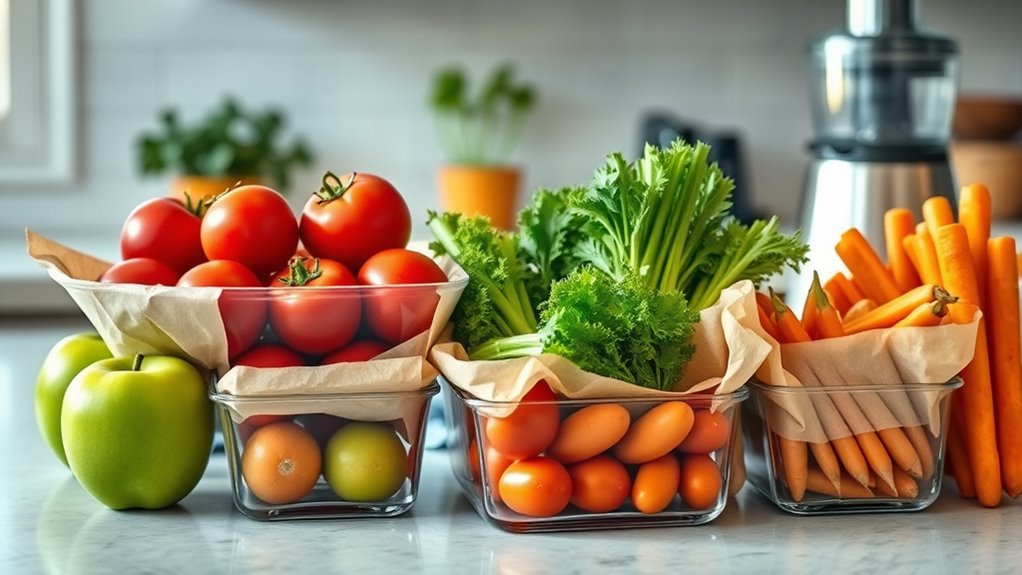
To start, you should sort your produce carefully, removing any damaged or overripe items that could spoil quickly. Proper produce preservation begins at the source—by keeping fruits and vegetables at their peak ripeness, you’ll ensure the best taste and nutritional value. For leafy greens like spinach or kale, store them in a perforated plastic bag in the crisper drawer of your refrigerator. This allows air circulation, preventing excess moisture that can cause spoilage. Root vegetables like carrots, beets, and celery should be kept in a cool, dark, and humid environment—ideally in a mesh bag or perforated container to avoid condensation buildup.
When it comes to pickling techniques, you have a versatile tool in your arsenal. Pickling not only preserves vegetables but also enhances their flavor profile, making them more interesting for juicing. You can quickly pickle small batches of cucumbers, radishes, or even carrots by immersing them in a vinegar-based brine with spices such as dill, garlic, or peppercorns. This method slows down microbial growth and keeps produce fresh for weeks or even months if stored properly. Just remember to use sterilized jars and keep them refrigerated to prevent spoilage.
If you’re not into pickling, other produce preservation methods work well, too. For example, blanching and freezing vegetables like berries, greens, or chopped fruits can lock in nutrients and extend their usability. Vacuum sealing is another excellent technique to prevent oxygen exposure, which helps maintain freshness and flavor. When storing produce for juicing, make sure to consume it within a few days of purchase or harvest for the best results. The key is to keep produce cool, dry, and protected from light, which can degrade quality over time.
Additionally, employing proper storage containers and techniques can further prolong produce freshness, especially when using air exchange control methods to reduce spoilage.
Frequently Asked Questions
How Long Can I Store Pre-Juiced Produce Safely?
You can typically store pre-juiced produce safely for up to 24 to 48 hours. To minimize nutrient degradation, use airtight storage containers and keep the juice refrigerated. Make sure to fill containers to minimize air exposure, which slows oxidation and preserves nutrients. After this time, the juice may lose flavor and nutritional value, so it’s best to consume it sooner rather than later for maximum freshness and health benefits.
Can I Store Different Types of Produce Together?
You can store different types of produce together if they have similar storage requirements and compatibility. However, avoid produce mixing that could lead to spoilage, fermentation, or flavor transfer. Use airtight containers or separate compartments to maintain freshness. Check each produce’s storage guidelines to prevent spoilage. When in doubt, store delicate or highly perishable items separately to ensure they stay fresh longer and avoid cross-contamination.
Does Refrigeration Affect the Nutritional Quality of Produce?
Refrigeration effects on produce nutrition are like a slow fade from a vibrant painting. When you refrigerate produce, some nutrients, especially vitamins like C and B, can degrade over time. However, proper refrigeration helps preserve freshness and prevents spoilage, which keeps your produce more nutritious longer. So, while it might slightly affect produce nutrition, refrigerating guarantees you get the most out of your fruits and veggies for juicing.
What’s the Best Way to Prevent Produce From Spoiling?
To prevent produce from spoiling, focus on proper produce preservation through effective storage techniques. Keep fruits and vegetables in the right environment—some need refrigeration, while others stay fresh at room temperature. Use breathable containers or paper towels to absorb moisture, and store produce separately to avoid spoilage transfer. Regularly check for signs of spoilage, and consume perishables promptly to maximize freshness and nutritional quality.
How Do I Know When Produce Has Gone Bad for Juicing?
When wondering if produce has gone bad, look for visual cues like mold, discoloration, or sliminess, and trust your nose—if it smells sour or off, it’s time to toss it. Produce that’s past its prime often exhibits these telling signs, so don’t ignore the indicators. Always inspect and sniff before juicing to guarantee freshness and avoid spoiled produce, keeping your drinks safe and tasty.
Conclusion
Now that you know how to store your produce properly, you can keep everything fresh and ready for juicing whenever the mood strikes. Remember, a little preparation goes a long way—don’t let your fruits and veggies go bad on you. By following these tips, you’ll stay ahead of the game and get the most out of your produce. After all, a stitch in time saves nine, so start storing smarter today and enjoy vibrant, delicious juices every time!

Cindy thoroughly researches juicing trends, techniques, and recipes to provide readers with practical advice and inspiration. Her writing style is accessible, engaging, and designed to make complex concepts easy to understand. Cindy’s dedication to promoting the advantages of juicing shines through her work, empowering readers to make positive changes in their lives through the simple act of juicing.