

To achieve clarity and purity in your homemade drinks, choosing the right mesh, nut milk bags, and filters is key. Consider the material—stainless steel for durability or fine nylon for smooth filtrations. Mesh size matters too; finer options produce clearer liquids free of pulp and sediment. Proper storage and maintenance help keep your tools in top condition, ensuring great results every time. Keep going to discover how to select, use, and care for these essential tools for perfect straining.
Key Takeaways
- Choosing the right mesh or filter material (stainless steel, nylon, polyester) ensures durability and effective filtration.
- Finer mesh pores produce clearer, pulp-free liquids, ideal for nut milks and herbal infusions.
- Proper mesh size selection prevents sediment and enhances the visual appeal of homemade beverages.
- Organized storage and regular cleaning of tools maintain their effectiveness and extend lifespan.
- Mastering filtration techniques with suitable tools results in professional-quality, visually appealing drinks.
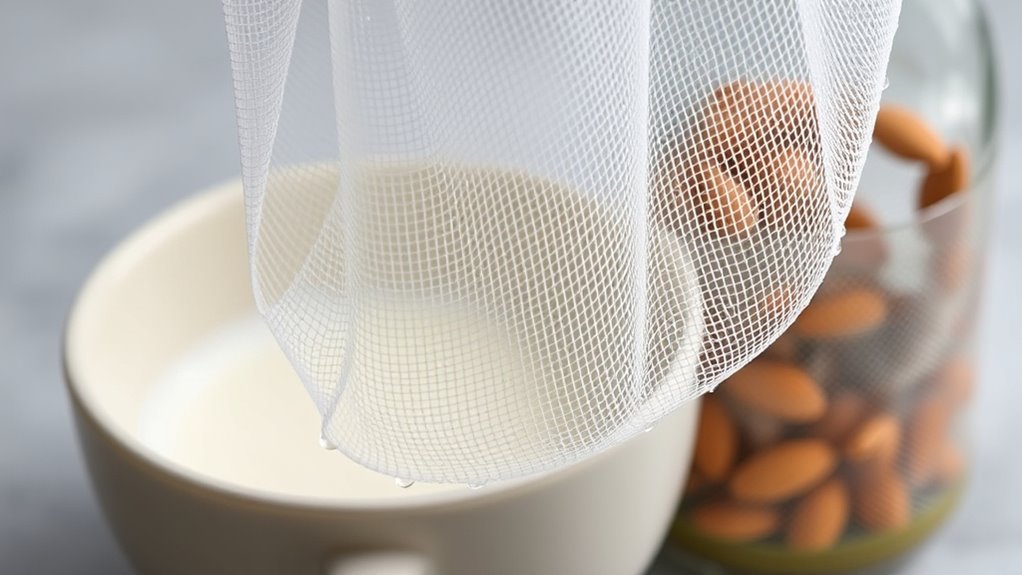
If you’re making nut milk or filtering liquids at home, understanding the different types of mesh, nut milk bags, and filters is vital. These tools are key to achieving the clarity and purity you want in your homemade beverages and DIY projects. Selecting the right mesh or filter depends on your specific needs, whether you’re aiming for a smooth, pulp-free milk or a finely strained herbal infusion. Proper kitchen organization helps you keep these tools accessible and clean, streamlining your process and reducing messes. When you have dedicated storage for each type of filter or bag, you save time and keep your workspace tidy, making your DIY projects more enjoyable and efficient. Different meshes and filters come in various materials, including stainless steel, nylon, and fine mesh polyester. Stainless steel options are durable, easy to clean, and ideal for repeated use, especially if you’re making nut milk regularly. Nylon and polyester meshes, on the other hand, often have finer pores, perfect for filtering tiny particles and achieving a clear liquid. Choosing the right mesh size is vital; a coarser mesh works well for straining larger pulp or seeds, while finer meshes are better for delicate liquids to prevent sediment. Using the appropriate filter ensures your homemade nut milk or herbal infusions are smooth and visually appealing, which enhances the overall quality of your DIY projects. Properly storing your nut milk bags and filters guarantees they stay in good condition, so you’re ready to create fresh, healthy drinks whenever inspiration strikes. Additionally, selecting filters with effective filtration capabilities can significantly improve the clarity and purity of your homemade beverages. Ultimately, mastering the use of mesh, nut milk bags, and filters elevates your kitchen game. It allows you to produce cleaner, more refined liquids that look as good as they taste. Whether you’re making nut milk as part of your health-conscious lifestyle or refining your DIY craft, understanding these tools helps you achieve professional results at home. Keep your tools organized and well-maintained, and you’ll find straining becomes a seamless step in your culinary and DIY routines. With the right equipment and a tidy workspace, you can confidently experiment and create beverages and infusions that look beautiful, taste great, and meet your standards for quality.
Frequently Asked Questions
How Do I Clean and Maintain Mesh and Filter Tools Effectively?
To keep your mesh and filter tools clean, use warm water and a gentle brush to remove residue after each use. Soak them in vinegar or lemon juice periodically to eliminate buildup and odors. For maintenance tips, avoid harsh chemicals that can damage the material, and always dry thoroughly before storing. Regular cleaning and proper care will extend their lifespan and ensure ideal performance every time you use them.
What Materials Are Safest for Allergen-Sensitive Individuals?
You need the safest materials for allergen-sensitive individuals, and that means avoiding allergenic materials like certain plastics or metals that could trigger reactions. Opt for non-toxic options like silicone, stainless steel, or organic cotton, which are gentle and hypoallergenic. These materials are built to withstand frequent use, ensuring your straining tools remain safe and effective without risking allergenic reactions. Always verify material labels for peace of mind.
Can These Tools Be Used for Non-Food Filtering Purposes?
Yes, you can use mesh, nut milk bags, and filters for non-food purposes. In industrial applications, they help filter debris or particles in manufacturing processes. For artistic uses, artists often incorporate these materials for mixed media projects, creating textured effects or sculptures. Their versatility makes them suitable for various tasks beyond food, so feel free to experiment with their filtering capabilities in different contexts.
How Long Do Mesh and Nut Milk Bags Typically Last?
Mesh and nut milk bags usually last about 6 to 12 months, depending on durability and usage frequency. You should expect to replace them every year if you use them regularly. To prolong their lifespan, hand wash gently and avoid harsh scrubbing. Over time, wear and tear can reduce their effectiveness, so monitor for thinning or holes, and replace them when their durability lifespan diminishes to guarantee ideal filtering.
Are There Eco-Friendly Options for Mesh and Filter Products?
Your search for eco-friendly mesh and filter products is essential because it can save the planet! You can choose biodegradable alternatives and reusable fabric options that reduce waste and environmental impact. Many brands now offer sustainable, plant-based, or compostable mesh and filters. Switching to these options means you’re actively making a difference, helping to protect nature’s beauty for future generations while enjoying high-quality, eco-conscious products.
Conclusion
By choosing the right mesh, nut milk bags, or filters, you open a world of clarity in your kitchen. These tools aren’t just about straining—they’re about elevating your craft, turning everyday ingredients into pure perfection. Think of them as the silent conductors of your culinary symphony, guiding flavors with finesse. So, embrace these simple tools and let your creations shine with the brilliance of clarity—because excellence begins with a well-strained vision.

Cindy thoroughly researches juicing trends, techniques, and recipes to provide readers with practical advice and inspiration. Her writing style is accessible, engaging, and designed to make complex concepts easy to understand. Cindy’s dedication to promoting the advantages of juicing shines through her work, empowering readers to make positive changes in their lives through the simple act of juicing.