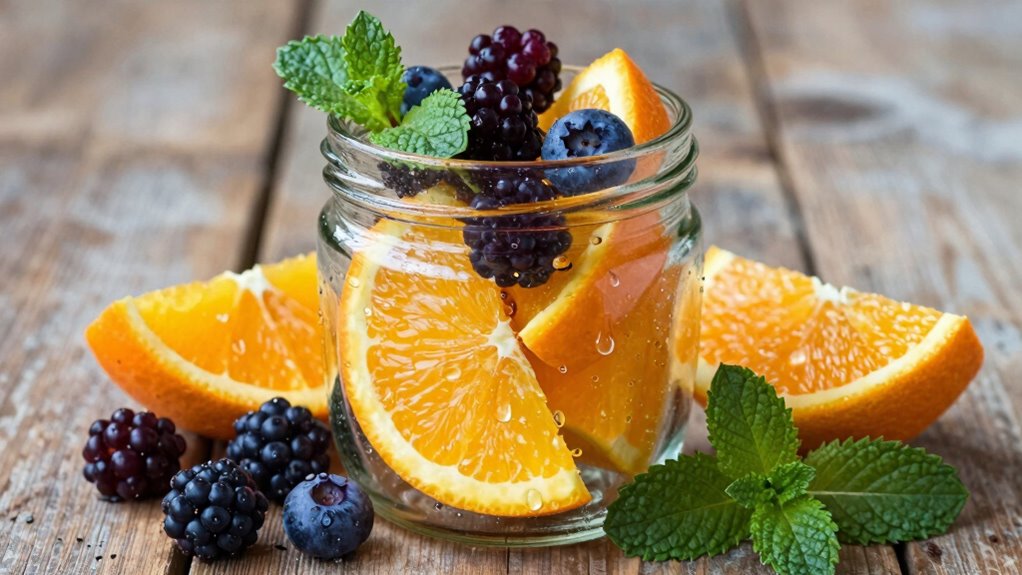

To create better juice blends, master the sweet-sour-bitter rule by balancing these elements to suit your taste. Start with a tart citrus base, then add natural sweetness like apple or pear to soften acidity. Incorporate bitter greens or herbs to add depth and complexity. Experiment with ingredient pairings, tasting as you go, to develop harmony. If you want to learn how these techniques work together, keep exploring the art of flavor balancing.
Key Takeaways
- Start with a tart citrus base to set a balanced flavor foundation.
- Combine sweet ingredients like apple or pear to soften sour notes.
- Incorporate bitter elements such as greens or herbal infusions for depth.
- Adjust sweetness or acidity gradually with honey, citrus, or bitter greens for harmony.
- Taste frequently and refine by experimenting with ingredient proportions for optimal balance.
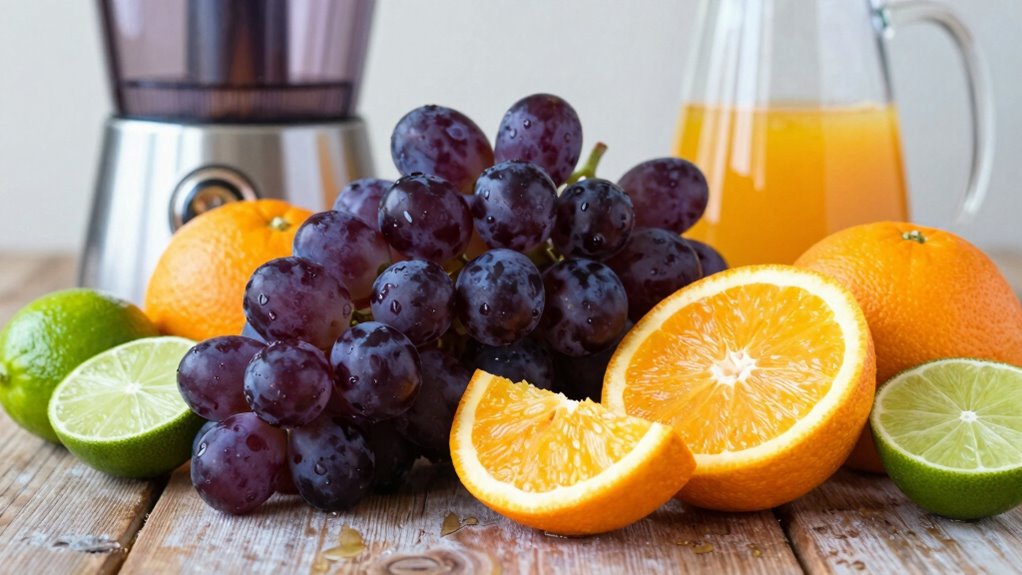
When blending juices, understanding the sweet-sour-bitter rule can make all the difference in creating a balanced and flavorful drink. This rule acts as a guiding principle, helping you achieve the perfect harmony of flavors that appeal to the palate. You’ll find that mastering flavor balancing is key to making juice blends that are neither too overpowering nor too bland. It’s all about how you pair your ingredients to enhance or tone down specific taste elements. For example, if you start with a tart citrus base, adding a touch of natural sweetness, like apple or pear, can soften the acidity and create a more inviting flavor profile. Conversely, if your blend leans toward sweetness, incorporating a hint of bitterness—such as a splash of bitter gourd or a dash of herbal infusions—can add depth and complexity.
Ingredient pairing is crucial when applying the sweet-sour-bitter rule. Think of your ingredients as building blocks; selecting the right combination ensures each flavor interacts well rather than clashing. For instance, pairing sweet pineapples with sour lemons creates a lively, well-rounded citrusy punch. If you want to introduce bitterness, consider ingredients like kale or radicchio, which can provide a subtle bitter note that balances the sweetness and acidity. The goal here is to craft a well-rounded taste experience, where no single flavor dominates excessively. When you experiment with ingredient pairing, you learn how different elements influence the overall flavor, helping you fine-tune your blends. Additionally, understanding flavor interaction can help you predict how ingredients will combine to achieve the desired taste. Developing an understanding of taste balance can also improve your ability to create consistent and harmonious juice blends. Recognizing how ingredient interactions influence flavor harmony is essential for refining your recipes over time.
Another vital aspect of flavor balancing is understanding how to adjust the sweetness, acidity, and bitterness levels based on your preferences. If your blend feels too sour, a small amount of honey or agave syrup can round out the sharpness. If it’s too bitter, adding sweeter fruits or a splash of coconut water can mellow the bitterness without overpowering the blend. Conversely, if the juice is overly sweet, a splash of citrus or a touch of bitter greens can bring it back into balance. The key is to taste as you go, making incremental adjustments to perfect the harmony. Over time, you’ll develop an intuitive sense for ingredient pairing and flavor balancing, transforming your juice blends into delightful, well-rounded drinks.
electric juicer for fruit and greens
As an affiliate, we earn on qualifying purchases.
As an affiliate, we earn on qualifying purchases.
Frequently Asked Questions
How Do I Adjust the Sweetness Level in My Juice Blends?
To adjust the sweetness level in your juice blends, start by tasting your mix and decide if it needs more sweetness or less. For added sweetness, incorporate flavor pairing ingredients like honey or agave syrup. If it’s too sweet, consider ingredient substitution with tart fruits like citrus or green apples to balance the flavor. Always make small adjustments, tasting as you go, to achieve the perfect balance in your juice.
Can the Rule Be Applied to Other Beverage Types Besides Juice?
Absolutely, you can apply the Sweet-Sour-Bitter Rule to other beverages like smoothies, teas, or cocktails. It helps you balance flavor pairings and make ingredient substitutions more effectively. By considering these taste elements, you can enhance complexity and harmony in your drinks. Adjusting sweetness, sourness, or bitterness can transform your beverage, making it more enjoyable and tailored to your preferences. It’s a versatile tool for crafting better, more balanced drinks.
What Are Common Mistakes When Balancing Sweet, Sour, and Bitter Flavors?
One common mistake is overemphasizing sweetness, which disrupts flavor harmony and skews taste perception. For example, a cocktail with too much syrup can drown out sour and bitter notes, making it overly cloying. You should aim for a balanced blend, ensuring each flavor complements the others. Ignoring the interplay causes an uneven taste experience, so taste frequently and adjust gradually for a harmonious, well-rounded beverage.
How Does Temperature Affect the Perception of These Flavors?
Temperature considerably impacts flavor perception and flavor harmony in your juice blends. When you serve a beverage cold, sour and bitter flavors become more subdued, while sweetness may seem more intense. Warm temperatures enhance sour and bitter notes, making them more prominent. Understanding temperature sensitivity helps you craft balanced drinks, as adjusting serving temperature can either emphasize or mellow specific flavors, ensuring your juice blends achieve ideal harmony and appeal.
Are There Any Health Benefits Associated With Balancing These Flavors?
Did you know that balancing flavors can enhance not just taste but health benefits too? When you create flavor harmony in your juice blends, you may boost antioxidants and improve digestion. Combining sweet, sour, and bitter elements can support immune health and reduce inflammation. By thoughtfully balancing these flavors, you nourish your body and enjoy your juice more, making every sip a healthier and more enjoyable experience.
Conclusion
By mastering the sweet-sour-bitter rule, you hold the key to creating juice blends that dance on your taste buds like a perfectly choreographed orchestra. Think of these flavors as musical notes—each one must be in harmony to craft a symphony that delights and surprises. When you balance these elements, your juice becomes more than just a drink; it transforms into a revitalizing masterpiece. So, trust this rule, and let your flavor creativity soar like a bird in flight.