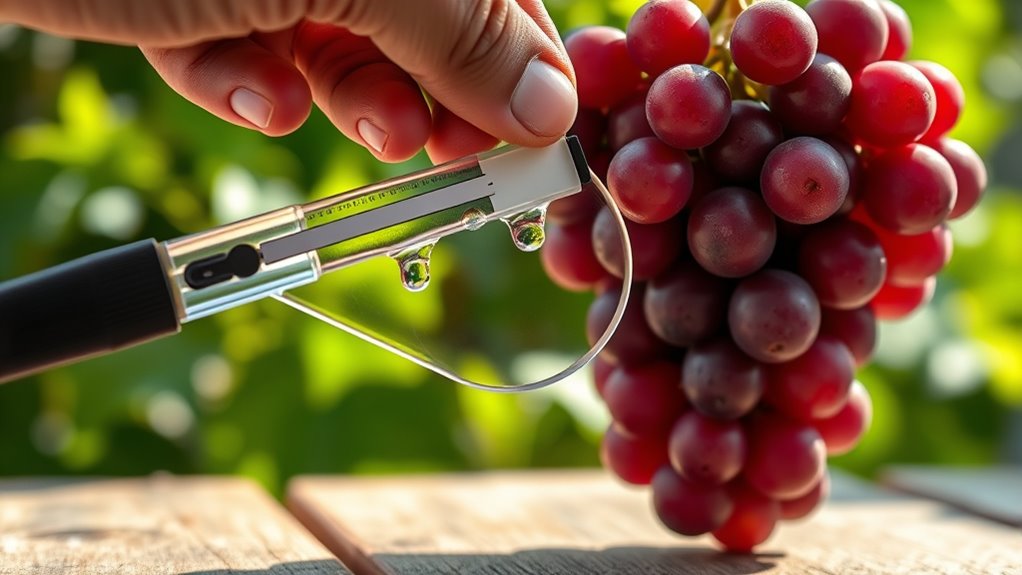

To test Brix levels at home, you can use a simple handheld refractometer. First, calibrate it with a distilled water solution to make certain of accuracy. Then, wash and crush your sample, placing a few drops on the prism without overflow. Close the cover and look through the eyepiece to read the Brix value. Maintaining proper sample preparation and calibration helps guarantee reliable results. If you keep exploring, you’ll find more tips for accurate testing.
Key Takeaways
- Use a handheld refractometer, a simple device that measures sugar content directly from fruit or beverage samples.
- Calibrate the refractometer with distilled water before testing to ensure accurate Brix readings.
- Prepare samples by washing, crushing, or straining to obtain a clear liquid for testing.
- Place a few drops of the sample on the prism, close the cover, and read the Brix level through the eyepiece or digital display.
- Maintain consistent temperature and clean the device after each use for reliable, at-home Brix measurements.
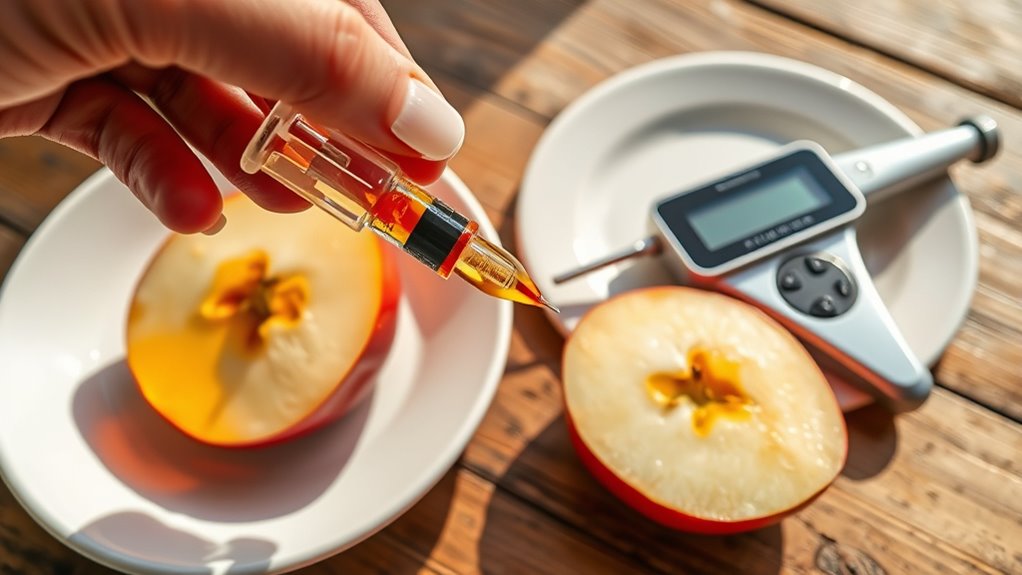
Testing Brix at home is a straightforward way to measure the sugar content of fruits, vegetables, or homemade beverages. It’s a handy method that provides quick results without needing expensive equipment or lab analysis. To get accurate readings, you’ll need a refractometer, a device that determines Brix levels by measuring the refractive index of a liquid sample. Before using your refractometer, it’s important to perform proper refractometer calibration. This step guarantees your measurements are precise and reliable. Most refractometers come with a calibration solution, usually distilled water with a known refractive index. To calibrate, you simply place a few drops of this solution on the device’s prism, close the cover, and then adjust the calibration screw until the reading shows 0 Brix. Doing this regularly guarantees your measurements stay accurate, especially if the device is used frequently or exposed to temperature changes.
Sample preparation is a vital step before testing Brix. You want to make sure your sample is well-prepared to avoid skewed readings. For fruits and vegetables, this means thoroughly washing and, if necessary, crushing or blending to create a uniform liquid. For homemade beverages like juice or wine, strain out any pulp, seeds, or solids that could interfere with the refractometer’s measurement. When preparing your sample, aim for a few drops—usually enough to cover the prism surface without overflow. It’s best to test fresh samples at room temperature, since temperature variations can affect the refractive index and lead to inaccurate results. If your sample is cold or hot, give it a moment to reach room temperature before testing.
Once your sample is prepared and your refractometer is calibrated, place a few drops onto the prism. Close the cover gently to spread the liquid evenly, then look through the eyepiece or digital display to read the Brix level. Keep in mind that consistent sample preparation and calibration are key to obtaining trustworthy results. Regularly cleaning the prism after each use prevents residue buildup, which can also affect accuracy. Additionally, understanding the contrast ratio of your system can help you better interpret the visual cues in your samples and ensure consistent measurements. By following these simple steps—calibrating your refractometer properly and preparing your samples thoroughly—you’ll be able to monitor sugar levels effectively at home. Whether you’re checking the ripeness of fruit, brewing a batch of homemade wine, or experimenting with new juice recipes, accurate Brix testing can help you achieve the desired sweetness and quality in your culinary projects.
Frequently Asked Questions
Can I Use Household Items to Test Brix Levels Accurately?
You can’t rely on household items for accurate homemade testing of Brix levels. While you might try using common kitchen tools, accuracy concerns arise because these tools aren’t calibrated for precise measurements. To guarantee reliable results, invest in a proper refractometer or Brix meter. This way, you get consistent, trustworthy readings, avoiding the pitfalls of makeshift methods that could lead to incorrect assessments of your produce or liquids.
How Often Should I Test Brix During Fruit Ripening?
Like a gardener tending to every bloom, you should test Brix levels regularly during fruit ripening to catch the perfect moment. For the best results, follow your fruit’s ripening schedule and test at least weekly, or more often if rapid changes occur. This ideal testing frequency helps you monitor sugar development, ensuring you harvest at peak flavor. Stay attentive, and your patience will pay off with delicious, perfectly ripe fruit.
Are Digital Brix Meters More Reliable Than Analog Ones?
Digital Brix meters are generally more reliable than analog ones because they often feature digital calibration, ensuring consistent accuracy over time. While analog meters can be precise, they depend heavily on your manual calibration and can be affected by user error. Digital devices offer easier readability and typically maintain their accuracy longer, making them a better choice for consistent Brix testing during fruit ripening.
What Is the Ideal Brix Range for Different Fruits?
Think of fruit maturity like a symphony reaching its crescendo. For berries, aim for a Brix of 10-12; apples thrive at 14-16; grapes reach harmony around 20-24. Knowing these ranges helps you pick the perfect harvesting timing, ensuring sweetness and flavor. Monitoring Brix gives you a clear cue, guiding you to harvest at peak ripeness for ideal fruit quality and taste.
How Do Temperature Fluctuations Affect Brix Readings at Home?
Temperature fluctuations can skew your brix readings, so maintaining temperature stability is essential. When you measure, make certain your samples are at a consistent temperature, ideally at room temperature, to get accurate results. Use calibration techniques, like calibrating your refractometer with distilled water, regularly, especially if the device has been exposed to varying temperatures. This way, you’ll maintain accurate readings despite environmental changes.
Conclusion
Now that you know how easy it is to test Brix at home, you’re empowered to take control of your harvest or juice quality. With simple tools in hand, you can enjoy the precision of a lab without leaving your kitchen. It’s a small step that leads to better tasting, perfectly ripened fruits. In a world filled with complex equipment, your homemade Brix test offers clarity—simple, accurate, and right at your fingertips.

Cindy thoroughly researches juicing trends, techniques, and recipes to provide readers with practical advice and inspiration. Her writing style is accessible, engaging, and designed to make complex concepts easy to understand. Cindy’s dedication to promoting the advantages of juicing shines through her work, empowering readers to make positive changes in their lives through the simple act of juicing.