
You need acidity in tropical juices because it keeps them lively, fresh, and full of vibrant flavor. Acidity enhances the brightness by balancing the sweetness and preventing the juice from tasting dull or flat. It also acts as a natural preservative, stopping spoilage and extending shelf life. Managing acidity carefully guarantees your juice stays flavorful and safe over time. If you want to discover how precise acidity control impacts quality, keep exploring further.

Get kitchen staples and gadgets delivered free with Prime
- Fast, free delivery on millions of items
- Prime Video, Amazon Music and more included
- Member-only deals all year
Key Takeaways
- Acidity enhances the lively, vibrant flavor that characterizes tropical juices.
- Proper acidity balances sweetness, maintaining the juice’s bright, refreshing taste.
- Acids act as natural preservatives, preventing spoilage and preserving freshness.
- Maintaining optimal pH levels controls microbial activity, ensuring product safety and flavor stability.
- Consistent acid levels during processing help retain the juice’s brightness and overall quality.
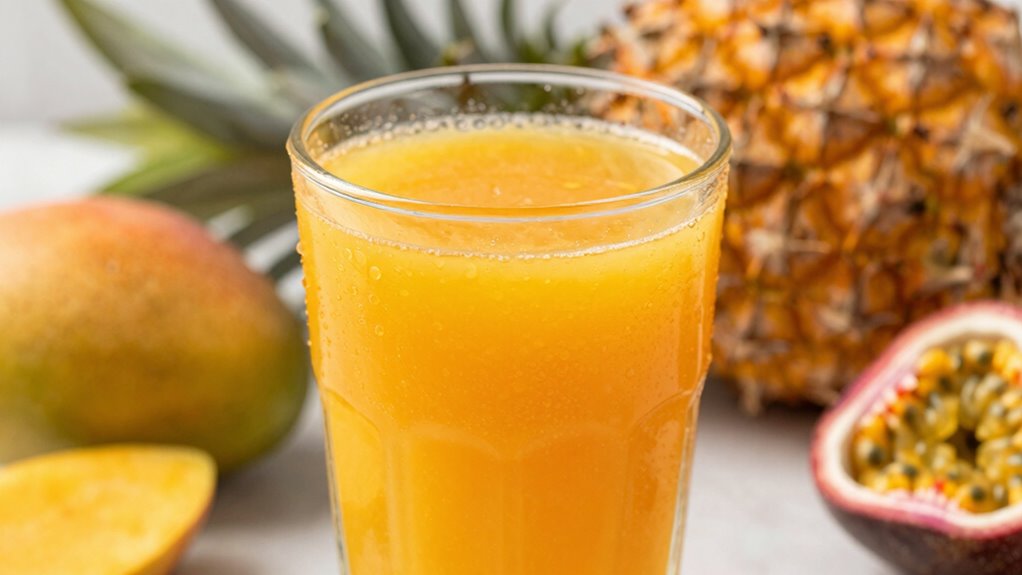
Tropical juices are known for their vibrant flavors and invigorating qualities, but many of them also contain a significant level of acidity that can affect your digestion and overall health. This acidity isn’t just a byproduct; it plays a pivotal role in maintaining the juice’s bright, fresh taste. Without sufficient acidity, tropical juices can taste dull, flat, or overly sweet, losing the lively characteristic that makes them so appealing. The key to this brightness lies in the delicate balance of acidity and sweetness, which is achieved through careful flavor balancing during processing.
Acidity in tropical fruit juices isn’t accidental; it’s indispensable for preserving their fresh qualities and preventing spoilage. The natural acids, like citric, malic, and ascorbic acids, act as natural preservatives and help maintain the vibrant flavors over time. When you process these juices, understanding fermentation processes becomes essential. Fermentation, in particular, can influence acidity levels—either enhancing or diminishing them—depending on how it’s managed. Proper fermentation ensures that the natural acids develop just enough to boost flavor without overpowering the fruit’s inherent brightness. Fermentation control is crucial for producers aiming to maintain the ideal flavor profile. Additionally, understanding the role of microbial activity** can help optimize fermentation to preserve acidity and flavor. Moreover, pH balance plays a significant role in controlling microbial growth and ensuring the preservation of the juice’s natural qualities. Maintaining optimal acid levels** is vital for both flavor and safety, making precise control a priority during production.
A thorough understanding of fermentation processes and their impact on acidity can also aid in customizing juice profiles to meet consumer preferences, ensuring a consistent and high-quality product.
As an affiliate, we earn on qualifying purchases.
Frequently Asked Questions
How Does Acidity Affect the Shelf Life of Tropical Juices?
Acidity extends the shelf life of tropical juices by improving pH stability and inhibiting microbial growth. When you add acids, you lower the pH, making the environment less hospitable for bacteria and molds. This microbial inhibition slows spoilage, keeping your juice fresh longer. Maintaining the right acidity level guarantees your tropical juice remains vibrant, safe to consume, and retains its flavor and quality during storage.
Can Adding Acidity Improve Flavor Balance in Tropical Juice Blends?
Adding acidity can indeed improve flavor balance in tropical juice blends. It enhances flavor by brightening the overall taste and creates a more invigorating, vibrant profile. Investigating ingredient compatibility reveals that acidity works well with fruits like pineapple or citrus, enhancing their natural sweetness without overpowering. This flavor enhancement helps achieve a harmonious blend, making the juice more appealing and well-rounded for consumers seeking a balanced, tropical experience.
Are There Natural Alternatives to Acids for Preserving Tropical Juices?
Yes, natural alternatives like natural enzymes and fermentation processes can help preserve tropical juices. Natural enzymes, found in fruits like pineapple and papaya, can break down unwanted microbes, extending shelf life. Fermentation processes introduce beneficial bacteria that inhibit spoilage. These methods maintain the juice’s brightness and flavor without added acids, making your tropical drinks healthier and more natural. Just guarantee proper fermentation conditions for peak results.
How Does Acidity Influence the Nutritional Content of Tropical Juices?
Did you know that acidity can boost the vitamin C content in tropical juices? Acidity influences nutritional content by aiding in pH regulation, which preserves essential nutrients and enhances flavor. When you maintain proper acidity, it prevents nutrient degradation and guarantees your juice remains nutritious and flavorful. So, acidity doesn’t just brighten the taste; it also protects the health benefits, making your tropical juice a more potent source of vitamins and antioxidants.
What Are Common Acids Used in Commercial Tropical Juice Production?
In commercial tropical juice production, common acids include citric, malic, and ascorbic acids, chosen for their ability to lower fruit pH and preserve freshness. These acidulant types enhance flavor, stability, and safety by preventing microbial growth. You’ll often see citric acid used for its bright, tangy taste, while malic adds a smooth, apple-like flavor. Keeping proper acidity guarantees your juice stays vibrant, fresh, and delicious.
Conclusion
So next time you sip on that vibrant tropical juice, remember the tiny splash of acidity is what keeps it lively and bright. It’s like a secret ingredient, quietly balancing sweetness and enhancing flavor, just like a gentle breeze that suddenly awakens a lush jungle. That perfect tang isn’t just a coincidence—it’s the harmony that makes every glass feel like a sun-drenched paradise. Cheers to the little things that make your tropical escape unforgettable.
NFL season / tailgating Picks
team gear
As an affiliate, we earn on qualifying purchases.