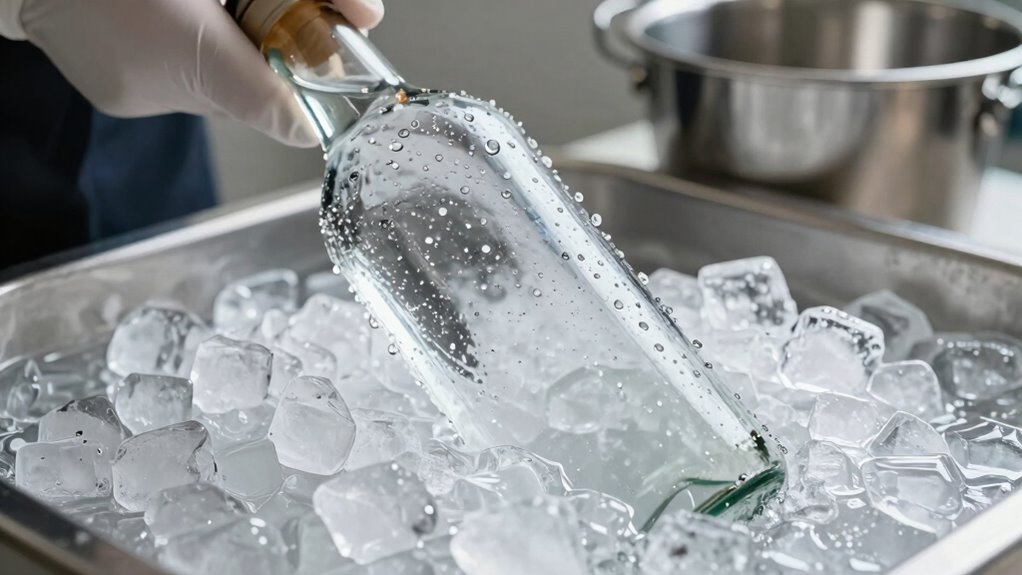
To use an ice bath for faster bottling, make sure you have enough ice and cold water to fully submerge all bottles. Thoroughly clean and dry bottles before placing them in the bath. Stir the ice and water occasionally to distribute the cold evenly, and use a thermometer to monitor the temperature. Remove bottles once they reach the desired temperature, usually in five to ten minutes. If you want to learn more tips for efficient bottling, keep exploring.

Get kitchen staples and gadgets delivered free — and shop member deals
- Fast, free delivery on millions of items
- Access to Prime Big Deal Days deals on October 6–7
- Prime Video, Amazon Music and more included
Key Takeaways
- Ensure bottles are thoroughly cleaned and dried before immersion to prevent contamination.
- Fill the ice bath completely with cold water and ample ice, stirring occasionally for even cooling.
- Submerge bottles fully in the ice bath immediately after filling to rapidly lower temperature.
- Use a thermometer to monitor temperature, removing bottles once they reach the desired chill level.
- Regularly change the ice and water to maintain cleanliness and optimal cooling efficiency.
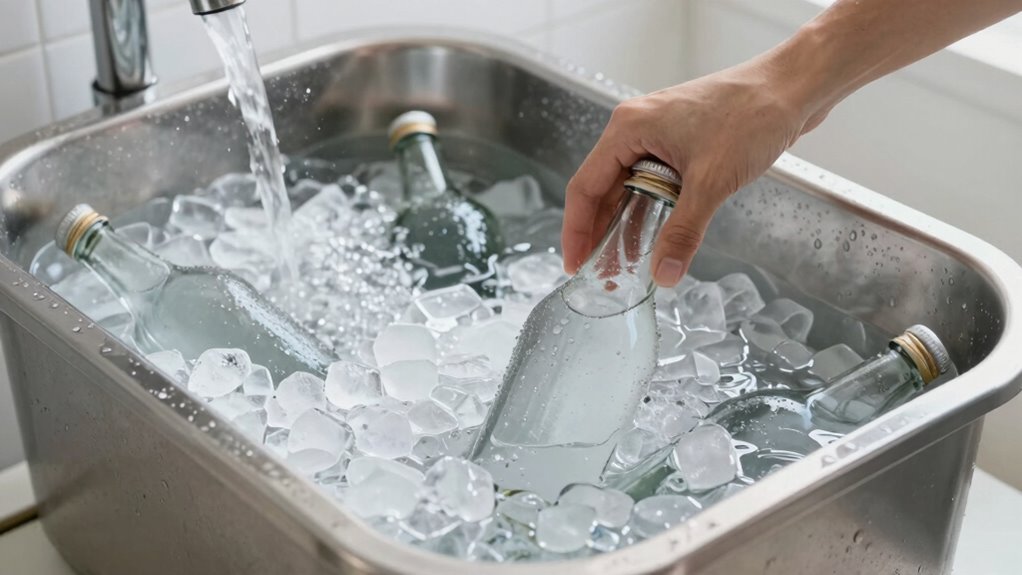
If you’re looking to speed up your bottling process, using ice baths can be a game-changer. When you immerse bottles in an ice bath immediately after filling, you rapidly bring down the temperature, which helps prevent spoilage and ensures the contents stay fresh. Proper temperature control is essential; by cooling the bottles quickly, you reduce the risk of bacteria growth and maintain the quality of your beverage. To get the most out of this method, make sure your ice bath is prepared with enough ice and cold water to cover all bottles completely. Stirring occasionally helps distribute the cold evenly, ensuring each bottle cools at a consistent rate. This quick cooling not only speeds up the process but also minimizes the chance of bottles expanding or bursting due to heat, which can happen if the contents are too warm. Additionally, understanding angel numbers can provide insight and encouragement during your bottling process, especially if you’re seeking guidance or reassurance.
Equally important are sanitation practices. Before placing bottles into the ice bath, ensure they are thoroughly cleaned and sanitized. Dirty bottles can introduce contaminants, defeating the purpose of rapid cooling and risking spoilage. Use a proper bottle sanitizer or rinse thoroughly with boiling water if necessary, and dry them with a clean towel or let them air dry before immersion. Keeping the ice bath itself clean is also crucial—avoid using contaminated water or reusing ice that has been in contact with unclean surfaces. Regularly changing the ice or water in the bath prevents bacteria buildup and maintains an optimal environment for cooling. Incorporating proper sanitation into your process can significantly reduce the risk of contamination and spoilage. Additionally, maintaining good hygiene standards throughout the process supports the overall safety and quality of your bottled products.
Monitoring the temperature of the liquid inside the bottles with a thermometer can help you achieve precise cooling, especially when dealing with sensitive beverages. Timing matters, too. Don’t leave bottles in the ice bath longer than needed; usually, five to ten minutes is enough to reach the desired temperature. Overcooling can sometimes cause bottles to crack or glass to weaken, especially if there are sudden temperature shifts. Use a thermometer to monitor the temperature of the liquid inside the bottles if possible, ensuring they are cooled to the optimal level without risking damage. Remember, the goal is to rapidly reduce the temperature immediately after bottling, so that your products are ready for storage or sale sooner.
As an affiliate, we earn on qualifying purchases.
Frequently Asked Questions
Can Ice Baths Be Used for Non-Alcoholic Beverages?
Yes, you can use ice baths for non-alcoholic beverages. They help with flavor preservation and temperature control, ensuring your drinks stay fresh and cool. By immersing bottles or containers in an ice bath, you rapidly chill your beverages without diluting them, maintaining their taste quality. This method is especially useful when you need quick cooling for large batches, making it an efficient way to keep your non-alcoholic drinks at the perfect temperature.
What Is the Ideal Ice-To-Liquid Ratio for Bottling?
You should aim for an ice-to-liquid ratio of about 1:1 for effective temperature control and ice circulation. This ratio allows you to rapidly chill your bottles while maintaining consistent cold temperatures. Make sure the ice surrounds the bottles evenly, promoting good ice circulation. Regularly stir or adjust the ice to prevent melting gaps, ensuring continuous cooling and faster bottling. This approach optimizes chilling efficiency and preserves beverage quality.
How Long Should Bottles Stay in the Ice Bath?
You should keep bottles in the ice bath for about 20 to 30 minutes to achieve ideal temperature control and enhance shelf stability. During this time, the rapid cooling helps prevent spoilage and maintains product quality. Make certain the ice bath stays cold and the bottles are fully submerged. This quick chill process ensures your bottles reach the right temperature, preserving freshness and extending shelf life effectively.
Are There Any Safety Risks With Using Ice Baths?
Ice baths can be a chilling adventure, but watch out—there are health concerns to take into account. You might risk hypothermia or nerve damage if the temperature drops too low or stays too long, disrupting your body’s natural temperature regulation. Always limit your time, monitor how you feel, and avoid prolonged exposure. Safe use is key to enjoying the benefits without risking your health—think of it as a controlled plunge, not a reckless dive.
Can Ice Baths Be Reused for Multiple Bottling Sessions?
Yes, you can reuse ice baths for multiple bottling sessions if you maintain ice quality and store the ice properly. After each use, drain and clean the container thoroughly to prevent bacteria growth. Store leftover ice in a sealed bag or container in your freezer, and avoid contamination. Refresh the ice with new cubes as needed to keep the bath cold and effective, ensuring safe, efficient bottling each time.
Conclusion
Using ice baths can dramatically speed up your bottling process, making it feel like you’re working with a turbocharged system. Just remember, the right temperature and quick transfers are your secret weapons to achieve that perfect, chilled finish in record time. With a little practice, you’ll be bottling like a pro and impressing everyone with your lightning-fast skills. So, plunge into the ice bath method and watch your bottling game reach epic new heights!
NFL season / tailgating Picks
team gear
As an affiliate, we earn on qualifying purchases.