If you cook often and need to prep large amounts of vegetables quickly, a food prep machine can be a worthwhile investment. It saves time, reduces physical effort, and guarantees consistent cuts every time. If you prepare veggies occasionally or have a tight budget, manual tools might suffice. Consider your cooking habits and volume to decide if it’s worth it. Keep exploring to discover more tips on choosing the right vegetable cutter for your needs.
Key Takeaways
- Assess your cooking frequency and vegetable volume to determine if the efficiency benefits justify the investment.
- Consider electric models for large batches and frequent use, manual tools for occasional, smaller tasks.
- Evaluate the machine’s performance, durability, and ease of cleaning to ensure long-term value.
- Weigh the time saved and effort reduced against the initial cost and storage space required.
- Match the cutter’s features with your culinary needs to enhance productivity and consistency in meal prep.
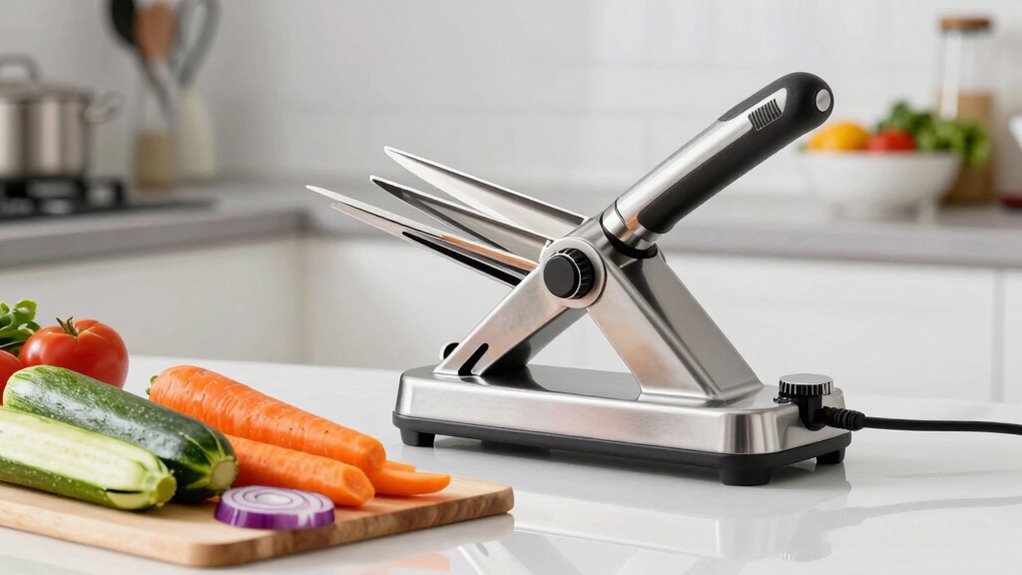
Food prep machines have revolutionized the way you cook by making everyday tasks faster and more efficient. When it comes to vegetable cutters, this transformation is especially noticeable. These devices take manual operation out of your prep routine, reducing the effort and time it takes to chop, slice, or dice produce. Instead of spending minutes with a knife, you can get perfectly cut vegetables in seconds, freeing up your time for other culinary tasks. This shift from manual operation to automated or semi-automated processes highlights one of the key advantages of modern food prep machines. They eliminate the physical strain and uneven results often associated with manual slicing, giving you consistent, professional-looking cuts every time.
Food prep machines speed up cooking and deliver consistent, professional cuts effortlessly.
But beyond the convenience, you should also consider the electric efficiency of these devices. Many vegetable cutters are designed to run on electricity, which means they offer a much quicker and more energy-efficient way to prepare large quantities of vegetables. With the push of a button, you can process dozens of carrots or potatoes without tiring your hand or risking uneven slices. Electric models tend to have powerful motors that handle tougher vegetables with ease, saving you time and effort. This increased electric efficiency not only speeds up your meal prep but also helps conserve energy compared to continuous manual effort, especially when you’re working on larger batches.
When deciding if a vegetable cutter is worth it, think about how often you cook and the volume of vegetables you typically prepare. If you regularly make salads, stir-fries, or batch cook meals, investing in a good food prep machine makes sense. It can turn a tedious chore into a quick task, giving you more time to focus on flavors and presentation rather than repetitive chopping. On the other hand, if you only occasionally need to prep vegetables, a manual tool like a hand-held slicer or grater might suffice. These manual options require no power, tend to be less expensive, and are easier to store, but they may also require more effort and time.
Ultimately, a vegetable cutter’s value hinges on your cooking habits and priorities. If you value efficiency, uniformity, and saving physical effort, then the electric models are likely worth the investment. They streamline your workflow, reduce fatigue, and produce consistent results, making them a great addition to busy kitchens. Additionally, choosing a model with advanced technology can further enhance performance and longevity. Conversely, if your cooking is more casual or infrequent, sticking with manual tools may be more practical and budget-friendly. Either way, understanding the balance between manual operation and electric efficiency will help you decide whether a vegetable cutter fits your needs and enhances your cooking experience.
Frequently Asked Questions
Are Vegetable Cutters Safe for Children to Use?
Vegetable cutters can be safe for children if you consider child safety and user age. Always supervise kids during use, especially for younger children, and choose models with safety features like blade guards. For older children, guarantee they understand proper handling and follow instructions carefully. Ultimately, assess your child’s maturity and skill level; with proper supervision and safety measures, vegetable cutters can be a helpful and safe kitchen tool for kids.
How Much Space Do Vegetable Cutters Typically Require?
Vegetable cutters usually need about 8 to 12 inches of countertop space, depending on the model. Consider your storage space and countertop footprint before buying one. Compact options are great if you have limited room, but larger, multifunctional cutters might require more storage and workspace. Measure your available kitchen space to guarantee it fits comfortably without cluttering, so you can use it safely and efficiently when preparing meals.
Can Vegetable Cutters Handle Large Quantities Quickly?
Yes, vegetable cutters can handle large quantities quickly, especially electric models designed for efficiency. You might find manual operation too slow for big jobs, but electric cutters make quick work of bulk prep. If you’re short on time and need speed, opting for an electric vegetable cutter is worth it, as they process large amounts rapidly, saving you effort and ensuring consistent results.
Do Vegetable Cutters Come With Replacement Parts or Blades?
Yes, vegetable cutters often come with replacement blades and maintenance accessories. You can typically find replacement blades to keep your device running smoothly, especially if you frequently use it. Maintenance accessories like cleaning brushes and lubricants help extend its lifespan. When purchasing, check if the manufacturer offers these parts separately, ensuring you have everything you need for easy maintenance and continued efficient performance.
Are There Models Suitable for Commercial Kitchen Use?
Yes, there are vegetable cutters designed specifically for commercial kitchens. These models feature commercial quality construction, ensuring they withstand heavy daily use. Look for units made with durable materials like stainless steel and heavy-duty plastics, which offer kitchen durability. Investing in a commercial-grade vegetable cutter can boost efficiency and safety, making it a worthwhile addition for any busy restaurant or catering operation.
Conclusion
So, when you’re weighing whether a vegetable cutter is worth it, think about how much time and effort it could save you in the kitchen. Will it truly streamline your prep work and make cooking more enjoyable? Remember, investing in the right food prep machine can transform your culinary routine—so ask yourself: is convenience worth the small expense? Ultimately, the decision depends on how much value you place on efficiency and ease in your daily cooking.