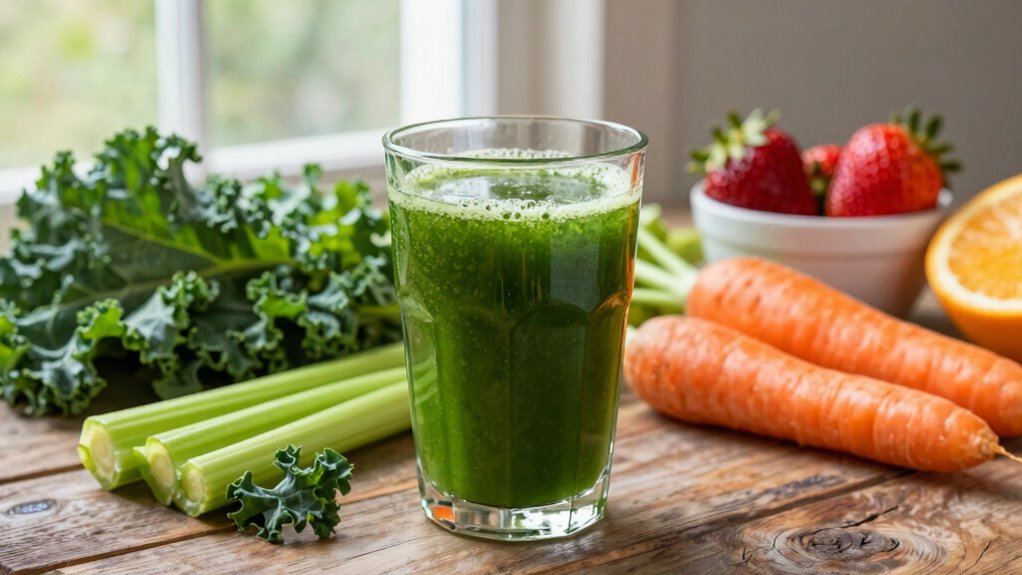
You’ll find that adding fruit to vegetable juices makes them taste better by balancing bitterness and adding natural sweetness. This not only improves flavor but also appeals to a wider audience, especially those hesitant about vegetable flavors. Combining fruits with vegetables creates vibrant, enjoyable drinks that stand out on shelves. If you want to discover how strategic blending can transform healthy drinks into everyday favorites, keep exploring these flavor pairing secrets.

Get kitchen staples and gadgets delivered free — and shop member deals
- Fast, free delivery on millions of items
- Access to Prime Big Deal Days deals on October 6–7
- Prime Video, Amazon Music and more included
Key Takeaways
- Vegetables often have subdued or bitter flavors, which can deter consumers from trying or repeatedly purchasing pure vegetable juices.
- Adding fruit enhances sweetness and flavor complexity, making vegetable juices more appealing and enjoyable.
- Fruit ingredients help mask bitter vegetable tastes, attracting a broader audience, including those new to vegetable-based drinks.
- Incorporating fruit creates vibrant, flavorful products that stand out and are perceived as indulgent rather than solely healthy.
- Flavor harmony between fruit and vegetables increases consumer acceptance and encourages habitual consumption of vegetable juices.
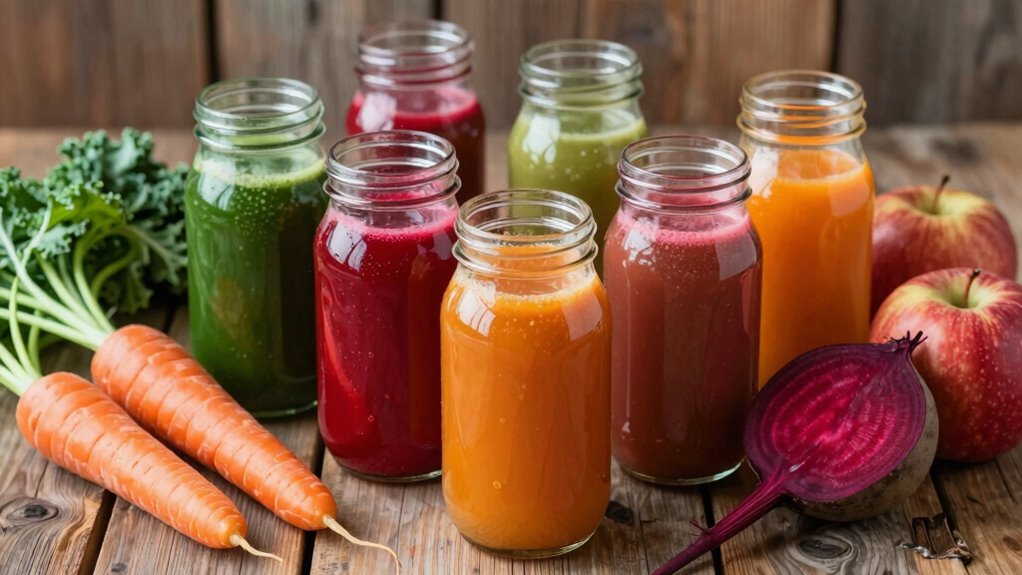
Many people turn to vegetable and fruit juices as a quick and convenient way to boost their daily intake of essential nutrients. However, not all vegetable juices automatically appeal to a wide audience. One of the main challenges lies in achieving the right flavor balance. Vegetables tend to have a more subdued or bitter taste compared to fruits, which are naturally sweet and inviting. When you drink pure vegetable juice, you might find it lacking in sweetness or flavor complexity, making it less appealing to those new to healthy drinks. To attract a broader customer base, many producers blend vegetables with fruits, balancing the bitterness with sweetness and creating a more palatable beverage. This combination not only enhances flavor but also makes the juice more enjoyable, encouraging repeat consumption.
Marketing strategies play an essential role in how these juices are perceived and accepted by consumers. Juices that are labeled solely as vegetable-based might struggle to find their audience, especially among those unfamiliar with or hesitant about vegetable flavors. Using appealing imagery, health benefits, and emphasizing taste can make a significant difference. When fruit is added, it’s easier to market the juice as delicious and invigorating rather than just healthy or detoxifying. Highlighting the natural sweetness and flavor harmony can attract people who might otherwise dismiss vegetable juices. Additionally, clever marketing can position these drinks as lifestyle choices—perfect for busy mornings or post-workouts—further broadening their appeal.
Incorporating fruit into vegetable juices isn’t just about taste; it’s a strategic move that impacts how the product is received in the marketplace. Consumers often associate fruit flavors with indulgence and enjoyment, making them more receptive to trying vegetable juices when they’re sweetened naturally. This strategy also helps in creating a more vibrant, colorful product that catches the eye on store shelves. By focusing on flavor balance, producers can craft a product that satisfies taste buds while still delivering nutritional benefits. Meanwhile, smart marketing strategies emphasize the harmony of taste and health, making these juices accessible and desirable. When fruit joins forces with vegetables, it’s not just about improving flavor—it’s about expanding the audience and turning healthy drinks into everyday favorites. Additionally, understanding the flavor profile of ingredients can help producers craft more appealing juice combinations. Recognizing the importance of flavor harmony can further enhance the success of these beverages in a competitive market.
Frequently Asked Questions
How Do Fruit Flavors Enhance Vegetable Juice Taste?
Fruit flavors enhance vegetable juice taste by masking bitter or earthy notes, making the drink more appealing. They also improve texture, adding natural sweetness and smoothness that balance the vegetable’s strong flavors. When you add fruit, you create a more enjoyable experience, encouraging you to drink more. This combination not only masks undesirable flavors but also boosts overall flavor masking and texture enhancement, making vegetable juices more attractive to a wider audience.
Are There Health Benefits to Mixing Fruits With Vegetables?
Mixing fruits with vegetables offers health benefits through flavor masking and nutrient synergy. Think of it like a team effort—fruits hide bitter tastes, encouraging you to drink more, while nutrients work together for greater health effects. For example, blending berries with spinach boosts vitamin C intake and enhances absorption of iron. This combination makes your juice not just tastier but more nutritious, supporting your overall health and well-being.
What Are Popular Fruit-Vegetable Juice Combinations?
You’ll find that popular fruit-vegetable juice combinations often feature apple and carrot for natural sweetness and versatility. Berry and spinach blends create a vibrant, nutrient-packed flavor pairing, while pineapple and cucumber offer a invigorating, tropical taste. These combinations showcase ingredient versatility, making juices more appealing to a broader audience. Experimenting with flavors helps balance the vegetable’s earthiness, encouraging more people to enjoy healthy, delicious drinks.
Do Fruit Additions Affect Juice Shelf Life?
Adding fruit can impact your juice’s shelf life because it influences preservation techniques and pH balance. Fruits often contain natural sugars and acids, which can promote microbial growth if not properly managed. To extend shelf life, you should monitor pH levels and consider pasteurization or refrigeration. These preservation techniques help maintain freshness and safety, ensuring your juice stays tasty and safe longer despite the added fruit.
How Do Fruit-Sweetened Vegetable Juices Compare Nutritionally?
Think of fruit-sweetened vegetable juices as a balanced symphony, where fruit acts as a gentle conductor. They offer better flavor masking, making veggies more appealing, but can slightly increase sugar content. Nutritional balance remains strong, as you still get essential vitamins and minerals. While they might have more natural sugars, they’re a tasty way to enjoy a variety of vegetables without compromising health benefits.
Conclusion
blending vegetables with fruit creates a symphony of flavors that can turn even the pickiest eater into a juice lover. By adding a touch of sweetness, you open the door to a wider audience, transforming healthy habits into a delightful experience. Just like a key opens a door, fruit can reveal the full potential of vegetable juices, inviting everyone to enjoy the vibrant health benefits. Embrace this harmony, and watch your audience grow like a garden in full bloom.
Fall Picks
fall essentials
As an affiliate, we earn on qualifying purchases.