
Pairing vitamin C-rich juices like orange or lemon with iron-rich foods helps your body absorb more iron. Vitamin C converts ferric iron to a form that’s easier to absorb and keeps it soluble. To maximize benefits, add citrus or drink citrus juice during or right after meals, and avoid drinks like tea that can block iron absorption. Keep exploring for more tips on how to boost your iron levels naturally and effectively.
Key Takeaways
- Consuming vitamin C-rich juices, like orange or lemon, during or after iron-rich meals enhances iron absorption.
- Vitamin C converts ferric iron to ferrous iron, improving solubility and bioavailability in the digestive tract.
- Pairing plant-based iron sources with citrus juices boosts nutrient synergy, especially for vegetarians and those with anemia.
- Avoid tannin-rich drinks such as tea and coffee around mealtime, as they hinder iron absorption.
- Incorporate high vitamin C fruits like strawberries or kiwifruit alongside iron-rich foods for optimal nutrient uptake.
Have you ever wondered how your body takes in iron from the foods you eat? The process of iron absorption is quite intricate, but one effective way to maximize it is by pairing iron-rich foods with vitamin C-rich juices. When you combine these, you create an environment that promotes enhanced bioavailability, meaning your body can absorb and utilize iron more efficiently. Vitamin C acts as a powerful enhancer by converting iron from its ferric form to ferrous iron, which is much easier for your intestines to absorb. This nutrient synergy boosts your overall iron uptake, especially important if you’re relying on plant-based sources of iron, which are often less bioavailable than animal products.
Consuming vitamin C-rich juices alongside iron sources isn’t just about individual nutrients; it’s about how they work together. For example, squeezing fresh orange juice over a spinach salad or drinking a glass of citrus juice with your lentils can markedly increase the amount of iron your body absorbs. The acidity in these juices creates an environment that keeps iron in its more soluble, absorbable form. It’s a simple yet effective trick to improve iron status, particularly for vegetarians or those with iron deficiency anemia. The key is to think of these foods and drinks as a nutrient synergy team, where each component amplifies the other’s benefits.
Pair vitamin C juices with iron-rich foods to boost absorption and maximize your nutrient synergy.
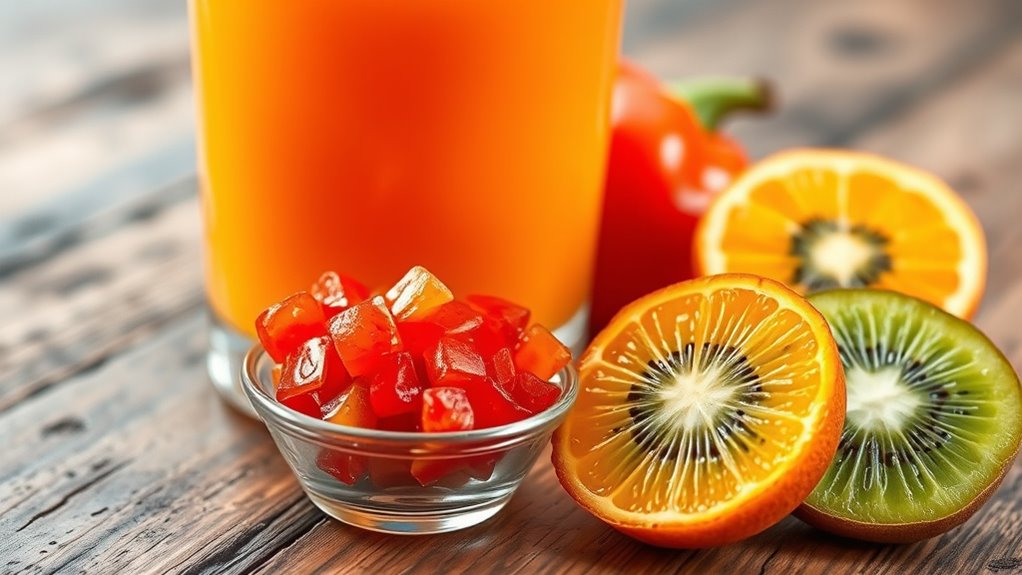
You don’t need to turn to supplements or complicated recipes to harness this benefit. Just include a splash of lemon or a glass of orange juice with your meals. The vitamin C doesn’t just help with iron absorption; it can also improve your overall nutrient intake. Many fruits and vegetables high in vitamin C, like strawberries, bell peppers, and kiwifruit, can be incorporated into your meals or beverages for a natural boost. This combination not only makes your meals more flavorful but also more effective at meeting your nutritional needs. Additionally, understanding the role of timing and food interactions can further optimize absorption.
Keep in mind that timing matters too. Drinking vitamin C-rich juice during or immediately after an iron-rich meal ensures that the nutrients are present in your digestive system simultaneously, maximizing absorption. Avoid drinking tea or coffee around mealtime, as their tannins can interfere with iron absorption, counteracting the benefits of your vitamin C intake. By paying attention to these small details, you create an environment in your gut that promotes better iron uptake through nutrient synergy, making your efforts to improve iron status more successful. In the end, pairing vitamin C-rich juices with iron-rich foods is a simple, delicious strategy to support your body’s iron absorption process.

hocvseo Pneumatic Capping Machine, Hand-Held Screw Capper with 6 Capping Head, Bottle Cap Sealing Tool, Max Speed 2500RPM, for Φ10-50mm Plastic Bottle
--BOTTLE CAPPING MACHINE: The Hand-Held Screw Capper has a wide capping range, and the capping is not limited...
As an affiliate, we earn on qualifying purchases.
Frequently Asked Questions
Can Vitamin C Improve Iron Absorption From Plant-Based Sources?
Yes, vitamin C can enhance iron absorption from plant-based sources. If you’re on a plant-based diet, consuming vitamin C-rich juices or foods alongside iron-rich plant foods creates nutrient synergy, making it easier for your body to absorb iron. Incorporate citrus fruits, bell peppers, or juices like orange or strawberry to maximize iron uptake. This simple step helps ensure you get enough iron and maintains your overall health.
Are There Specific Fruits That Enhance Iron Absorption Better Than Others?
You’re hitting the nail on the head—certain fruits with high vitamin C, like strawberries, kiwi, and citrus, are excellent iron absorption enhancers. These fruits outperform others because their vitamin C content helps your body absorb plant-based iron more efficiently. Including them in your meals can make a real difference, especially if you’re aiming to boost your iron levels naturally. So, go for these fruits to give your iron absorption a real leg up.
How Much Vitamin C Is Needed to Significantly Boost Iron Absorption?
You need about 25-100 mg of vitamin C to notably boost iron absorption, depending on your iron intake and individual needs. The recommended vitamin C doses reach iron absorption thresholds, meaning they’re enough to enhance iron uptake from plant-based sources. To maximize benefits, pair your meals with vitamin C-rich juices like orange or kiwi, ensuring you meet those ideal levels for better iron absorption and improved iron status.
Does Consuming Vitamin C With Iron Affect Iron Overload Risk?
Consuming vitamin C with iron doesn’t considerably increase your risk of iron overload if you’re healthy. Vitamin C helps your body absorb iron efficiently, but excessive supplementation could elevate iron levels over time. If you’re considering vitamin C supplements or high intake, especially with iron supplements, talk to a healthcare professional to avoid potential risks like iron overload. Moderate, balanced intake supports absorption without overdoing it.
Are There Any Foods That Hinder Iron Absorption Despite Vitamin C Intake?
Sure, some foods are like the stubborn gatekeepers of iron absorption. Phytates in whole grains and legumes cleverly interfere, making it harder for your body to grab iron. Calcium, found in dairy, also joins the party, competing directly with iron for absorption. So, if you’re chugging vitamin C-rich juice, don’t forget that these sneaky foods might still block your iron’s grand entrance.

Yokoma Semi-automatic Aluminum Screw Cap Capping Machine Bottle Cap Capping Sealing Machine Wine Bottle Capper Sealer Machine 5.9-13.8" Adjuatable Height 110V
[Versatile Cap Processing] This semi-automatic screw cap capping machine handles a wide range of aluminum and metal bottle...
As an affiliate, we earn on qualifying purchases.
Conclusion
By pairing vitamin C-rich juices with iron-rich foods, you can markedly boost your iron absorption. For instance, imagine Sarah, who struggled with fatigue until she started drinking orange juice with her spinach meals. Within weeks, her iron levels improved noticeably. So, next time you prepare a meal, squeeze some lemon over your lentils or enjoy a glass of citrus juice. Small changes like these can make a big difference in maintaining healthy iron levels.

Banfluxion 110V 370W Aluminum Screw Cap Capping Machine Semi-Automatic Bottle Cap Capping Machine 18-45mm Outer Diameter 150-350mm Bottle Height(Two Packages)
Application: This bottle capping machine is suitable for locking and sealing all kinds of metal bottle caps, such...
As an affiliate, we earn on qualifying purchases.

WYDDDARY 110V Semi - automatic Screw Capping Machine, 150mm-350mm Adjustable Height, Bottle Sealer for Plastic/glass/ceramic/polyester Bottles
【Technical Specifications】 Model DK-50 runs on 110V/60Hz and accommodates bottle caps with an outer diameter of 18-45mm and...
As an affiliate, we earn on qualifying purchases.

Cindy thoroughly researches juicing trends, techniques, and recipes to provide readers with practical advice and inspiration. Her writing style is accessible, engaging, and designed to make complex concepts easy to understand. Cindy’s dedication to promoting the advantages of juicing shines through her work, empowering readers to make positive changes in their lives through the simple act of juicing.