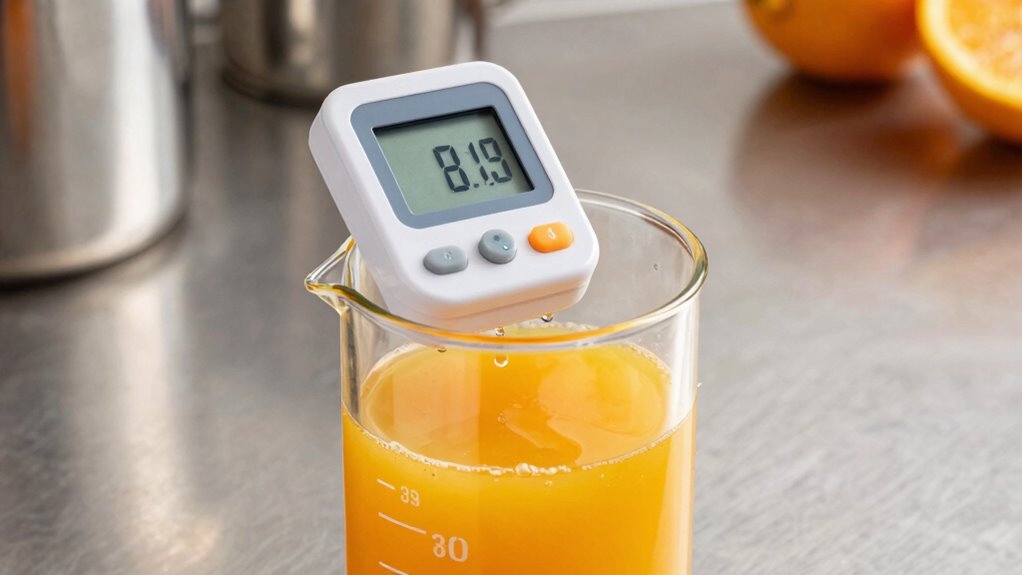

When juice producers talk about Brix adjustment, they mean measuring the sugar level in the juice and adding or diluting it to achieve the desired sweetness and quality. This process guarantees your final product is consistent, flavorful, and stable, meeting both consumer preferences and safety standards. Proper Brix adjustment helps control the flavor, aroma, and shelf life of the juice. Keep exploring to discover how they precisely manage this essential step for perfect quality.

Get kitchen staples and gadgets delivered free with Prime
- Fast, free delivery on millions of items
- Prime Video, Amazon Music and more included
- Member-only deals all year
Key Takeaways
- Brix adjustment involves modifying the sugar content of juice to meet desired sweetness levels.
- It is achieved by adding sugar syrup or diluting with water based on Brix measurements.
- The process ensures consistent flavor, quality, and product standards across batches.
- Proper Brix adjustment enhances juice stability, shelf life, and regulatory compliance.
- It is a crucial step in balancing natural ripeness, flavor, and consumer expectations.
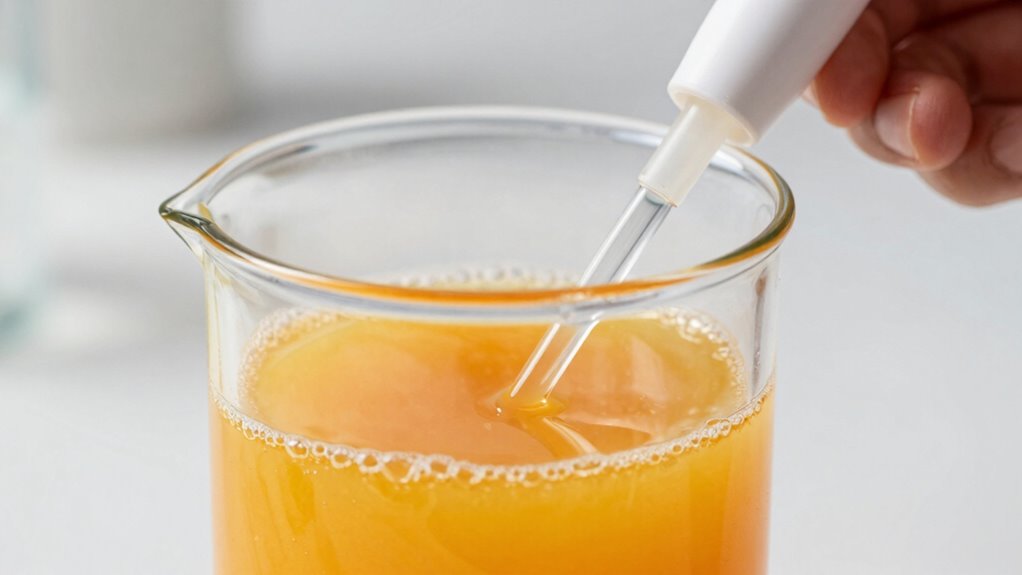
Adjusting the Brix level of juice is a critical step to guarantee consistent sweetness and quality in your final product. Brix measures the sugar concentration in your juice, which directly influences its taste, stability, and overall appeal. When you’re working with fruit juice, understanding the relationship between fruit ripening and sugar concentration is essential. As fruits ripen, their sugar levels naturally increase, making the juice sweeter. However, if you start with underripe or overripe fruit, the Brix can vary greatly, leading to inconsistencies in flavor and quality. That’s where Brix adjustment comes into play—by fine-tuning the sugar content, you make sure each batch meets your desired standards.
Brix adjustment ensures consistent sweetness and quality in fruit juice, balancing ripeness and flavor for the perfect final product.
When fruit ripens, the natural process involves converting starches into sugars, which elevates the Brix reading. If the fruit is picked too early, the sugar concentration is lower, resulting in a less sweet juice. Conversely, overly ripe fruit can lead to excessive sweetness or fermentation issues. As a juice producer, your goal is to achieve a specific Brix level that corresponds to your product specifications. This might mean adding sugar or diluting the juice to reach the ideal Brix. Using precise measurements, you can modify the sugar concentration to match your target profile, ensuring that each batch maintains consistent flavor, aroma, and texture.
Brix adjustment isn’t just about sweetness; it also impacts the stability and shelf life of the juice. Higher sugar content can act as a preservative, but too much can overpower the natural fruit flavors. On the other hand, too little sugar might make the juice seem dull or watery. By controlling the sugar concentration through Brix adjustment, you balance these elements effectively. This process often involves testing samples with a refractometer, then adding sugar syrup or diluting with water until the desired Brix level is reached. It’s a straightforward but essential step that guarantees your juice’s final quality aligns with consumer expectations and regulatory standards. Additionally, understanding fruit ripening stages helps in planning your adjustments more accurately, reducing waste and improving efficiency.
Ultimately, understanding how fruit ripening affects sugar concentration helps you make better decisions during processing. If you know your raw material’s ripeness stage, you can plan your adjustments accordingly, minimizing waste and ensuring consistency. Additionally, proper harvesting practices ensure the fruit’s ripeness is ideal for optimal sugar content. Brix adjustment is an art grounded in science, allowing you to produce a juice that’s perfectly sweet, stable, and true to your brand’s quality. It’s a key part of the production process that guarantees your product not only tastes great but also meets the highest standards of quality and safety.
digital refractometer for juice Brix measurement
As an affiliate, we earn on qualifying purchases.
As an affiliate, we earn on qualifying purchases.
Frequently Asked Questions
How Does Brix Adjustment Affect Juice Shelf Life?
Brix adjustment can extend your juice’s shelf life by helping preserve flavor and color consistency. When you carefully balance the sugar content, it slows down microbial growth, reducing spoilage. This process maintains the vibrant color and fresh taste longer, giving your juice a more appealing appearance and flavor over time. By controlling Brix, you guarantee your product stays high-quality, safe, and enjoyable for consumers, enhancing overall shelf stability.
Are There Natural Methods for Brix Adjustment?
Yes, you can naturally adjust brix levels through natural sweetening and fruit blending. By adding naturally sweet fruits like apples or grapes, you enhance sweetness without artificial sugars. Fruit blending allows you to balance acidity and sweetness, achieving the desired brix naturally. These methods preserve juice quality, appeal to health-conscious consumers, and maintain a natural flavor profile, making your juice both tasty and wholesome.
Can Brix Levels Vary Between Different Fruit Batches?
Yes, brix levels can vary between different fruit batches due to natural fruit variability and differences in ripeness. As a juice producer, you might notice inconsistent batch quality if you don’t modify brix levels accordingly. To maintain batch consistency, you often need to measure and adjust brix carefully. This ensures your juice has a uniform sweetness and quality, despite the natural fluctuations in fruit maturity and size.
What Equipment Is Used for Brix Adjustment?
You use a refractometer to measure Brix levels, ensuring precise fermentation control and acid balancing. To adjust Brix, you might add sweeteners like sugar or concentrate, then recheck with the refractometer. This process helps maintain consistent sweetness and acidity, essential for quality. Sometimes, pumps and mixers are employed to evenly distribute additions, making Brix adjustment efficient and accurate. Proper equipment guarantees your juice meets desired standards.
Is Brix Adjustment Required for All Juice Types?
Brix adjustment isn’t required for all juice types, but it’s often used for flavor enhancement and color correction. If a juice’s natural sweetness or appearance doesn’t meet quality standards, you might need to adjust its Brix level. This process helps achieve consistent taste and color, especially in commercial production. However, some juices with naturally high or stable Brix levels may not need adjustments, depending on the desired final product.
Conclusion
Think of Brix adjustment like tuning a musical instrument—you want everything perfectly in harmony. When juice producers tweak Brix levels, they’re ensuring each batch hits the right sweetness and consistency, much like a chef balancing flavors. I once watched a master juicer carefully measure and adjust Brix, turning a simple fruit into a symphony of taste. Just as a maestro refines their music, producers refine Brix to deliver a product that’s always just right for your palate.
Fall Picks
fall essentials
As an affiliate, we earn on qualifying purchases.