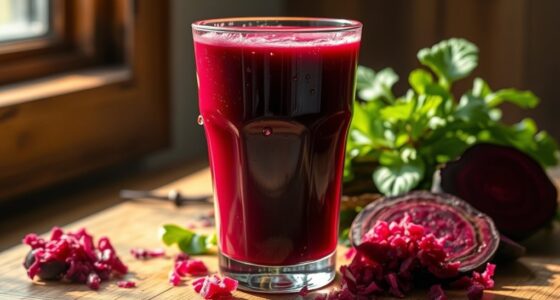
Choosing whole fruit over juice benefits your health because it retains fiber that aids digestion, promotes fullness, and slows sugar absorption, preventing blood sugar spikes. Juice, meanwhile, often loses these fibers and concentrates natural sugars, which can lead to higher calorie intake and rapid blood sugar increases. Additionally, whole fruit offers more vitamins and phytochemicals essential for your immune system. Stay with us to uncover more ways whole fruits support your overall well-being.
Key Takeaways
- Whole fruit contains fiber that slows sugar absorption and supports digestion, unlike juice which lacks fiber.
- Juicing removes pulp and skin, reducing vital nutrients, antioxidants, and phytochemicals found in whole fruit.
- Drinking fruit juice can cause rapid blood sugar spikes due to quick sugar absorption without fiber moderation.
- Whole fruit offers a balanced mix of vitamins, minerals, and fiber, promoting sustained energy and overall health.
- Consuming whole fruit helps control calorie intake and supports weight management better than fruit juice.

Have you ever wondered whether eating whole fruit is better than drinking fruit juice? The answer depends on what you’re looking for in your diet, but there are some important differences to contemplate. When you eat whole fruit, you’re getting the benefit of pulp fiber, which plays a significant role in your digestion and overall health. Pulp fiber adds bulk to your stool, helping you feel full longer and supporting healthy bowel movements. It also slows down the absorption of sugars into your bloodstream, preventing rapid spikes in blood sugar levels. On the other hand, fruit juice, especially when store-bought, often lacks this fiber because processing strips it away. Without pulp fiber, the sugars in juice are absorbed more quickly, leading to higher sugar concentration in your bloodstream. This quick absorption can cause blood sugar spikes, which aren’t ideal if you’re watching your glucose levels or trying to maintain steady energy throughout the day.
Another factor to consider is the natural sugar content. While fruit naturally contains sugars, the concentration in juice can be surprisingly high. Juicing concentrates the sugars present in fruit, so you might drink the equivalent of several pieces of fruit in just one glass. This means you could be consuming more sugar than you realize, increasing your calorie intake without feeling as full as you would from eating whole fruit. Consuming excess sugar regularly can contribute to weight gain, insulin resistance, and other metabolic issues. Eating whole fruit, however, allows you to enjoy those natural sugars alongside fiber, which helps moderate their impact on your blood sugar levels.
Furthermore, drinking fruit juice often means missing out on the additional nutrients found in the pulp and skin, such as antioxidants, vitamins, and phytochemicals. These nutrients can be partially lost during the juicing process, making juice less nutrient-dense compared to whole fruit. When you opt for whole fruit, you get a more complete package of health benefits, including dietary fiber, vitamins, and minerals that support your immune system and overall health.
Frequently Asked Questions
Does Fruit Juice Contain Added Sugars or Preservatives?
Yes, fruit juice can contain added sugars and preservatives. Many store-bought juices include added sugars to enhance flavor, which you should watch out for. Preservatives are often added to prolong shelf life. Always check labels carefully; opt for 100% fruit juice with no added sugars or preservatives to get the healthiest choice. Freshly squeezed juice is a better option if you want to avoid these additives entirely.
How Does Fiber Content Differ Between Whole Fruit and Juice?
You’ll find that whole fruit retains more fiber compared to juice, which means better fiber retention. This fiber helps slow digestion and stabilizes blood sugar levels. When you juice fruit, much of the fiber is removed, reducing its digestion impact. So, eating whole fruit offers more fiber benefits, supporting digestion and keeping you fuller longer. Drinking juice provides fewer fiber benefits, which might affect your overall health and digestion.
Are There Specific Fruits Better Suited for Juicing?
Certain fruits are better suited for juicing based on your juicing preferences and fruit suitability. Apples, oranges, and berries work well because they yield flavorful juice and are easy to process. You might avoid fruits with high water content like watermelon or those with tough skins such as pineapple. Consider your taste and texture preferences to choose fruits that produce enjoyable, nutritious juice while maintaining a good balance of flavor and health benefits.
Can Fruit Juice Replace Whole Fruit in a Balanced Diet?
Imagine replacing a whole apple with its juice; it might seem convenient, but it won’t provide the same nutritional integrity or fiber. Fruit juice can supplement your diet, but it shouldn’t replace whole fruit. Juicing preserves flavor, but often loses fiber and some nutrients. For a balanced diet, enjoy whole fruits for their full nutritional benefits, and use juice as an occasional treat rather than a primary source.
What Are the Environmental Impacts of Juicing Versus Eating Whole Fruit?
Juicing generally has a larger environmental impact than eating whole fruit. You use more energy in processing and packaging, creating more waste, especially from single-use bottles or cartons. Supporting sustainable farming practices can help, but you should also consider reducing packaging waste by choosing bulk or recyclable options. Eating whole fruit minimizes waste and energy use, making it a more eco-friendly choice for your diet.
Conclusion
Choosing whole fruit over juice can considerably boost your health, thanks to fiber and lower sugar content. Imagine Sarah, who switched from fruit juice to whole apples and noticed better digestion and sustained energy throughout her day. By making this simple change, you’re giving your body more nutrients and fewer empty calories. Remember, small choices like these can lead to long-term health benefits—so next time, reach for that whole fruit instead of juice.

Cindy thoroughly researches juicing trends, techniques, and recipes to provide readers with practical advice and inspiration. Her writing style is accessible, engaging, and designed to make complex concepts easy to understand. Cindy’s dedication to promoting the advantages of juicing shines through her work, empowering readers to make positive changes in their lives through the simple act of juicing.