
Juice tastes better straight from the machine because it’s at its freshest, with all natural flavors intact before exposure to oxygen, light, and heat begin to cause flavor loss. Once the juice is extracted, these factors quickly degrade delicate flavor compounds, making it taste duller over time. Keeping juice cold and serving immediately helps preserve that vibrant, authentic taste. If you want to understand how storage and temperature affect flavor, keep exploring how to enjoy your juice at its best.

Get kitchen staples and gadgets delivered free — and shop member deals
- Fast, free delivery on millions of items
- Access to Prime Big Deal Days deals on October 6–7
- Prime Video, Amazon Music and more included
Key Takeaways
- Freshly pressed juice retains more flavor due to minimal exposure to oxygen, light, and heat.
- Serving juice immediately preserves its vibrant aroma and taste before flavor degradation begins.
- Oxidation after extraction causes loss of delicate flavor compounds, making stored juice taste duller.
- Temperature influences flavor; cold serving temperatures help maintain brightness and aroma.
- Proper storage in airtight, chilled containers prolongs freshness and preserves the juice’s authentic flavor.
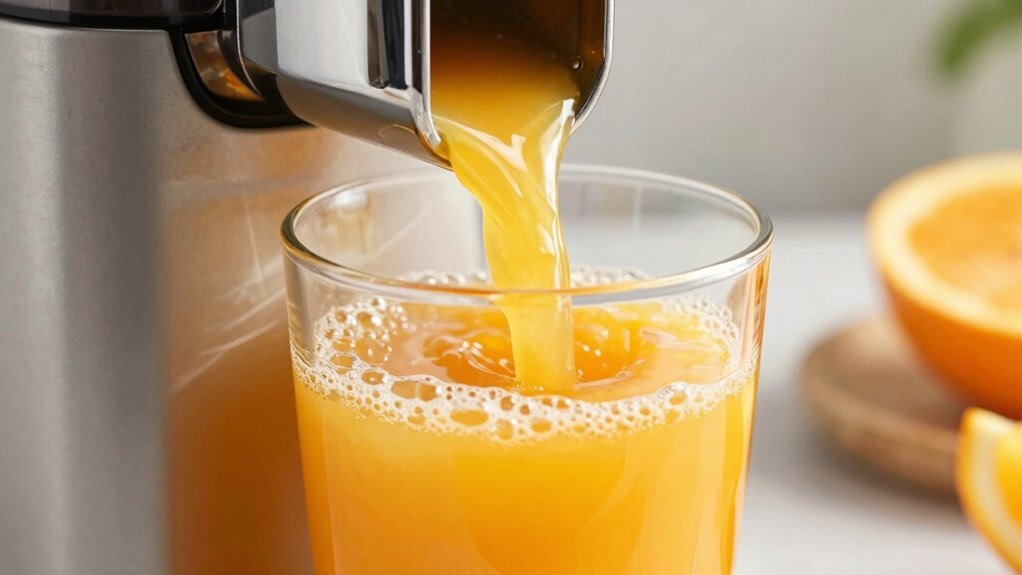
Have you ever noticed that juice tastes fresher and more vibrant straight from the machine? That’s because fresh juice from a commercial or home machine often retains more flavor, thanks to factors like flavor preservation and temperature effects. When you press or blend juice, you’re capturing the fruit’s natural essence at its peak, which means the flavors stay more intense and true to the original fruit. But as soon as the juice leaves the machine, its flavor can start to fade, especially if not stored properly or served at the wrong temperature.
Flavor preservation is key to enjoying juice at its best. Juice begins to degrade the moment it’s extracted because it’s exposed to oxygen, light, and heat—all of which break down the delicate compounds responsible for flavor. When juice is freshly squeezed and consumed immediately, these compounds remain intact, giving you that vibrant, fresh taste. However, once it sits out or is stored for a while, oxidation occurs, dulling the flavors and making the juice taste less lively. That’s why drinking juice straight from the machine often provides a more authentic and robust flavor experience. It’s the closest you can get to tasting the fruit at its freshest.
Temperature effects play a substantial role in how juice tastes. Cold temperatures help preserve the flavor by slowing down chemical reactions that cause spoilage and flavor loss. If you serve juice right after squeezing, keeping it chilled enhances its taste, as cold temperatures help maintain the juice’s natural brightness and aroma. Conversely, if the juice warms up, the flavors can become muted or develop off-notes, making it seem less appealing. This is why many juice bars and home setups recommend serving juice immediately, ideally over ice or chilled, to maximize flavor retention. Serving it at room temperature can cause subtle flavors to fade and may even make the juice taste flat or dull.
In essence, the key to enjoying the freshest, most vibrant juice lies in understanding how flavor preservation and temperature effects influence taste. When you drink juice straight from the machine, you’re experiencing it at its peak—a combination of careful extraction, minimal exposure to degrading factors, and optimal temperature. Proper storage techniques are essential to prolong its vibrant flavor and freshness. Additionally, understanding the impact of oxidation on flavor stability can help you better preserve the quality of your juice. Using airtight containers or immediate consumption are effective ways to prevent flavor deterioration. So, for the best experience, aim to enjoy your juice immediately after pressing, and keep it cool until you’re ready to drink. This practice ensures you retain the nutritional quality and full flavor profile of the juice. That way, you’ll savor the full, lively flavor that only freshly made juice can offer.
airtight juice storage containers
As an affiliate, we earn on qualifying purchases.
As an affiliate, we earn on qualifying purchases.
Frequently Asked Questions
How Does the Type of Fruit Affect Juice Flavor?
The type of fruit substantially influences juice flavor because different fruit varieties have unique flavors. Ripeness level also plays a vital role; overripe fruit can make juice taste sweeter or more fermented, while underripe fruit might result in tart or less flavorful juice. When you choose specific fruit varieties and consider their ripeness, you can control the taste of your juice, making it more suited to your preferences.
Does the Temperature of the Machine Impact Juice Taste?
Imagine walking into a juice bar on a hot day; the machine’s temperature stability becomes essential. Yes, the machine’s temperature impacts juice taste, as consistent temperatures help preserve flavor. When the machine stays cool and stable, it prevents oxidation and flavor degradation. Conversely, temperature fluctuations can alter the juice’s freshness and sweetness, making it taste different. So, maintaining ideal temperature is key to ensuring your juice stays flavorful and invigorating.
Can Cleaning Methods Influence Juice Flavor Consistency?
Yes, cleaning methods can influence juice flavor consistency. Regular cleaning routines help prevent residue buildup, which can affect taste and aroma. If you neglect thorough cleaning, leftover pulp, oils, or bacteria may taint the flavor of fresh juice. By maintaining a consistent cleaning schedule, you guarantee your machine operates smoothly and produces juice with a fresh, consistent taste every time. Proper cleaning is key to ideal flavor.
Do Different Juicing Speeds Change the Taste?
They say “slow and steady wins the race,” and that applies to juicing speeds. Using a slower speed helps preserve flavor and maintain pulp consistency, resulting in a fresher taste. Faster speeds might extract juice quickly but can introduce bitterness and inconsistent pulp, affecting flavor preservation. So, adjusting juicing speeds directly influences how your juice tastes, giving you control over smoothness and richness.
How Does Oxygen Exposure Alter Juice Quality?
Oxygen exposure causes oxidation effects in your juice, leading to nutrient degradation and a loss of freshness. When you leave juice exposed to air, antioxidants and vitamins break down faster, making the juice taste duller and less nutritious. To maintain quality, you should consume juice quickly after extraction or store it in airtight containers. This minimizes oxygen contact, helping preserve the flavor, nutrients, and overall freshness.
Conclusion
So, next time you notice your juice tastes fresher straight from the machine, remember that factors like oxidation and temperature play a big role. Some say it’s the quick extraction process that locks in flavor, while others believe certain machines add subtle elements. The truth? It’s likely a mix of both. Either way, that immediate freshness might just be a little extra magic—making your juice taste better because it’s served at its peak.
Halloween Picks
halloween
As an affiliate, we earn on qualifying purchases.





![A Visual Guide To Europe’s Most Popular Olive Oil Varieties, From Koroneiki To Picual [MAP]](https://thejuiceryworld.com/wp-content/uploads/2026/10/a-visual-guide-to-europe-s-most-popular-olive-oil-varieties-from-koroneiki-to-pi-featured-260x140.jpg)