
TL;DR

Get kitchen staples and gadgets delivered free with Prime
- Fast, free delivery on millions of items
- Prime Video, Amazon Music and more included
- Member-only deals all year
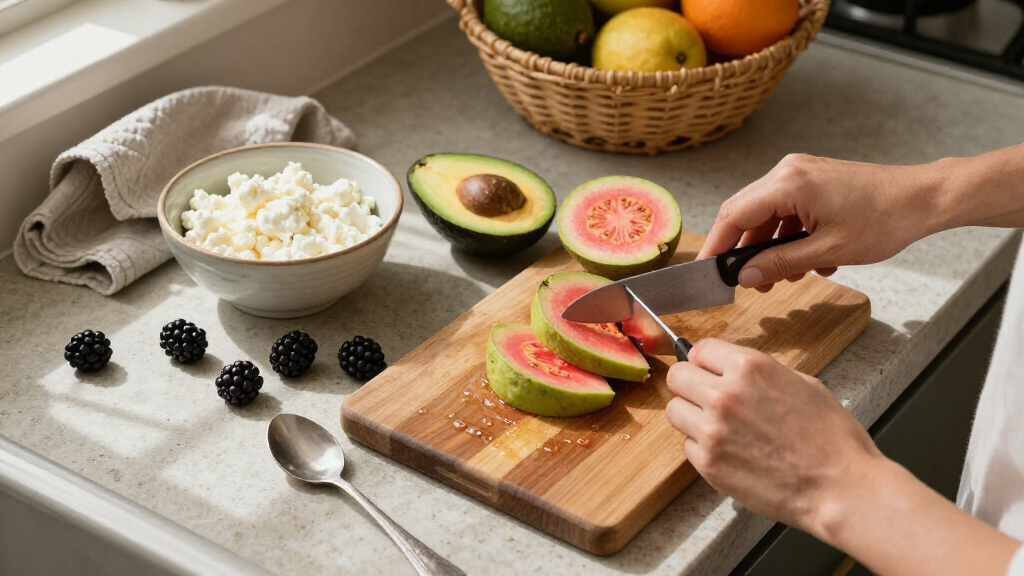
A Good Housekeeping report highlights 10 fruits that can contribute modest amounts of protein alongside fiber, vitamins and plant compounds. Dietitians quoted in the report stress that fruit is not a replacement for major protein sources such as beans, eggs, tofu or meat.
A Good Housekeeping report identifies 10 fruits that can add modest amounts of protein to meals, while dietitians emphasize that fruit should not be treated as a main protein source. The list includes passion fruit, guava, avocado, kiwi, berries, cherries, jackfruit, tomatoes and pomegranate, with the article framing them as nutrient-rich additions to a varied diet.
The report gives the highest listed amounts to passion fruit, at about 5 grams of protein per cup, and guava, at more than 4 grams per cup. A cup of cubed avocado has about 3 grams, while jackfruit provides about 3 grams per cup. Kiwi and tomatoes are listed at roughly 2 grams per cup. Blackberries contain about 2 grams per cup, and raspberries are just under that amount.
The remaining entries are cherries and pomegranate. The source states that a cup of pitted cherries has just under 2 grams of protein. It does not provide a protein figure for pomegranate in the supplied material. These amounts are estimates reported for specific serving sizes; the article does not provide a full nutrition comparison or explain how varieties and preparation might change the figures.
Dietitians quoted in the report point to nutrients beyond protein. Michelle Routhenstein, a preventive cardiology dietitian, highlights fruit’s antioxidants and flavanols. The report also describes fiber, vitamin C, potassium and other plant compounds in particular fruits. Brittany Werner, a registered dietitian, suggests guava in salsa, while Routhenstein recommends using avocado in place of mayonnaise in tuna salad.
Fruit Adds Protein Alongside Other Nutrients
The list offers shoppers ways to add small amounts of protein through familiar foods, but the amounts need perspective: even the report’s highest figure, about 5 grams per cup, is not presented as a substitute for protein-rich foods such as eggs, beans, tofu or meat. Routhenstein says fruit can contribute to a person’s total intake, while its broader value includes nutrients that vary across fruit types.
That distinction matters for people planning meals around protein. Fruit can complement a meal or snack, particularly when paired with a more concentrated protein source, but the report does not claim that eating these fruits alone meets an individual’s protein needs. Its practical focus is variety: use fruit in yogurt or oatmeal, add it to savory dishes, or blend it into smoothies.
The nutrition details may also help readers make choices beyond protein. The report connects berries’ fiber and anthocyanins with potential health benefits and describes avocado as a source of monounsaturated fat and potassium. Those are nutrient descriptions and attributed dietitian comments, not evidence in this source that any one fruit prevents or treats disease.
fresh passion fruit and guava grocery delivery
As an affiliate, we earn on qualifying purchases.
As an affiliate, we earn on qualifying purchases.
How the Report Frames Fruit Protein
The underlying article, published by Good Housekeeping, presents the list as grocery-shopping guidance, not as a new clinical study or official dietary recommendation. It explains that fruit contains some protein but generally supplies less than meat, eggs, beans or tofu. The report’s dietitian comments place the protein figures alongside fiber, vitamins, minerals and plant compounds.
Its serving estimates are not a ranking of all fruits, and the source material supplied here does not contain complete nutrition data for every entry. In particular, the pomegranate section is cut off before its protein amount and further details appear. The list should therefore be read as a set of examples rather than a complete nutritional database.
“You’re not going to be using fruit as your main protein source, but it will contribute to your overall protein intake.”
— Michelle Routhenstein, MS, RD, preventive cardiology dietitian
Limits of the Nutrition Figures
The supplied report excerpt does not include the full pomegranate entry, so its protein amount and accompanying details are unavailable. It also does not specify the varieties, testing methods or preparation assumptions behind every estimate. The figures should be treated as approximate amounts for the stated servings, not as precise values for every fruit sold in stores.
The source provides general dietitian commentary, not individualized dietary advice or results from a new study. It does not establish that these fruits cause the health outcomes described, nor does it state how much protein any particular reader needs.
Using the List at the Store
Readers can use the figures as a starting point when choosing produce, checking serving sizes and pairing fruit with other foods. The report suggests adding fruit to yogurt, oatmeal, salads, salsa or smoothies; it also describes jackfruit as a meat-texture substitute while cautioning that it does not match meat’s protein contribution.
No follow-up study, new guidance or further publication is announced in the supplied source. Any additional claims about the incomplete pomegranate entry or updated nutrition figures would require the full article or another reliable nutrition source.
Key Questions
Which fruit in the report has the most protein?
Passion fruit has the highest stated amount in the supplied material, at about 5 grams per cup. Guava is listed at more than 4 grams per cup.
Can fruit replace meat, eggs, beans or tofu as a protein source?
No. The report’s dietitian says fruit can contribute to total protein intake but should not be used as a main protein source. It contains less protein than foods such as meat, eggs, beans and tofu.
How much protein does pomegranate contain?
The supplied excerpt names pomegranate but cuts off before giving its protein figure. Its amount cannot be confirmed from the material provided.
What are some ways to add these fruits to meals?
The report suggests fruit in yogurt or oatmeal, berries in chia jam, guava in salsa and avocado in tuna salad. Jackfruit can add a shredded texture to savory dishes, though it does not replace meat’s protein.
Source: rss
NFL season / tailgating Picks
team gear
As an affiliate, we earn on qualifying purchases.