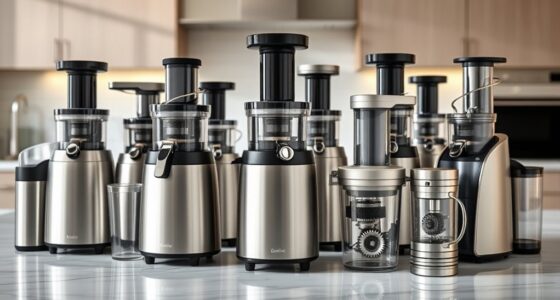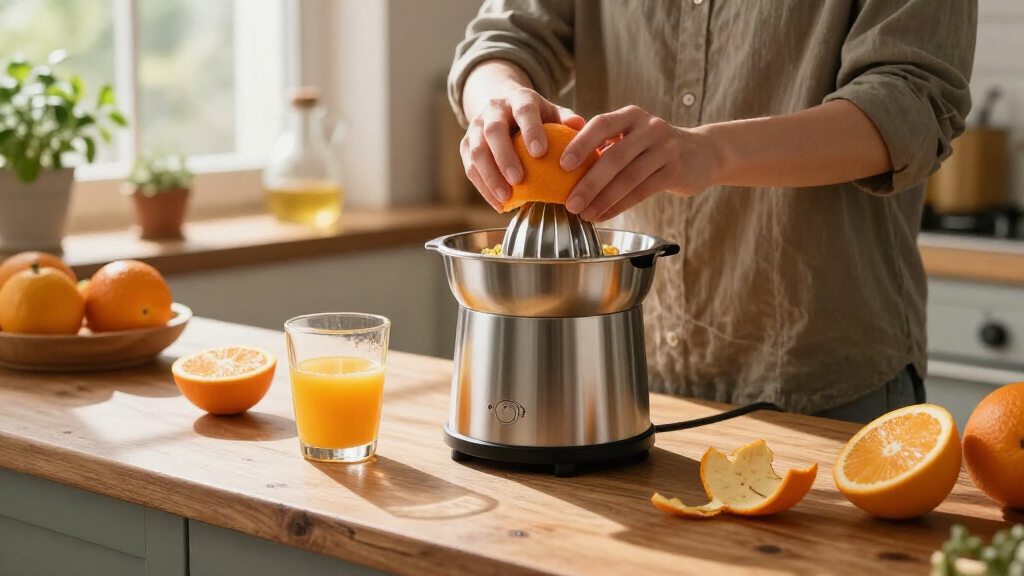

Electric citrus juicers promise fresh orange or lemon juice without the wrist strain of a manual press, but the category splits sharply between budget pressure-activated squeezers, hands-free automatic presses, and masticating machines that blur into general juicing. After comparing 14 models on juice yield, pulp control, cleanup, and counter footprint, the Cuisinart Pulp Control Citrus Juicer stands out as the best overall pick for its adjustable pulp settings, final-spin feature, and durable build at a mid-range price. The BLACK+DECKER CJ625 is the best value for occasional juicers, while the Vinci Hands-Free Press justifies its premium price if you juice daily and hate holding the fruit. The main tradeoff you’ll face: cheap reamer-style juicers are easy to clean but require effort, whereas automatic presses and cold-press machines extract more juice but cost more and involve more parts. Read on for the full breakdown.

Get kitchen staples and gadgets delivered free with Prime
- Fast, free delivery on millions of items
- Prime Video, Amazon Music and more included
- Member-only deals all year
Complete the kit


Key Takeaways
- Pulp control was the clearest dividing line: models like the Cuisinart and Dash offer adjustable pulp settings, while fixed-filter options like the Elite Gourmet force you to accept one pulp level or strain manually.
- Hands-free operation separates the Vinci and the Eurolux one-touch from pressure-activated models like the BLACK+DECKER — a meaningful difference if you juice more than two or three pieces of fruit at a time.
- Cold-press options (the Aeitto and Canoly) extract noticeably more juice per orange, but their multi-part assemblies take 3–4 times longer to clean than simple reamer juicers, making them overkill for small batches.
- The Yuanhao is the only true commercial-grade option here; every other model is built for household volumes of roughly one to four glasses per session.
- Two sizes of reamer cones matter more than motor wattage — models shipping with small and large cones (Healnitor, Lebenlang, Astralship) handle limes through grapefruit, while single-cone models limit versatility.





| electric citrus juicer | Material |
|---|---|
| BLACK+DECKER 32oz Electric Cit | Plastic |
| Cuisinart Pulp Control Citrus | — |
| Elite Gourmet ETS623 Electric | BPA-free plastic |
| Eurolux Premium Electric Orang | Stainless Steel |
| Dash Dual Electric Citrus Juic | — |
| Yuanhao Commercial Electric Ci | — |
| Healnitor 150W Electric Citrus | Stainless steel |
| LEBENLANG Electric Orange Juic | Stainless steel |
| Aeitto Cold Press Juicer Machi | — |
| Astralship Electric Citrus Jui | Stainless steel |
| Canoly 3-in-1 Cold Press Juice | — |
| Vinci Electric Juicer | BPA-free Tritan |
| Eurolux Premium Electric Orang | — |
| Eurolux Electric Citrus Juicer | Stainless steel |
More Details on Our Top Picks
BLACK+DECKER 32oz Electric Citrus Juicer, CJ625
This model earns the top spot because it balances capacity, versatility, and price better than anything else here. The 32 oz pitcher is the largest in this batch, which means one session covers a family breakfast instead of the repeat batches you’d face with the Dash Dual’s 20 oz container. Auto-reversing cones plus adjustable pulp control give it the extraction tricks of pricier machines — the Cuisinart charges more for the same core behavior. The tradeoff is honest: this is an all-plastic build, so it won’t feel as premium or last as long as the Eurolux’s stainless steel body, and there’s no auto shutoff. For most kitchens, though, those are compromises worth making.
Pros:- Largest capacity in the lineup at 32 oz
- Auto-reversing cones maximize extraction
- Adjustable pulp control with removable basket
- Two cone sizes handle limes through grapefruits
Cons:- All-plastic construction is less durable over time
- No auto shutoff or one-touch convenience features
Best for: Households that juice for two or more people and want the biggest batch capacity per dollar
Not ideal for: Buyers who want a premium, long-lasting build — the plastic construction will show wear faster than stainless models
- Brand:BLACK+DECKER
- Model:CJ625
- Capacity:32 oz
- Material:Plastic
- Color:White
- Pulp Control:Adjustable
- Cones:Small and large
- Warranty:1 year
Our verdict“If you want one juicer that handles family-sized batches without paying for stainless steel, this is the pick.”
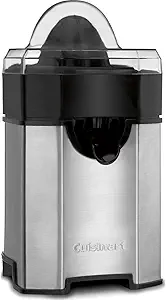
Cuisinart Pulp Control Citrus Juicer, Black/Stainless Steel
What separates the Cuisinart from the field is its three dedicated pulp settings — low, medium, high — rather than the simple adjustable screen you get on the BLACK+DECKER or Dash. That granularity matters if your household splits between pulp haters and pulp lovers. The final-spin feature wrings out the last drops after you lift the fruit, something no other model in this batch does, and the 3-year warranty triples BLACK+DECKER’s coverage. You give up capacity compared with the CJ625’s 32 oz pitcher, and the footprint is bulkier than the Elite Gourmet’s compact body. It’s also strictly a citrus machine, so greens and apples are off the menu regardless of settings.
Pros:- Three distinct pulp settings for true texture control
- Final-spin feature extracts every last drop
- 3-year warranty, the longest in this batch
- Handles limes through grapefruits
Cons:- Bulky footprint for tight counters
- Capacity falls short of the BLACK+DECKER CJ625
Best for: Juice drinkers who care deeply about texture control and want stronger warranty backing
Not ideal for: Small kitchens with limited counter space — it’s one of the bulkier units here
- Model:CCJ-500P1
- Color:Black/Stainless Steel
- Pulp Control Settings:3 (low, medium, high)
- Cone:Auto-reversing
- Extras:Final-spin extraction feature
- Cleaning:Dishwasher-safe parts
- Warranty:3 years
Our verdict“This is the machine for households where pulp preference is a genuine daily debate.”
Elite Gourmet ETS623 Electric Citrus Juicer, 24 oz
Where the BLACK+DECKER is built for volume, the Elite Gourmet is built for the studio apartment or RV. Its footprint is the smallest of the full-size options here, yet the 40W motor and auto-reversing reamer keep extraction respectable — you’re not sacrificing juice yield, just batch size. The 24 oz capacity splits the difference between the Dash’s 20 oz and the CJ625’s 32 oz, which suits one or two glasses at a time. Like most budget compacts, the plastic body won’t age as gracefully as the Eurolux’s stainless shell, and there’s no pulp dial as refined as the Cuisinart’s three settings. For a small-space juicer, those are acceptable cuts.
Pros:- Compact footprint fits tight counters and cabinets
- 40W motor with auto-reversing reamer for solid extraction
- BPA-free construction
- Dishwasher-safe parts
Cons:- Plastic build may not hold up to heavy daily use
- 24 oz capacity limits batch sizes
Best for: Single users or couples in small kitchens who juice a glass or two at a time
Not ideal for: Anyone juicing for a crowd — the 24 oz pitcher forces repeated batches
- Capacity:24 oz (3 cups)
- Motor Power:40W
- Material:BPA-free plastic
- Color:Black/Stainless Steel
- Reamer:Auto-reversing
- Dishwasher Safe Parts:Yes
- Certification:ETL Listed
Eurolux Premium Electric Orange Juicer, Stainless Steel
This is the power and build-quality pick. At 120 watts, it triples the Elite Gourmet’s output, so hard grapefruits and pomegranate-sized citrus give up faster with less arm pressure. The stainless steel body is the real story: unlike every plastic model in this batch, it shrugs off years of acidic juice and looks good doing it. The soft grip handle and auto shutoff make it the most comfortable extended-use option, closer in feel to the Vinci hands-free press than to the Dash. The tradeoffs are size and price — it eats counter space the Elite Gourmet doesn’t, and it costs meaningfully more than the BLACK+DECKER for similar citrus-only functionality.
Pros:- 120W motor, the most powerful in this batch
- Durable stainless steel construction
- One-touch operation with auto shutoff
- Soft grip handle reduces hand strain
- Versatile cone fits most fruit sizes
Cons:- Larger footprint takes up counter space
- Premium price for citrus-only functionality
Best for: Frequent juicers willing to pay for durability, power, and a kitchen-worthy stainless look
Not ideal for: Casual juicers on a budget — cheaper models deliver similar juice for far less money
- Power:120 Watts
- Material:Stainless Steel
- Auto Shutoff:Yes
- Pulp Control:Yes
- Handle:Soft grip
- Dishwasher-safe Parts:Yes
Our verdict“Buy it if you juice nearly every day and want a machine that outlasts the plastic crowd.”
Dash Dual Electric Citrus Juicer Machine, 20 oz
The Dash is the lightest-commitment option here — inexpensive, compact, and genuinely easy to store in a cabinet between uses. Its auto-reversing reamer and interchangeable cones mirror what pricier machines offer, and the mess-free spout is a small detail that pays off every morning compared with pouring from the BLACK+DECKER’s pitcher. The obvious limitation is the 20 oz container, the smallest in this batch, so weekend lemonade for six means refilling repeatedly. Pulp adjustment exists but is cruder than the Cuisinart’s three-position dial. If your juicing is a single glass a day, those compromises barely register; if it isn’t, step up to the CJ625.
Pros:- Lowest-effort cleanup and storage in the batch
- Auto-reversing reamer with two cone sizes
- Mess-free spout pours without drips
- Very budget-friendly price
Cons:- Smallest capacity here at 20 oz
- Pulp control is basic compared with the Cuisinart
Best for: Budget-minded singles who want one fresh glass of juice daily with minimal storage hassle
Not ideal for: Families or entertainers — the 20 oz capacity means constant re-juicing
- Capacity:20 oz
- Color:White
- Reamer Type:Auto-Reversing
- Included Cones:Small lime, large orange/grapefruit
- Pulp Control:Adjustable
- Spout:Mess-free pour spout
Our verdict“The cheapest way into daily fresh citrus juice, as long as your needs stop at one or two glasses.”
Yuanhao Commercial Electric Citrus Juicer Machine
This is the workhorse of the lineup, built for juice bars and cafés rather than kitchen counters. With a 1400 RPM motor and three interchangeable reamers covering everything from limes to grapefruits, it extracts far more volume per hour than home models like the Astralship or LEBENLANG, both of which would overheat under sustained commercial demand. The stainless steel body and reinforced metal gears mean it survives daily abuse that would wear out plastic-gearred competitors within months.
The tradeoff is scale: it’s bulky, power-hungry, and priced for businesses, not households. A home juicer making two glasses a morning gets nothing here that a BLACK+DECKER CJ625 can’t deliver at a fraction of the footprint.
Pros:- High-efficiency 1400 RPM motor handles continuous high-volume juicing
- Three interchangeable reamers (2.5–4.5 in) fit limes through grapefruits
- Stainless steel body with reinforced metal gears built for daily commercial wear
- Splash guard and dishwasher-safe parts keep cleanup fast during service
Cons:- Bulky commercial footprint dominates a home countertop
- Priced and specified for businesses, poor value for household use
Best for: Juice bars, restaurants, and cafés that need to press dozens of citrus fruits per hour without equipment failure
Not ideal for: Home users — the commercial footprint, power draw, and business-grade price are wasted on a morning glass of OJ
- Motor Speed:1400 RPM
- Reamers:3 interchangeable (approx. 2.5, 3.5, 4.5 inches)
- Construction:Stainless steel body with reinforced metal gears
- Features:Splash guard, pulp filter
- Cleaning:Dishwasher-safe parts
- Intended Use:Commercial — juice bars, restaurants, cafés
Our verdict“Buy this only if you’re juicing commercially — home users should stick with compact models like the Healnitor or Astralship.”
Healnitor 150W Electric Citrus Juicer Squeezer with 2 Cones, Stainless Steel Quiet Orange Juice Extractor
What separates the Healnitor from the pack is noise — it stays under 60 decibels, which is quieter than most electric juicers and makes early-morning juicing viable in shared households. Its 150W motor also outmuscles the 80W Astralship, meaning it powers through grapefruits where weaker motors strain or stall. The two-cone setup covers the standard citrus range, and the anti-drip spout is a small detail that the LEBENLANG doesn’t advertise but that genuinely reduces countertop mess.
The catch is capacity: like the Astralship, its serving pitcher is modest, so juicing for a family of four means working in batches. And it’s citrus-only — buyers wanting greens or vegetables should look at the Aeitto cold press instead.
Pros:- Runs under 60 decibels, among the quietest in this roundup
- 150W motor handles grapefruit without straining, unlike the 80W Astralship
- Anti-drip spout prevents countertop mess between pours
- Sleek stainless steel build with dishwasher-safe removable parts
Cons:- Smaller capacity requires batching for family-sized servings
- Costs notably more than basic electric juicers like the Elite Gourmet
Best for: Apartment dwellers and early risers who need quiet operation and enough motor power for grapefruit
Not ideal for: Households juicing large batches at once — the small capacity means multiple rounds of work
- Power:150W
- Noise Level:Under 60 dB
- Cones:2 sizes
- Material:Stainless steel
- Compatible Fruits:Orange, grapefruit, lemon, lime
- Dimensions:8.8″D x 6.5″W x 10.8″H
- Color:Silver
Our verdict“The pick for anyone whose kitchen shares walls or bedrooms — quiet, capable, and clean, as long as you’re not juicing by the liter.”
LEBENLANG Electric Orange Juicer with 2 Cones, BPA-Free, 24oz Capacity
The LEBENLANG earns its spot with the best capacity-to-size ratio in this batch: a full 24oz BPA-free container in a compact, stable footprint, meaning one session covers a family breakfast rather than the batch-juicing the Healnitor demands. Its dual-rotation cones — spinning both directions to regrind pulp — extract noticeably more juice from each half than single-direction models like the basic pressure-activated units.
Where it falls short of the Cuisinart Pulp Control is control itself: the pulp filter system works, but it’s less adjustable, so pulpy-juice lovers may find the output too clean or not clean enough with no middle setting. It also stays firmly in citrus territory, so it can’t replace a versatile machine like the Aeitto.
Pros:- 24oz container juices a family breakfast in a single session
- Dual-direction rotation squeezes more juice per fruit half
- BPA-free, removable container cleans up easily
- Compact and stable base won’t wobble on the counter
Cons:- Pulp control is fixed, less flexible than the Cuisinart’s adjustable settings
- Citrus-only design excludes greens and soft fruits
Best for: Families who want a full pitcher of fresh citrus juice in one quick, stable, low-effort session
Not ideal for: Pulp enthusiasts who want adjustable texture — the filtration here is fixed rather than tunable
- Brand:LEBENLANG
- Model:LB389
- Material:Stainless steel
- Capacity:24 oz
- Cones:2 rotating cones
- Compatible Fruits:Orange, lemon, lime, grapefruit
- Power Source:Electric
Our verdict“The most practical everyday citrus machine here for households — big output, small footprint, one compromise on pulp flexibility.”
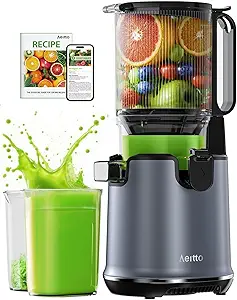
Aeitto Cold Press Juicer Machines, 5.3″ Wide Mouth Hopper
This is the odd one out — and deliberately so. The Aeitto isn’t a citrus specialist; it’s a slow masticating juicer that happens to do citrus well alongside everything else. The 5.3-inch feed chute swallows whole fruit with no halving, which no dedicated citrus press in this roundup — not the Yuanhao, not the Healnitor — can match, and the cold-press process claims up to 99% yield while preserving nutrients that fast-spinning reamers can degrade.
The tradeoffs are real, though: it’s the bulkiest home option here, some functionality leans on a companion app that not everyone wants, and it’s overkill if oranges are your only goal. For pure citrus-on-demand, the Vinci hands-free press or the LEBENLANG do the job with less counter space and simpler cleanup.
Pros:- 5.3″ wide chute accepts whole fruits and vegetables with no pre-cutting
- Cold-press masticating technology preserves nutrients and yields up to 99% juice
- One-touch operation with reverse function to clear jams
- Quiet motor suitable for daily early-morning use
Cons:- Bulky footprint overwhelms small kitchens compared to compact citrus presses
- App dependency for full functionality will frustrate low-tech buyers
- Higher price tier than dedicated citrus-only machines
Best for: Health-focused juicers who want citrus plus greens, carrots, and whole fruits from one machine
Not ideal for: Orange-juice-only households — it costs more, takes more space, and cleans up slower than a dedicated citrus press
- Feed Chute Width:5.3 inches
- Juice Yield:Up to 99%
- Technology:Slow masticating cold press
- Operation:One-touch with reverse function
- Compatible Produce:Fruits, vegetables, leafy greens
- App Support:Aeitto app for recipes
- Color:Grey
Our verdict“Choose the Aeitto only if citrus is one ingredient in a broader juicing habit — specialists will find it oversized and overfeatured.”
Astralship Electric Citrus Juicer Machine with Stainless Steel Base, 24oz Pitcher, 2 Cones & Pulp Filter
The Astralship is the easiest entry point into electric citrus juicing in this batch. Its pressure-activated operation — press the fruit down, it spins; lift, it stops — requires almost no hand strength, making it friendlier for older users or anyone with arthritis compared to squeeze-handle models like the Eurolux. You get the same 24oz pitcher and two-cone setup as the LEBENLANG at what’s typically a lower price, plus dishwasher-safe parts that make daily cleanup a non-event.
But the 80W motor is the weak link: where the Healnitor’s 150W chews through grapefruit, the Astralship can labor on thick-skinned fruit, and there’s no noise rating or cord-length spec to plan around. It’s a starter machine, not a lifetime one.
Pros:- Pressure-activated operation needs minimal grip strength, ideal for arthritic hands
- Two cones cover limes through oranges with good yield
- 24oz pitcher with pulp filter handles a full serving in one pass
- Dishwasher-safe parts and compact footprint simplify daily use
Cons:- 80W motor struggles with large or thick-skinned fruit like grapefruit
- Unspecified cord length and noise level leave placement questions unanswered
Best for: First-time electric juicer buyers and users with limited hand strength who want simple press-and-go operation
Not ideal for: Grapefruit fans or heavy daily users — the modest 80W motor strains where stronger machines cruise
- Power:80W
- Pitcher Capacity:24 oz
- Cones:2 (small and large)
- Material:Stainless steel
- Operation:Pressure-activated
- Accessories:Pitcher with pulp filter
- Dishwasher Safe Parts:Yes
Our verdict“A solid, low-commitment first electric juicer for casual orange and lemon use — upgrade to the Healnitor or LEBENLANG if you juice daily or love grapefruit.”
Canoly 3-in-1 Cold Press Juicer C09
The Canoly C09 is the outlier in this roundup: it is not a citrus press at all but a 3-in-1 cold press juicer that also makes sorbet and nut milk. Where the Vinci Electric Juicer stops at citrus, the Canoly’s 6-inch chute swallows whole apples, carrots, and oranges, which changes the entire juicing routine — no pre-cutting, no halving fruit. Its 35dB brushless motor is quieter than dedicated citrus presses like the Eurolux models, and the 15-year warranty signals serious build confidence. The tradeoffs are real: it costs far more than simple presses like the Elite Gourmet ETS623, takes up meaningful counter space, and adds complexity for anyone who only wants morning orange juice. This pick makes the most sense for households that see juicing as a lifestyle, not a task.
Pros:- 3-in-1 versatility with juice, sorbet, and nut milk functions
- 6-inch whole-fruit chute eliminates pre-cutting
- Whisper-quiet 35dB brushless motor
- Exceptional 15-year warranty
Cons:- Premium price far above dedicated citrus presses
- Large footprint that can overwhelm small kitchens
- Overkill if you only ever juice citrus
Best for: Health-focused households who want one machine for juice, sorbet, and nut milk with minimal prep
Not ideal for: Buyers who only juice citrus occasionally — the price and footprint are wasted on simple orange juice duty
- Functions:Juice, sorbet, nut milk
- Chute Width:6 inches
- Motor:Brushless, 35dB
- Capacity:90 oz hopper
- Strainers:Juice & sorbet
- Warranty:15 years
Our verdict“A premium multi-tasker worth it only if you juice more than citrus and want one machine for everything.”
Vinci Electric Juicer – Hands-Free Automatic Compact Citrus Press Machine
Most citrus juicers, like the Eurolux Premium Orange Juicer, still ask you to press a halved fruit down onto a spinning cone. The Vinci Electric Juicer removes that step entirely: drop in a halved fruit, close the fully enclosed chamber, and walk away. That enclosure also means zero spray on your counters — a genuine advantage over open reamer designs such as the Dash Dual Citrus Juicer. Pressure-sensitive extraction and swappable fine/coarse filters give you real pulp control, and everything dishwasher-safe keeps cleanup short. Compared with the Canoly C09, it is dramatically simpler and cheaper, but the 12 oz capacity means batch juicing for a family means refilling repeatedly. This model is better suited to one or two people who value effortlessness over volume.
Pros:- Truly hands-free operation with no pressing required
- Enclosed chamber prevents juice spray
- Adjustable pulp control with fine and coarse filters
- Handles citrus up to 4.5 inches in diameter, including large grapefruit
Cons:- Small 12 oz capacity limits batch juicing
- Citrus-only — no versatility beyond juicing
Best for: Couples and singles who want zero-effort, mess-free citrus juicing for small daily servings
Not ideal for: Families juicing for four or more — the 12 oz capacity requires constant refills
- Capacity:12 oz
- Material:BPA-free Tritan
- Max Fruit Diameter:Up to 4.5 inches
- Pulp Control:Adjustable, fine and coarse filters
- Operation:Hands-free, pressure-sensitive automatic press
- Chamber:Fully enclosed
Our verdict“The most effortless citrus juicer here for small households, as long as 12 ounces per cycle is enough.”
Eurolux Premium Electric Orange Juicer – Stainless Steel Citrus Squeezer
Compared with its sibling, the Eurolux ELCJ-4800, this premium Eurolux trades raw wattage for a 160W high-torque motor and heavier stainless steel construction — the result feels closer to a commercial bar juicer than a kitchen gadget. The universal juicing cone handles oranges, lemons, and limes without swapping parts, and the soft grip handle makes repeated pressing comfortable if you are juicing a whole bag of oranges. It sits midway between the simpler BLACK+DECKER CJ625 and the commercial Yuanhao machine: more robust than the former, far less expensive than the latter. The downside is that its aggressive power is unnecessary for a single glass of juice, and it does only one job — unlike the multi-function Canoly C09.
Pros:- 160W high-torque motor extracts juice quickly and thoroughly
- Durable stainless steel build built to last years
- Universal cone fits oranges, lemons, and limes without swapping
- Comfortable soft grip handle for batch juicing
Cons:- Overpowered and oversized for light, occasional use
- Citrus-only with no multi-function capability
Best for: Frequent juicers who press large batches and want restaurant-grade durability without a commercial price
Not ideal for: Casual users juicing an occasional lemon — the power and bulk are more machine than the job needs
- Power:160W high-torque motor
- Construction:Stainless steel
- Handle:Soft grip
- Juicing Cone:Universal (orange, lemon, lime)
- Auto Shutoff:Yes
- Pulp Control:Yes
Our verdict“The right choice if you juice in volume and want a machine that outlasts cheaper plastic presses.”
Eurolux Electric Citrus Juicer Stainless Steel (ELCJ-4800)
The Eurolux ELCJ-4800 is the quiet, tidy option in this lineup. Its motor runs at just 110 RPM, which keeps noise low enough for early mornings — a real advantage over the torquier Eurolux Premium Orange Juicer when you don’t want to wake the house. One-touch, hands-free operation means you press a halved fruit down and it does the rest, while dishwasher-safe detachable parts make cleanup as quick as the Vinci Electric Juicer. The tradeoff for that gentle pace is throughput: juicing a large batch takes noticeably longer, and there are no extra cones or speed settings — the premium Eurolux and the Healnitor 150W both include more accessories. This pick makes the most sense for small kitchens and light daily use where noise and counter space matter more than speed.
Pros:- Very quiet 110 RPM operation, ideal for early mornings
- One-touch hands-free juicing
- Compact footprint suits small counters
- Dishwasher-safe detachable parts
Cons:- Slower extraction struggles with larger quantities
- No included accessories or multiple speed settings
- Citrus-only functionality
Best for: Apartment dwellers and early risers who want quiet, one-touch juicing for small servings
Not ideal for: Anyone juicing large quantities regularly — the low-speed motor slows down big batches
- Power:300W motor
- Speed:110 RPM
- Material:Stainless steel
- Dimensions:22 x 19 x 31.7 cm
- Operation:One-touch, hands-free
- Compatible Fruits:Orange, lemon, lime, grapefruit
- Model:ELCJ-4800
Our verdict“A quiet, compact press for light daily use — pick the premium Eurolux instead if speed and volume matter.”

How We Picked
I evaluated each juicer against five buyer-relevant criteria. Juice yield and extraction efficiency came first, because the whole point of going electric is getting more juice with less effort. Cleanup burden weighed heavily — a citrus juicer with six dishwasher-safe parts beats a higher-yielding machine with awkward crevices for most people. Ease of operation covered whether the user must press and hold the fruit or can walk away, and whether the reamer auto-reverses for better extraction. Versatility considered cone sizes, pulp adjustment, and whether a machine handles limes as well as grapefruit. Finally, build quality and value determined whether each price tier earns its cost.
The ranking reflects how these criteria interact for real buyers. Models balancing yield, cleanup, and flexibility rank highest, which is why the Cuisinart takes the top spot over cheaper and pricier rivals. Specialist machines — the commercial Yuanhao, the cold-press Aeitto and Canoly, the hands-free Vinci — are slotted by how well they serve their niche rather than by raw capability, since most shoppers want a daily-driver, not a niche tool.
| electric citrus juicer | Material |
|---|---|
| BLACK+DECKER 32oz Electric Cit | Plastic |
| Cuisinart Pulp Control Citrus | — |
| Elite Gourmet ETS623 Electric | BPA-free plastic |
| Eurolux Premium Electric Orang | Stainless Steel |
| Dash Dual Electric Citrus Juic | — |
| Yuanhao Commercial Electric Ci | — |
| Healnitor 150W Electric Citrus | Stainless steel |
| LEBENLANG Electric Orange Juic | Stainless steel |
| Aeitto Cold Press Juicer Machi | — |
| Astralship Electric Citrus Jui | Stainless steel |
| Canoly 3-in-1 Cold Press Juice | — |
| Vinci Electric Juicer | BPA-free Tritan |
| Eurolux Premium Electric Orang | — |
| Eurolux Electric Citrus Juicer | Stainless steel |
Factors to Consider When Choosing Electric Citrus Juicers
Before settling on a model, it helps to understand what actually varies across electric citrus juicers — and where buyers most often regret their choice. These are the factors that shaped this ranking.Press-and-Hold vs. Hands-Free Operation
This is the single biggest fork in the road, and it’s where buyers most often misjudge their own habits. Pressure-activated reamer juicers (the BLACK+DECKER, Elite Gourmet, Dash) require you to press the halved fruit down onto the spinning cone for every piece — fine for one glass, tiresome for a family brunch. Hands-free machines like the Vinci or the one-touch Eurolux clamp or lift the fruit for you, which matters if you juice a pitcher’s worth daily. A common mistake is buying the cheapest press-and-hold model, then abandoning it because juicing six oranges feels like a workout. Match the mechanism to your typical batch size, not to the price tag.
Pulp Control: Adjustable Beats Fixed
Pulp preference is deeply personal and changes with the fruit — Valencia oranges behave differently from lemons. Adjustable pulp settings, found on the Cuisinart, Dash, and a few others, let you dial from pulpy to nearly clear, which effectively makes one juicer serve the whole household. Fixed-filter models force a compromise, and buyers who discover they hate pulp often end up straining juice through a sieve, adding a step that erases the convenience they paid for. If two people in your home disagree about pulp, treat adjustable control as non-negotiable rather than a nice-to-have.
Cleanup: Count the Parts, Check the Crevice
Citrus juicers fail in the sink more often than on the counter. Simple reamer models have three or four parts that rinse clean in under a minute, while cold-press machines like the Aeitto and Canoly have augers, screens, and housing components that need brushing after every use. Pulp is fibrous and dries stubbornly, so any screen or filter with tight mesh becomes the bottleneck. My advice: if you juice fewer than four times a week, weight cleanup twice as heavily as yield. A machine that extracts 10% more juice but takes five extra minutes to wash rarely survives daily life.
Cone Sizes and Fruit Range
A juicer sized for oranges will mangle limes and underperform on grapefruit. Dual-cone models — the Healnitor, Lebenlang, and Astralship all include two sizes — handle the full citrus spectrum, while single-cone budget models usually fit medium oranges well and little else. If your goal is lemon water or margaritas as much as orange juice, check cone options before anything else. Also consider reamer depth: shallow cones let small fruit spin without contact, leaving juice behind and frustrating the user who can’t see why.
Plastic vs. Stainless Build — What You Actually Get
Stainless housing, as on the Eurolux models and Astralship, offers better long-term durability and doesn’t stain or absorb citrus oils the way some plastics can. But the parts that touch juice matter more than the exterior: a stainless body with a plastic pitcher and reamer gives you aesthetics, not hygiene advantages. BPA-free plastic (standard on the Lebenlang and most modern models) is perfectly safe and keeps weight and cost down. Pay extra for stainless when the juicer will live on your counter permanently or serve heavy daily use; skip it for occasional juicing, where the money is better spent on hands-free features or pulp control.
When a Citrus Juicer Isn’t the Right Machine at All
If you also want carrot, apple, or green juice, a dedicated citrus juicer is the wrong purchase — that’s where the cold-press Aeitto and Canoly earn their spots, since they cross categories. But buyers should know the tradeoff: masticating machines sacrifice the simplicity that makes citrus juicers appealing, and they’re slower for pure orange juice. Conversely, someone who only makes orange juice weekly should never buy a masticating machine for that job. Decide your fruit portfolio first, then pick the mechanism — reversing that order is the most common and expensive mistake in this category.
Frequently Asked Questions
Is an electric citrus juicer really better than a manual press?
It depends on volume. For one lemon or lime, a manual press is faster because there’s nothing to assemble or plug in. Once you’re juicing three or more pieces — say, a glass of orange juice — electric models win on effort and typically extract more juice thanks to spinning reamers and final-spin features that fling residual juice off the pulp. Hands-free electric presses like the Vinci also help people with wrist or grip issues who simply can’t use a manual press comfortably. If you juice only occasionally for cooking, manual is fine; for regular drinking juice, electric pays off.
Are cold-press juicers better for citrus specifically?
Not necessarily, and this surprises people. Cold-press machines like the Aeitto do extract a high percentage of juice and produce less froth, but citrus is already easy to juice — the yield advantage over a good reamer juicer is smaller than with hard produce. The real cost is cleanup: a masticating machine takes several minutes to disassemble and brush, versus under a minute for a simple reamer model. Choose cold press only if you plan to juice non-citrus fruits and vegetables too, or if you make large batches where the extra yield adds up. For pure citrus, a dedicated citrus juicer is simpler and faster every time.
How much should I expect to spend for a juicer that lasts?
The sweet spot sits between roughly $30 and $60, which covers well-built reamer models like the Cuisinart with adjustable pulp control and dishwasher-safe parts. Below $25, you’ll usually find adequate motors but flimsier plastic parts and shorter warranties. Above $100, you’re paying for hands-free automation or commercial-grade construction — worthwhile for daily juicers or high volume, excessive for weekend mimosas. Watch the warranty as a quality signal: brands confident in their motors typically back them for one to three years.
Why does my electric juicer leave so much juice in the pulp?
Usually it’s technique or a missing final-spin step. Pressing too hard collapses the fruit against the reamer and prevents juice from escaping; steady moderate pressure lets the cone do the work. Models with a final-spin feature, like the Cuisinart, let the reamer run after you lift the fruit to extract what clings to the pulp. Very dry pulp can also mean the reamer is worn or the wrong size for your fruit. If your model lacks these features, halting and repositioning the fruit halfway through recovers a surprising amount of juice.
Can these juicers handle grapefruit and pomegranate?
Grapefruit yes, with the right cone — that’s why dual-cone models like the Healnitor and Astralship rank well for versatility, since their large cones accommodate grapefruit halves. Single-cone budget models often struggle, letting grapefruit spin loosely and splash. Pomegranate is a different story: the arils clog reamer screens and most citrus juicers aren’t designed for them, so expect messy cleanup and modest yield. For pomegranate, a manual press or a cold-press machine handles it better than any reamer-style electric citrus juicer in this lineup.
Conclusion
For most buyers, the Cuisinart Pulp Control Citrus Juicer is the best overall choice — it balances adjustable pulp control, strong extraction, and easy cleanup at a fair mid-range price. The BLACK+DECKER CJ625 is the best value pick for occasional juicers who want reliable performance under $30, while the Elite Gourmet ETS623 suits beginners who want a simple, no-frills starter machine. On the premium end, the Vinci Hands-Free Press is worth the splurge for daily juicers, and the Eurolux stainless models deliver a premium build with a professional look for permanent counter placement. For specific needs: choose the Yuanhao for commercial volumes, the Aeitto or Canoly if you juice beyond citrus, and the Dash Dual or Healnitor if you need lime-to-grapefruit range in one machine. Whatever you pick, match the mechanism to how often — and how much — you actually juice, and you’ll end up with a machine that earns its counter space.
Fall Picks
fall essentials
As an affiliate, we earn on qualifying purchases.