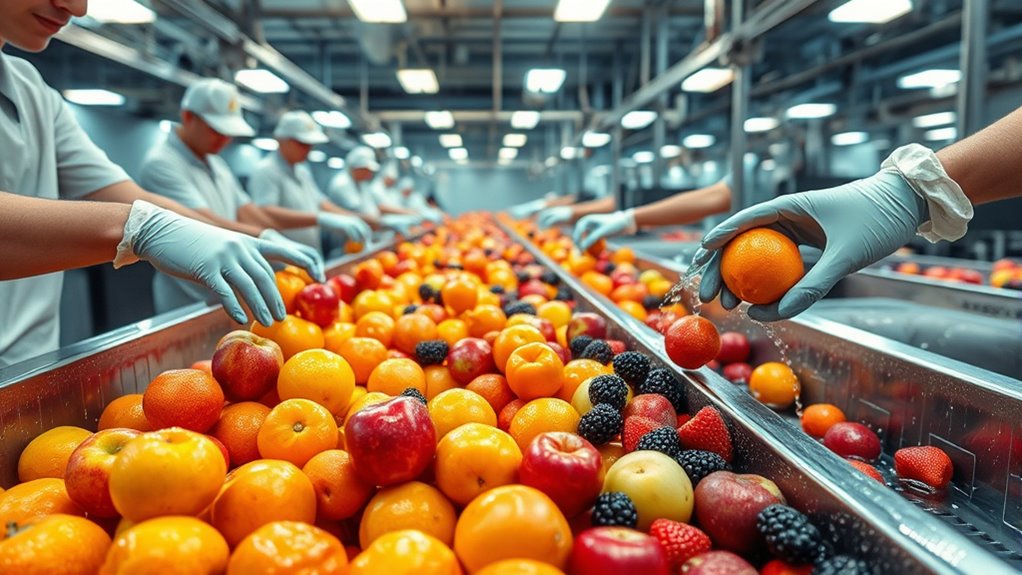

To guarantee high-quality juice, you should thoroughly wash your fruits using clean, cold water and gentle agitation to remove dirt, residues, and pesticides. Sorting is equally important; select only ripe, undamaged fruit while discarding moldy or bruised pieces and foreign objects. Proper handling maintains safety and consistency, preventing contamination and spoilage. Mastering these steps sets a strong foundation for successful juicing, and exploring further can help you refine your process for even better results.
Key Takeaways
- Use clean, cold water and mild agents to effectively remove dirt, pesticides, and residues from the fruit surface.
- Employ agitation during washing to loosen contaminants and ensure thorough cleaning.
- Select fruit based on ripeness, removing damaged, moldy, or bruised items to prevent spoilage.
- Discard foreign objects like stems and leaves to maintain product safety and quality.
- Ensure gentle handling throughout washing and sorting to preserve fruit integrity and flavor.
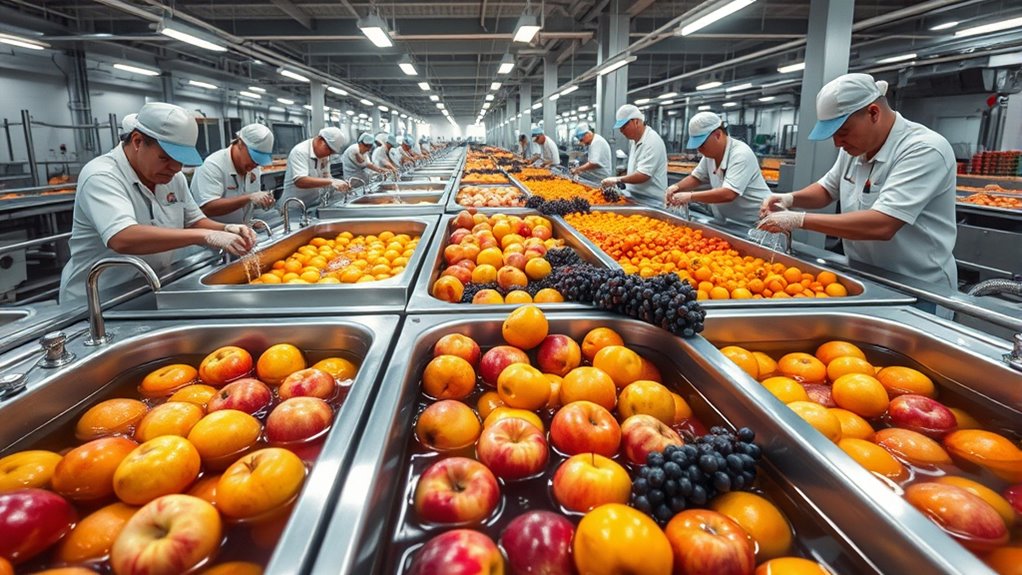
Washing and sorting fruit are vital steps in guaranteeing high-quality juice production. These initial processes directly impact the safety, flavor, and overall quality of your final product. When you start with thoroughly washed and properly sorted fruit, you set the stage for a successful juice batch. During washing, your goal is to remove dirt, debris, and residues, including pesticides. Pesticide removal is essential because leftover chemicals not only pose health risks but can also interfere with the taste and clarity of the juice. To achieve effective pesticide removal, you should use clean, cold water and consider incorporating mild food-grade cleaning agents or agitation techniques. This helps loosen and remove stubborn residues, ensuring your fruit is safe for consumption and processing. Additionally, proper washing techniques can help minimize pathogen presence, which is crucial for food safety.
Sorting fruit is equally important and should be done carefully. You need to select fruit at the right ripeness stage because ripeness directly influences juice yield, flavor, and shelf life. Overripe fruit can ferment quickly, leading to spoilage, while underripe fruit often yields less juice and might have a tart or dull taste. By choosing fruit that’s ripe but firm, you guarantee maximum sweetness, proper texture, and consistent flavor in your juice. During sorting, discard any damaged, moldy, or bruised fruit, as these can introduce spoilage organisms or off-flavors. Proper sorting also involves removing foreign objects like stems or leaves that could contaminate the batch or damage processing equipment.
Once you’ve washed and sorted your fruit, you should inspect each piece for uniform ripeness, which simplifies the subsequent extraction process. Consistent ripeness ensures you don’t have to adjust processing parameters for different fruit qualities, leading to a more uniform product. Additionally, sorting helps prevent contamination and ensures only the best fruit makes it into your juice. This step reduces the risk of introducing unwanted bacteria or mold, which can spoil your product or pose health risks. As you handle your fruit, remember that gentle washing and meticulous selection are essential to maintaining fruit integrity, flavor quality, and safety standards. Incorporating knowledge about emergency preparedness essentials can also help in planning for unexpected issues during processing, ensuring your operation remains resilient in challenging conditions.
fruit washing and sorting station
As an affiliate, we earn on qualifying purchases.
As an affiliate, we earn on qualifying purchases.
Frequently Asked Questions
How Long Can Washed Fruit Be Stored Before Processing?
You can store washed fruit for up to 24 to 48 hours before processing, depending on the fruit type and storage conditions. To maximize fruit shelf life, keep it refrigerated at 32-40°F (0-4°C) and in a humidity-controlled environment. Proper storage conditions slow down spoilage and maintain freshness, ensuring your fruit stays in ideal condition for juicing. Always monitor for signs of spoilage before processing.
Are There Eco-Friendly Cleaning Methods for Fruit Washing?
You can use eco-friendly cleaning methods like organic sanitizers and biodegradable cleaners to wash fruit effectively. Picture a gentle, bubbling rinse that removes dirt and bacteria without harming the environment. These natural solutions break down safely after use, leaving no toxic residue. They’re perfect for maintaining quality while caring for the planet, ensuring your fruit is clean and ready for processing with minimal ecological impact.
What Are the Most Common Contaminants in Fruit for Juice?
You should watch out for common contaminants like pesticide residues and microbial contamination. Pesticide residues come from chemicals used during farming, which can linger on the fruit surface. Microbial contamination, including bacteria and molds, can occur from soil, handling, or storage. These contaminants pose health risks, so thorough washing and sorting are essential. Using eco-friendly cleaning methods helps reduce chemical residues while effectively removing microbes, ensuring safe, high-quality juice.
How Is Fruit Quality Assessed After Washing and Sorting?
After washing and sorting, you check fruit quality by inspecting firmness and color consistency—think of it as the fruit’s beauty contest. You gently squeeze to feel its firmness, making sure it’s not mushy or too hard. Then, you compare hues to make certain of uniform color, indicating ripeness and freshness. If it passes these tests, you can confidently say your fruit is ready for the juicing process—no fancy awards needed!
Are There Specific Regulations for Washing Fruit in Different Countries?
Yes, there are specific regulations for washing fruit in different countries to guarantee safety and quality. You must follow international standards like Codex Alimentarius and local regulatory compliance to avoid contamination. These rules specify water quality, hygiene practices, and sanitation procedures. Staying updated with regional regulations helps you maintain compliance, protect consumers, and ensure your fruit meets all safety standards for processing and sale.
Conclusion
Now that you know how to wash and sort fruit properly, your juice will be brighter and fresher than a sunrise. Proper cleaning removes dirt and contaminants, ensuring pure, delicious juice. Sorting guarantees only the best fruit makes it into your bottles, preventing spoiled batches. Think of your process as a superhero shield, protecting every glass from flaws. With these steps, you’ll create juice so vibrant and tasty, it’ll knock your customers’ socks off like a thunderclap of flavor!