To quickly clean a large amount of produce, try batch washing. Fill a basin with cold water and add a splash of vinegar or produce-safe cleaner. Submerge your fruits or vegetables, gently agitate, and then rinse everything together in a second basin or under running water. This method reduces water use, saves time, and guarantees your produce is thoroughly clean and safe. Keep going to discover more tips for efficient, eco-friendly produce prep.

Get kitchen staples and gadgets delivered free with Prime
- Fast, free delivery on millions of items
- Prime Video, Amazon Music and more included
- Member-only deals all year
Key Takeaways
- Fill a large basin with cold water and optional cleaning solution for soaking produce.
- Briefly submerge produce to loosen dirt and bacteria before rinsing.
- Agitate produce gently in the water to enhance cleaning efficiency.
- Rinse all produce simultaneously under running water or in a second basin.
- Drain, then pat dry or air dry for storage or immediate use.
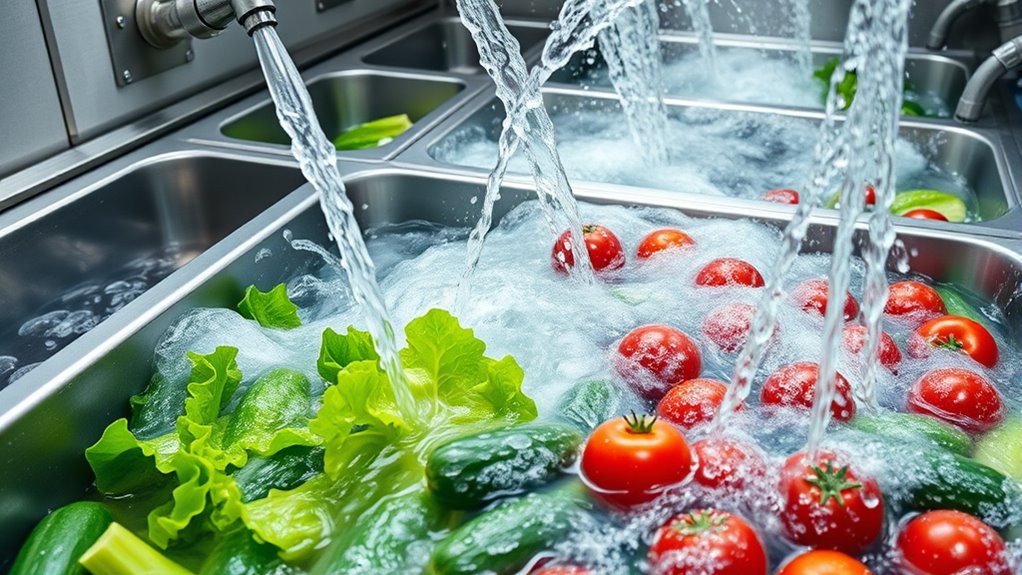
Have you ever wondered how large quantities of clothes or materials are cleaned efficiently? While it might seem unrelated, the same principles apply when you’re looking to streamline your produce cleaning routine. Batch washing isn’t just for laundry; it’s a smart approach to handling fruits and vegetables, especially when you want to maintain freshness and conserve resources. When you wash produce in batches, you reduce water usage considerably, which supports water conservation efforts. Instead of rinsing each piece individually, you can soak and rinse a large amount at once, saving both water and time. This method is especially helpful when you’re preparing for a big meal or preserving a harvest.
Using batch washing for produce also helps with fruit preservation. Once fruits are thoroughly cleaned, they last longer because dirt, bacteria, and residues that cause spoilage are removed efficiently. When you take the time to wash your fruits properly in large batches, you prevent the spread of mold and bacteria that can cause faster deterioration. It’s a simple step that extends the life of your fruits, meaning less waste and more enjoyment from your harvest or grocery shopping. Plus, cleaning in bulk allows you to inspect and sort fruits more effectively, removing damaged or spoiled items before storage.
Thorough batch washing extends fruit freshness and reduces waste by removing contaminants efficiently.
The process begins with filling a large basin or sink with clean, cold water—adding a splash of vinegar or a produce-safe cleaning solution can enhance the cleaning process without risking fruit quality. Submerge your fruits in the water, gently agitating them to loosen dirt and residues. Let them soak briefly to allow the water to work on removing contaminants. Once soaked, you can rinse all the produce simultaneously under running water or in a second clean basin. This not only saves water but also ensures that all surfaces are thoroughly cleaned. After rinsing, you can drain the basin and set the fruits out to dry or pat them dry with clean towels.
Batch washing is particularly effective when you’re preserving fruits through freezing or canning because it guarantees your produce is clean, safe, and ready for storage. It minimizes waste, shortens preparation time, and supports sustainable practices by conserving water. Additionally, adopting efficient methods like this can significantly reduce your overall water footprint in the kitchen. By adopting this method, you’re making a smart choice for your kitchen and the environment. Efficiently cleaning large amounts of produce in one go keeps your routine simple, reduces resource consumption, and helps ensure your fruits stay fresh longer. It’s a small change that makes a big difference in how you handle your produce and contributes to a more sustainable lifestyle.
As an affiliate, we earn on qualifying purchases.
Frequently Asked Questions
Can Batch Washing Remove All Pesticide Residues Effectively?
Batch washing can substantially improve pesticide removal, but it may not eliminate all residues completely. To guarantee produce safety, you should use thorough washing techniques like soaking and scrubbing, especially for fruits and vegetables with crevices. While batch washing helps reduce pesticide residue on a large scale, combining it with other methods like peeling or using safe cleaning solutions offers better pesticide removal and enhances overall produce safety.
What Is the Optimal Water Temperature for Batch Washing Produce?
You should set your water temperature to around 20°C (68°F) for ideal cleaning efficiency. Interestingly, this temperature balances effective pesticide removal with gentle produce handling. Cold water may not remove residues thoroughly, while hot water risks damaging delicate items. By maintaining this moderate temperature, you guarantee thorough cleaning without compromising produce quality, making your batch washing routine both safe and efficient.
How Long Should Produce Be Soaked During Batch Washing?
You should soak produce for about 2 to 3 minutes during batch washing. This soaking duration effectively loosens dirt and contaminants without jeopardizing the produce texture. Keep an eye on the items, especially delicate ones, and avoid soaking too long, which can lead to softening or damage. A quick, controlled soak ensures thorough cleaning while maintaining the produce’s quality and freshness.
Are There Any Produce Types That Shouldn’T Be Washed in Batches?
You should avoid batch washing fragile produce and leafy greens, as they can easily bruise or tear. These items require gentle handling, so washing them individually or using a delicate rinse is best. Batch washing might cause damage or spoilage, especially for delicate textures. Always assess the produce type first to make sure you’re cleaning each item properly without compromising its quality or integrity.
How Often Should the Washing Water Be Changed During Batch Cleaning?
Imagine your washing water as a flowing river carrying away dirt; you need to refresh it regularly. Change the water every 2 to 3 batches to maintain water quality and prevent contamination. This keeps your produce fresh and safe, like a clear stream flowing unpolluted. Regular water changes guarantee contaminants don’t accumulate, protecting your supply and ensuring every vegetable or fruit is squeaky clean and safe for consumption.
Conclusion
Now that you’ve learned the batch washing routine, you’re all set to save time and keep your produce spotless. Just remember, “A stitch in time saves nine”—the sooner you clean your fruits and veggies, the fresher they stay. Incorporate this quick routine into your weekly prep, and you’ll enjoy healthier meals with less hassle. Clean produce is the first step to delicious, nutritious dishes—so don’t wait; start batch washing today!
NFL season / tailgating Picks
team gear
As an affiliate, we earn on qualifying purchases.