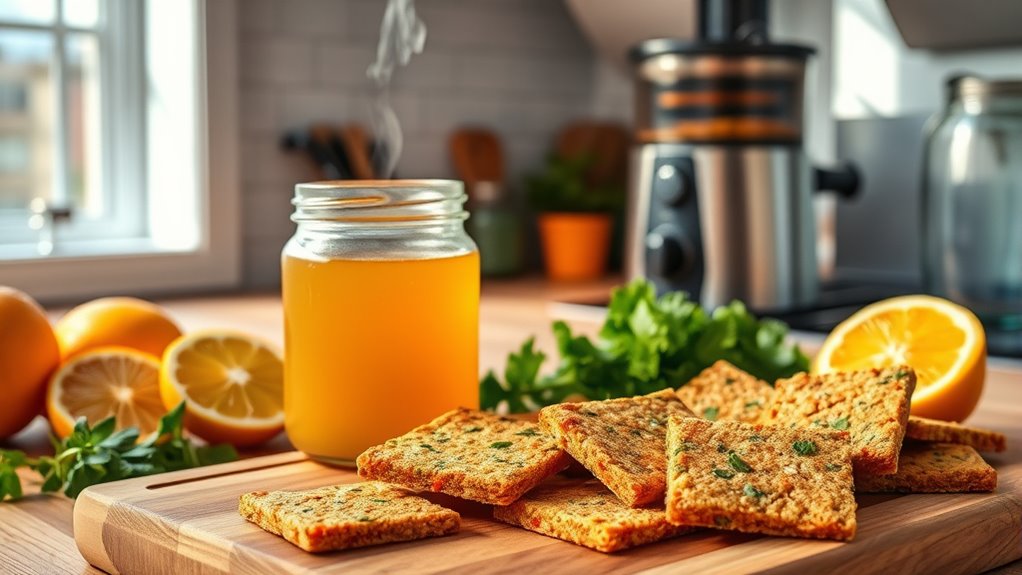
To practice zero-waste juicing, repurpose pulp into tasty snacks like crackers by spreading it thin, seasoning, and baking. You can also create flavorful broths by steeping pulp in hot water with aromatics, which serve as nutritious bases for soups or stews. Composting leftover pulp further reduces waste and nourishes your garden. Keep exploring for more simple strategies to maximize your produce and minimize waste in your juicing routine.

Get kitchen staples and gadgets delivered free — and shop member deals
- Fast, free delivery on millions of items
- Access to Prime Big Deal Days deals on October 6–7
- Prime Video, Amazon Music and more included
Key Takeaways
- Transform leftover pulp into nutritious crackers by spreading it thin, seasoning, and baking to reduce waste and create tasty snacks.
- Use pulp to make flavorful vegetable broths by steeping in boiling water with herbs and aromatics for sustainable cooking.
- Incorporate composting techniques with pulp and browns to recycle waste into nutrient-rich soil for gardening.
- Store leftover juice in airtight containers or freeze in small portions to extend freshness and minimize waste.
- Practice organic juicing at home with pesticide-free produce to support eco-friendly, zero-waste juicing habits.
Have you ever thought about how much waste juicing creates? When you juice fruits and vegetables, you’re left with pulp, peels, and seeds that often get tossed aside. But instead of throwing this valuable byproduct away, you can turn it into delicious, zero-waste snacks and broths. To do this effectively, it helps to understand composting techniques that can transform your pulp into nutrient-rich compost. By layering your pulp with browns like dried leaves or shredded paper, and maintaining a proper balance of greens and browns, you can create healthy compost that nourishes your garden. This not only reduces waste but also closes the loop in your food cycle, making your juicing routine more sustainable.
Transform pulp into nutrient-rich compost by layering with browns and maintaining balance.
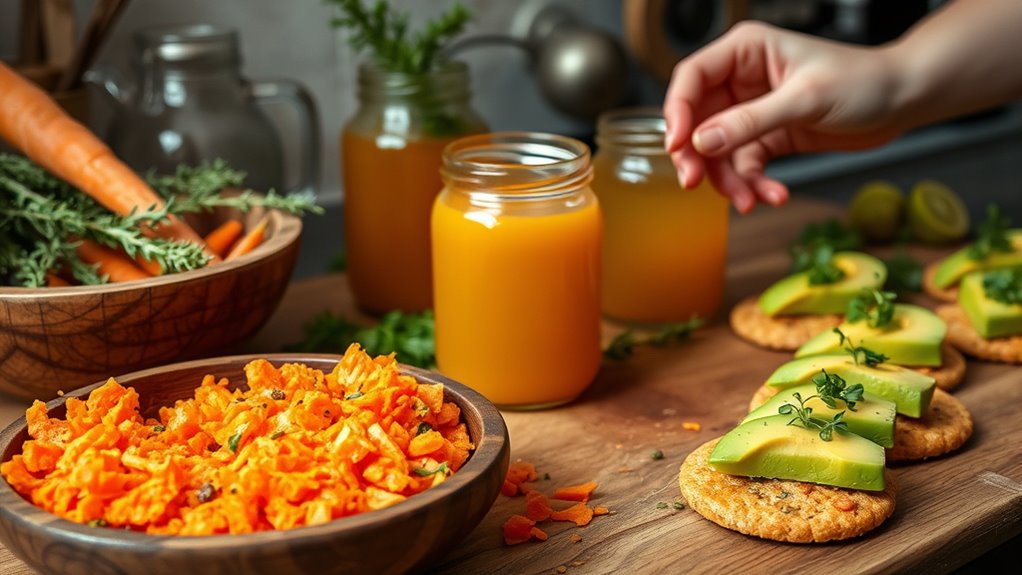
If composting isn’t an option, you can still make the most out of your pulp by repurposing it into pulp crackers. Simply spread the pulp thin on a baking sheet, season it with herbs, spices, or a pinch of salt, and bake until crisp. These crackers make a crunchy, nutritious snack that minimizes waste and adds flavor to your diet. Alternatively, you can use the pulp to make broths. Steep the leftover peels and pulp in boiling water with aromatics like garlic, onion, and herbs to create a flavorful vegetable broth. This broth serves as a base for soups or stews, enriching your meals while utilizing every part of your produce.
To keep your juicing process efficient and waste-free, learn some juice storage tips. Fresh juice is best enjoyed immediately, but when you need to store it, use airtight containers and keep it in the fridge to prevent oxidation and spoilage. For longer storage, consider freezing your juice in small portions—this way, you can enjoy fresh-tasting juice days later. Proper storage prevents waste by extending the shelf life of your juice and ensures you get the most out of your efforts. Additionally, understanding how to make organic juices at home using fresh, pesticide-free produce can enhance your sustainability efforts.
Combining these techniques—composting, making pulp crackers, creating broths, and storing your juice correctly—helps you reduce waste and enjoy every part of your fruits and vegetables. It’s about respecting your ingredients and being mindful of the environment. With a little planning, you can turn what would be waste into tasty snacks and nourishing broths, making your juicing habits truly zero-waste. Embracing these practices not only benefits your health but also contributes to a more sustainable lifestyle, proving that you don’t need to compromise flavor or convenience to be eco-friendly.
vegetable pulp crackers baking sheet
As an affiliate, we earn on qualifying purchases.
As an affiliate, we earn on qualifying purchases.
Frequently Asked Questions
How Long Do Homemade Pulp Crackers Stay Fresh?
Homemade pulp crackers stay fresh for about 3 to 5 days if you store them properly. To maximize their shelf life, make sure to dry the pulp thoroughly during pulp drying, which helps prevent mold. Keep the crackers in an airtight container at room temperature. You can experiment with flavor variations to keep them interesting, but always check for any signs of spoilage before eating, especially after a few days.
Can Pulp Broths Replace Traditional Stock in Recipes?
You can use pulp broths as a tasty alternative to traditional stock, but they may not always replace it seamlessly. Pulp flavor variations and nutritional benefits add depth, yet they often lack the rich, umami profile of classic stocks. Think of pulp broths as a versatile, healthful boost rather than a complete swap. Experiment with different pulp types to enhance flavor and nutrition, but keep in mind they work best as a supplement.
Are There Any Health Risks With Consuming Pulp-Based Products?
There are some health risks with consuming pulp-based products, mainly due to pulp contamination and allergen concerns. You should guarantee your pulp is thoroughly washed and stored properly to avoid bacteria or mold. Be cautious if you have food allergies, as pulp may contain allergens from the original fruits or vegetables. Always monitor for any unusual smell or appearance, and consult a healthcare professional if you have doubts about safety.
What Are the Best Storage Methods for Pulp Crackers?
You probably didn’t expect to hear that the best way to store pulp crackers is in airtight containers, and refrigeration keeps them fresh longer. To prevent spoilage, place your crackers in a sealed container and store them in the fridge, ideally within two days of making. For longer storage, consider freezing them in an airtight bag. Always label your containers with dates to keep track of freshness.
Can All Fruit and Vegetable Pulp Be Used for Crackers and Broths?
Yes, you can use most fruit and vegetable pulp for crackers and broths, but consider their pulp flavor combinations and drying techniques. Some pulps, like citrus or onion, may need extra drying or flavor adjustments. It’s best to experiment with drying times and flavors to prevent spoilage or off-flavors. Always check for moisture and spoilage before using pulp in recipes, ensuring your creations taste fresh and vibrant.
Conclusion
Now that you’ve explored zero-waste juicing, the possibilities are endless. Imagine turning every leftover pulp into delicious crackers or nourishing broths—what else could you transform? The more you experiment, the more surprises await. Will you discover your new favorite snack or secret ingredient? Keep pushing boundaries, and don’t be surprised if your kitchen becomes a hub of innovation. The journey doesn’t end here—what will you create next? The future of waste-free living is in your hands.
NFL season / tailgating Picks
team gear
As an affiliate, we earn on qualifying purchases.