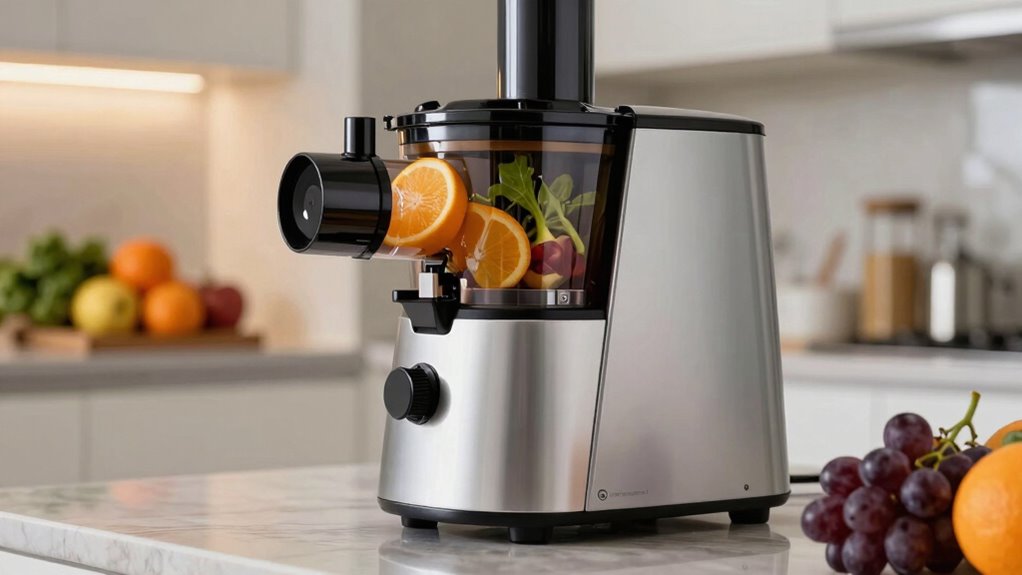

While wide-chute juicers make loading fruits and vegetables faster and cleanup easier, they can also lower your juice yield. Larger openings tend to trap more pulp, which can reduce the amount of juice extracted and increase mess during juicing. Proper cleanup immediately after use helps manage pulp and maintain efficiency. If you want to discover more tips on balancing convenience with maximizing juice, keep exploring these features.

Get kitchen staples and gadgets delivered free — and shop member deals
- Fast, free delivery on millions of items
- Access to Prime Big Deal Days deals on October 6–7
- Prime Video, Amazon Music and more included
Key Takeaways
- Larger chutes simplify loading but can trap more pulp, reducing juice yield.
- Increased pulp buildup in wider openings may divert juice from the container, lowering overall yield.
- Easy cleaning of wide chutes helps maintain efficiency but requires prompt pulp removal to prevent clogs.
- Wide chutes often lead to more external mess, which can cause pulp loss and impact juice quantity.
- Design trade-offs exist: convenience of wide chutes may come at the expense of maximizing juice extraction efficiency.
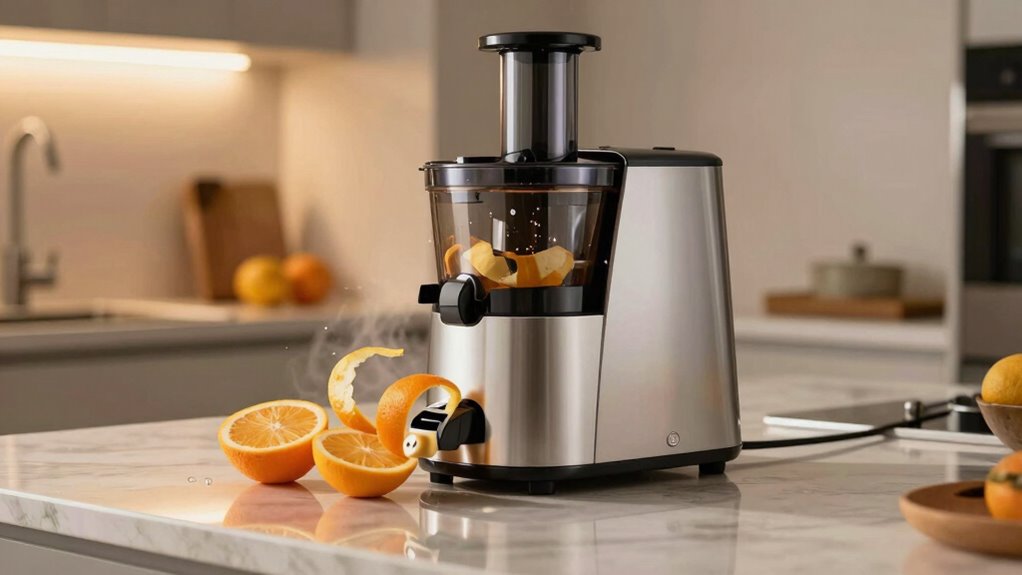
Cleaning ease is another factor to consider with wide-chute juicers. Their larger openings make it easier to access internal parts, so you don’t have to disassemble the entire machine to clean tricky corners. Many models feature fewer components or removable parts that rinse quickly, making cleanup faster and less tedious. Still, keep in mind that the bigger chute can sometimes trap more pulp or produce more mess on the outside of the machine during use. Proper cleaning immediately after juicing helps prevent pulp buildup and ensures your juicer stays in top condition. If you’re someone who prefers quick, straightforward cleaning, look for models with minimal parts and dishwasher-safe components. Additionally, the human-centered design of some wide-chute juicers aims to enhance user experience, but it’s important to evaluate how these features impact overall maintenance.
wide chute juicer with easy cleaning
As an affiliate, we earn on qualifying purchases.
As an affiliate, we earn on qualifying purchases.
Frequently Asked Questions
Do Wide-Chute Juicers Require More Cleaning Than Narrow-Chute Models?
Yes, wide-chute juicers often require more cleaning due to increased cleaning complexity and debris buildup. With larger openings, you tend to get more pulp stuck in crevices, making maintenance frequency higher. You’ll need to spend extra time rinsing and scrubbing to prevent clogging and guarantee peak performance. While they’re convenient for processing large pieces, be prepared for more frequent cleaning to keep your juicer working smoothly.
Can Wide-Chute Juicers Handle All Types of Fruits and Vegetables?
Imagine your juicer as a versatile artist’s palette, ready to tackle any fruit or vegetable you toss in. Wide-chute juicers excel in fruit versatility and vegetable adaptability, handling everything from apples to carrots effortlessly. You’ll find they’re designed to accommodate various sizes, making preparation easier. However, some tough or fibrous produce might challenge their limits, so always consider the specific produce you plan to juice for ideal results.
Are Wide-Chute Juicers More Energy-Efficient Than Traditional Models?
Yes, wide-chute juicers are generally more energy-efficient than traditional models. They often require less power to operate because their larger feed chutes reduce the need for extensive prep work, and their motor designs optimize energy consumption. This improved power efficiency means you can juice more with less energy, making them a convenient and eco-friendly choice. Keep in mind, actual energy savings depend on usage and specific model features.
How Long Does the Juicing Process Take With Wide-Chute Machines?
With wide-chute juicers, the juicing process usually takes about 5 to 10 minutes, depending on the fruit or vegetable. Their faster feeding speed allows you to insert larger pieces, which speeds up pulp extraction. You’ll notice less prep work, but sometimes the increased feed size can lead to slightly longer extraction times if the machine struggles with tougher produce. Overall, they’re convenient for quick juicing sessions.
Do Wide-Chute Juicers Produce More Foam or Pulp Than Standard Juicers?
You’ll find that wide-chute juicers tend to produce more foam and pulp than standard models. Surprisingly, their pulp consistency is often wetter, leading to more pulp in the juice. Foam production also increases because larger pieces and rapid processing trap air more easily. So, if you prefer a smooth, foam-free juice, a standard juicer might be better, but wide-chute options save prep time at the expense of extra foam and pulp.
Conclusion
So, while wide-chute juicers make prep easier, they might compromise your juice yield. Imagine you’re excited to make a big batch of fresh juice for a weekend brunch, only to find you’re losing more liquid than expected because of the chute size. If you want maximum juice and efficiency, weigh the convenience against the potential loss. Sometimes, a smaller chute and more prep time can give you a better, more satisfying result.
NFL season / tailgating Picks
team gear
As an affiliate, we earn on qualifying purchases.