
When you use a press-cloth during manual fruit pressing, it acts as a barrier that filters out pulp, seeds, and skins, resulting in a clearer and cleaner juice. Simply place the cloth over the press and secure it properly before pressing. This method not only improves the final product’s appearance but also reduces filtration afterward. If you want to discover more tips on achieving the best juice, keep exploring the techniques.

Get kitchen staples and gadgets delivered free — and shop member deals
- Fast, free delivery on millions of items
- Access to Prime Big Deal Days deals on October 6–7
- Prime Video, Amazon Music and more included
Key Takeaways
- Use a clean press-cloth to cover the fruit during manual pressing, filtering out pulp and seeds for clearer juice.
- Ensure the press-cloth fits tightly around the fruit to prevent pulp from slipping through during extraction.
- Regularly check and replace the press-cloth if debris passes through, maintaining juice clarity.
- Properly prepared fruit and storage improve pressing efficiency and reduce pulp in the final juice.
- Combining the press-cloth method with gentle pressing techniques yields cleaner, more refined homemade fruit juice.

Have you ever wondered how to extract fresh juice from fruit without relying on electric machines? If so, manual fruit pressing offers a simple yet effective approach that keeps you connected to the process. One of the key tricks to getting clean juice involves using a press-cloth, which acts as a barrier to pulp and seeds, resulting in a clearer, more refined final product. But before you begin pressing, it’s essential to understand how fermentation techniques and fruit storage methods play a role in preparing your fruit for ideal juice extraction.
Using fermentation techniques in your process can enhance flavor development and break down cell walls, making it easier to extract juice. Although fermentation is often associated with making wine or cider, a brief controlled fermentation can loosen the fruit’s structure, particularly with tougher fruits like apples or pears. This step isn’t necessary for all fruits, but for certain types, it can improve yield and clarity. When your fruit is ripe and ready, store it properly to preserve freshness and prevent spoilage. Fruit storage methods, such as keeping fruit cool and in a dark place, help maintain the fruit’s integrity until you’re ready to press. This ensures you’re working with the best quality, which translates into cleaner juice and better flavor.
Controlled fermentation can enhance flavor and soften tough fruits before pressing.
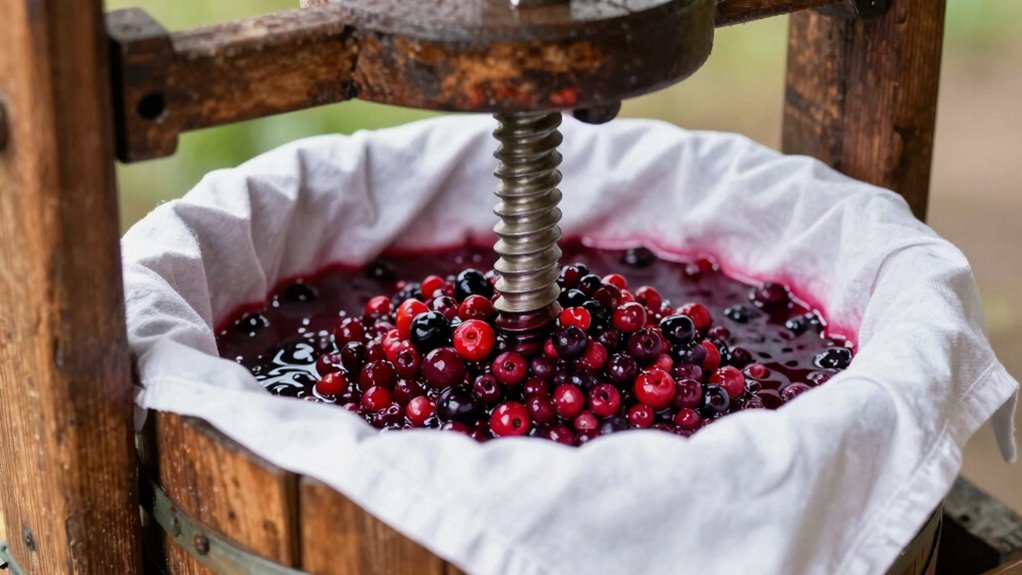
Once your fruit is stored correctly and, if desired, lightly fermented, you’re ready to start pressing. Place the fruit into a sturdy container or a traditional press, and cover it with a clean press-cloth. This fabric acts as a filter, catching pulp, seeds, and skins, so only the juice flows through. When you apply pressure—either by hand or with a simple screw press—you’ll notice the juice begins to flow steadily, leaving behind the fibrous material. The press-cloth makes this process cleaner and less messy, reducing the need for further filtering. As you press, keep an eye on the juice to catch any debris that might sneak through, and periodically adjust the cloth or replace it if necessary.
Using a press-cloth is a straightforward but crucial step for achieving clear, pure juice. It’s especially useful when working with small batches or when you want to maximize the quality of your homemade juice. The key is to maintain proper fruit storage methods beforehand and consider fermentation techniques if you’re aiming to enhance flavor or soften tougher fruit. These steps, combined with the manual pressing method, give you full control over the process, resulting in fresh juice that’s free of unwanted pulp and seeds. With patience and attention to detail, manual fruit pressing can be a rewarding way to enjoy freshly squeezed juice that’s both delicious and natural.
manual fruit press with press-cloth
As an affiliate, we earn on qualifying purchases.
As an affiliate, we earn on qualifying purchases.
Frequently Asked Questions
Can I Reuse the Press Cloth Multiple Times?
Yes, you can reuse the press cloth multiple times. To guarantee proper press cloth maintenance, wash it thoroughly after each use with gentle soap and warm water. Avoid harsh chemicals to preserve fabric dye safety, preventing color bleeding or fabric damage. Dry it completely before reuse to prevent mold. Regular cleaning and careful handling will keep your press cloth effective and safe for repeated use, ensuring cleaner juice every time.
What Types of Fabric Are Best for Press Cloths?
Ever wonder what fabric works best for press cloths? You should choose durable, tightly woven fabrics like cheesecloth, muslin, or fine cotton. These materials guarantee fabric durability and material safety, preventing fibers from contaminating your juice. Are you making certain your press cloth is both safe and effective? Opt for natural, food-grade fabrics that resist tearing and hold up after multiple uses, giving you cleaner juice every time.
How Do I Prevent Seeds From Slipping Through?
To prevent seeds from slipping through during seed separation, choose a fabric with tight weave or fine mesh to enhance fabric filtration. Use a press cloth made from muslin or cheesecloth, which effectively catch seeds while allowing juice to flow freely. guarantee the cloth is properly stretched and secured over your press. Regularly check and replace it if seeds or pulp start to clog, maintaining ideal fabric filtration and clean juice extraction.
Is Manual Pressing Suitable for Large Quantities?
Manual pressing isn’t ideal for large quantities, as it’s time-consuming and labor-intensive. For bigger batches, you should consider large-scale equipment or commercial pressing methods, which are designed to handle high volumes efficiently. These machines save you time and effort, producing consistent results. While manual pressing works well for small batches, investing in commercial pressing equipment makes sense when dealing with substantial quantities, ensuring smooth, clean juice extraction.
What Are the Environmental Benefits of Manual Pressing?
You’ll feel like a hero for the planet when you choose manual pressing, saving countless resources and reducing waste. This eco-friendly method promotes sustainable practices by using simple, reusable materials like cloths, minimizing plastic waste and energy consumption. Every squeeze you make supports a healthier environment, proving that small, mindful actions can lead to big ecological benefits. Embrace manual pressing and become a champion of eco-friendly living today!
Conclusion
By using the press-cloth trick, you guarantee your juice stays clear and pure, proving that a simple method can make a big difference. It might seem like a small step, but it actually highlights how careful technique enhances the final product. So next time you press fruit manually, remember that a little extra effort with a cloth can transform your juice—making it cleaner, smoother, and more enjoyable. Sometimes, the simplest tricks truly make the biggest impact.
NFL season / tailgating Picks
team gear
As an affiliate, we earn on qualifying purchases.