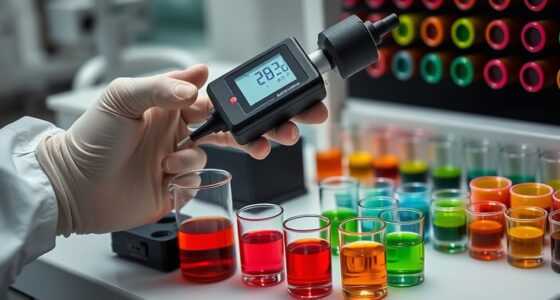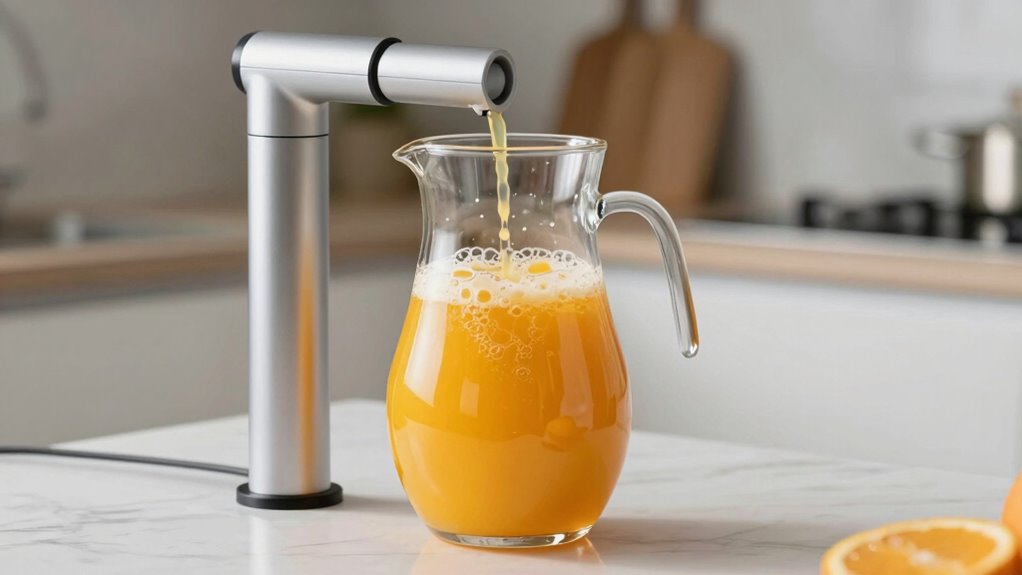

Deaerating your homemade juice helps remove trapped air that causes oxidation, which dulls flavors and shortens shelf life. You can do this easily at home using a vacuum pump or gentle shaking to release air before sealing the container. This process preserves freshness, enhances aroma, and guarantees better taste. Small steps like these make a big difference in beverage quality. To discover simple techniques and tips, see how bit your drinks can improve with this oxygen fix.

Get kitchen staples and gadgets delivered free with Prime
- Fast, free delivery on millions of items
- Prime Video, Amazon Music and more included
- Member-only deals all year
Key Takeaways
- Deaeration removes excess oxygen from juice, reducing oxidation and preserving fresh flavor.
- Using a vacuum pump or gentle shaking effectively extracts trapped air at home.
- Eliminating air prevents spoilage, enhances aroma, and improves overall taste.
- Proper deaeration prolongs juice shelf life and maintains its vibrant color and texture.
- Incorporate deaeration as a simple step to achieve smoother, more refreshing homemade juice.
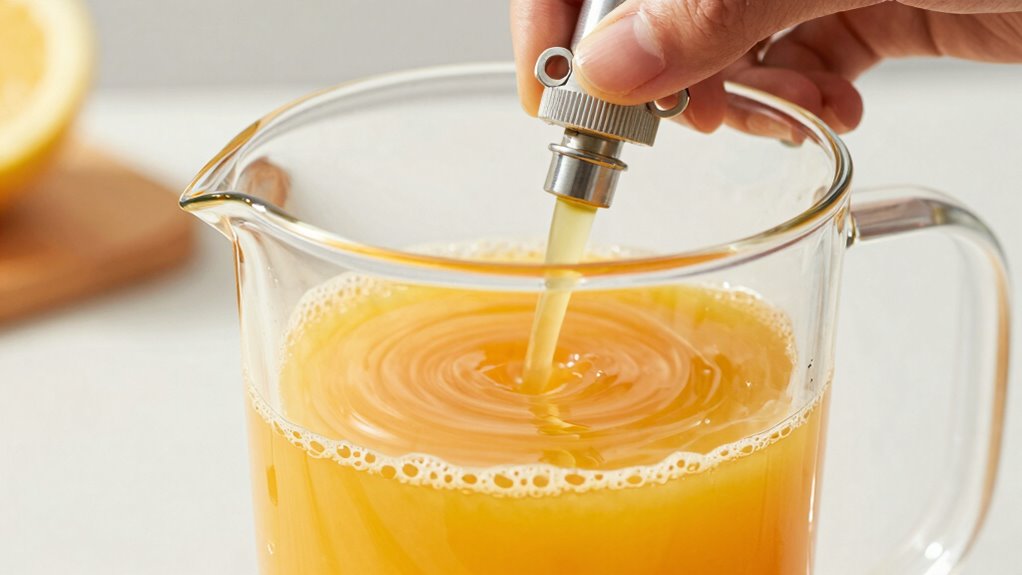
Have you ever noticed how air bubbles or a dull taste can affect the quality of your homemade beverages or water? These small but impactful factors can substantially alter the flavor and overall experience of what you’re drinking. When it comes to beverages like juice or homemade wine, oxygen exposure can cause oxidation, which diminishes freshness and flavor. That’s where deaeration comes into play, offering an effective way to improve taste and preserve quality. By removing excess air from your liquids, you can guarantee your drinks taste as vibrant and fresh as intended, making each sip a more enjoyable experience.
Deaeration is especially useful in wine preservation, but it’s equally beneficial for other beverages. When you remove dissolved oxygen, you prevent oxidation, which can cause off-flavors and spoilage over time. This process can be done easily at home with simple tools or techniques, allowing you to extend the life of your homemade wines or juices. More importantly, deaeration enhances flavor by reducing bitterness and metallic notes that often develop when oxygen reacts with the beverage’s compounds. As a result, your drinks taste cleaner, more balanced, and closer to their original flavor profile.
You might wonder how to deaerate your liquids effectively without specialized equipment. One straightforward method is to use a vacuum pump to extract air from bottles or containers. Simply pour your beverage into a bottle, attach the pump, and remove the air until you notice a slight vacuum. This pulls out the dissolved oxygen, preventing oxidation and preserving the beverage’s freshness. Alternatively, you can gently shake or stir your drink to release trapped air, then let it settle before sealing it tightly. These techniques are simple, cost-effective, and give you control over the oxygen levels in your drinks, guaranteeing they stay fresher longer. Additionally, understanding the importance of liquid oxygen levels can help you optimize your deaeration process for better results.
In addition to preserving flavor, deaeration can enhance the overall quality of your homemade drinks. Removing excess oxygen helps maintain their vibrant color, aroma, and texture. It’s especially important if you plan to store beverages for an extended period, as oxygen exposure accelerates spoilage. Whether you’re making wine, juice, or infused water, deaeration is a smart step that boosts both preservation and taste. It’s a small investment of effort that yields noticeable improvements, making your homemade beverages more enjoyable and longer-lasting.
In essence, deaeration at home is an easy yet powerful way to protect your drinks from oxygen damage. It preserves their fresh flavor, enhances aroma, and helps you enjoy every glass to the fullest. So next time you’re preparing your favorite beverage, consider removing the excess air to unlock better taste and extended freshness. Your palate—and your drinks—will thank you.
vacuum pump for juice deaeration
As an affiliate, we earn on qualifying purchases.
As an affiliate, we earn on qualifying purchases.
Frequently Asked Questions
Can Deaeration Remove All Unwanted Flavors From Juice?
Deaeration can’t remove all unwanted flavors from juice, but it markedly improves flavor enhancement by removing oxygen that causes oxidation. When you deaerate your juice, oxygen removal slows down spoilage and preserves fresh taste. However, some stubborn flavors from ingredients or spoilage may remain. So, while deaeration enhances overall flavor and freshness, it’s not a complete fix for every unwanted flavor in your juice.
How Long Does the Deaeration Process Typically Take?
The deaeration process usually takes about 10 to 15 minutes, depending on your equipment and the amount of juice. During this time, you actively remove oxygen, which enhances flavor by preventing oxidation. You’ll notice the bubbles diminish as oxygen is removed, leading to better-tasting juice with improved flavor stability. Keep an eye on the process and guarantee your setup maintains constant removal for ideal flavor enhancement.
Is Special Equipment Needed for Effective Deaeration?
You don’t necessarily need special equipment for effective deaeration, but using a vacuum pump or a wine stopper with a vacuum pump can improve results. These tools are affordable and help remove oxygen more efficiently. Consider your budget and the volume of juice you want to deaerate when choosing equipment. While basic methods work, investing in proper tools can save time and ensure better-tasting, fresher juice.
Will Deaeration Affect the Juice’s Nutritional Content?
You might worry deaeration reduces nutrient stability, but it actually helps preserve flavor retention without harming nutrients. By removing oxygen, you prevent oxidation that can degrade vitamins and minerals over time. So, your juice’s nutritional content stays intact, and you enjoy fresher, better-tasting juice longer. Using simple techniques at home won’t compromise your juice’s health benefits; instead, it enhances its overall quality and taste.
Can Deaeration Be Used for Carbonated Beverages?
Yes, deaeration can be used for carbonated beverages. During the carbonation process, removing excess oxygen through deaeration helps preserve the beverage’s freshness and carbonation levels. By reducing oxygen, you prevent spoilage and maintain the beverage’s quality longer. This technique is especially useful for homebrewers or enthusiasts wanting to extend shelf life and ensure a crisp, bubbly drink, enhancing overall beverage preservation while keeping carbonation intact.
Conclusion
Now that you know how to deaerate your juice at home, you’re all set to enjoy fresher, better-tasting drinks. Don’t let oxygen ruin your efforts—think of it as clearing the air for pure flavor to shine through. With just a little effort, you can turn a simple glass into a true delight. Remember, sometimes you’ve got to roll up your sleeves and take control to truly savor the fruits of your labor.
Fall Picks
fall essentials
As an affiliate, we earn on qualifying purchases.