
Maintaining the correct rinse temperature in your commercial dishwasher is crucial for juice bars to ensure glasses are thoroughly sanitized and safe for customers. When the rinse temperature is too low, bacteria and residue can remain, risking contamination and health code violations. Too high, and you’ll waste energy and wear out equipment faster. Proper temperature control helps maintain hygiene, improve efficiency, and extend your dishwasher’s lifespan. Keep these tips in mind to keep your operation running smoothly—there’s more to discover ahead.

Get kitchen staples and gadgets delivered free — and shop member deals
- Fast, free delivery on millions of items
- Access to Prime Big Deal Days deals on October 6–7
- Prime Video, Amazon Music and more included
Key Takeaways
- Proper rinse temperature ensures glasses are sanitized, preventing bacteria and cross-contamination in juice bar environments.
- Maintaining the correct rinse temperature optimizes energy use while achieving effective sanitation standards.
- Regular monitoring and adjustments prevent sanitation failures and extend dishwasher lifespan.
- Proper rinse temperatures contribute to clear, spotless glasses, enhancing beverage presentation and customer satisfaction.
- Consistent temperature management supports health compliance, reduces repair costs, and promotes efficient daily operations.

Commercial dishwashers are indispensable appliances for restaurants, cafes, and other food service businesses that need to clean large quantities of dishes quickly and efficiently. When it comes to juice bars, where glassware and utensils are frequently used, understanding the significance of rinse temperature is critical. The rinse cycle isn’t just about cleanliness; it directly impacts the quality of your beverages, customer safety, and overall operational efficiency. Maintaining the correct rinse temperature ensures that glasses are sanitized properly, preventing bacteria growth and cross-contamination, which is especially crucial in a health-conscious environment like a juice bar.
Proper rinse temperature in commercial dishwashers ensures glasses are sanitized, safe, and ready for high-quality beverages.
One of the key reasons rinse temperature matters is its influence on energy efficiency. When you set your dishwasher to the right rinse temperature—usually between 180°F and 195°F—you achieve ideal sanitation without wasting unnecessary energy. Operating at excessively high temperatures can lead to increased energy consumption and higher utility bills, while too low a temperature risks inadequate cleaning and sanitation. Striking the right balance helps you conserve energy while maintaining hygiene standards. To maximize this, regularly check your dishwasher’s thermostat and calibration to ensure it’s reaching the correct temperature, and avoid over-using energy-intensive cycles unless necessary.
Proper maintenance tips are essential to keep your commercial dishwasher running at peak performance. Regularly inspecting and cleaning spray arms, filters, and nozzles ensures water and detergent flow remains unobstructed, which is crucial for achieving thorough rinsing at the appropriate temperature. Additionally, descaling the machine periodically helps prevent mineral buildup that can impair heating elements and reduce efficiency. This not only extends the lifespan of your dishwasher but also conserves energy by ensuring it heats water effectively. Always follow the manufacturer’s guidelines for maintenance routines and use recommended cleaning agents to avoid damaging critical components. Moreover, understanding the importance of rinse temperature can help you better optimize your cleaning protocol, ensuring compliance with health standards and customer safety.
Adjusting your rinse temperature isn’t just a one-time setup; it requires ongoing attention to detail. Keep a maintenance log to track inspections and cleanings, and regularly test the water temperature during operation. If you notice glasses aren’t coming out as clear or sanitized as they should be, it could be a sign that the rinse cycle isn’t reaching the right temperature—promptly addressing this can save you from costly repairs or replacements down the line. By implementing these maintenance tips and focusing on energy efficiency, you ensure that your juice bar’s dishwashing process remains effective, safe, and cost-efficient, ultimately contributing to a better customer experience and smoother daily operations.
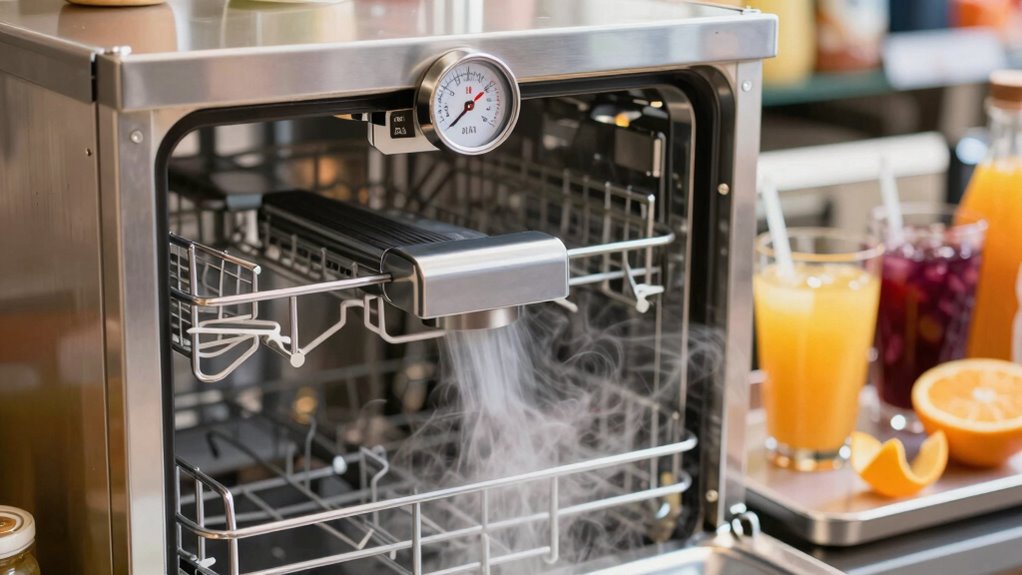
commercial dishwasher rinse temperature gauge
As an affiliate, we earn on qualifying purchases.
As an affiliate, we earn on qualifying purchases.
Frequently Asked Questions
How Does Rinse Temperature Affect Overall Dish Sanitation?
You need to maintain the right rinse temperature because it directly impacts dish sanitation. Higher temperatures effectively kill bacteria and remove residue, helping you meet sanitation standards. Regular dishwasher maintenance ensures the rinse cycle stays at the correct temperature, preventing health risks and ensuring cleanliness. If the rinse temperature is too low, dishes won’t be properly sanitized, which can compromise safety and impact your juice bar’s reputation for hygiene.
What Is the Ideal Rinse Temperature for Juice Bar Glasses?
Think of your rinse cycle as a gentle breeze that clears away lingering doubts. For juice bar glasses, keep the rinse temperature around 180°F to make certain of thorough cleanliness. This temperature consistency guarantees the removal of contaminants and ensures crystal-clear glasses. If the rinse gets too cool, residues might cling; if too hot, glasses could crack. Maintain the ideal temperature, and your glasses will shine with purity and confidence.
Can Incorrect Rinse Temperatures Cause Equipment Damage?
Yes, incorrect rinse temperatures can cause equipment damage, impacting its lifespan. When you don’t follow proper temperature guidelines, mineral buildup or warping can occur, leading to costly repairs. To protect your investment, stick to recommended rinse temperatures and maintain strict maintenance protocols. Doing so guarantees your dishwashers operate efficiently, reduces breakdowns, and extends their longevity, saving you money and keeping your juice bar running smoothly.
How Often Should Rinse Temperature Settings Be Checked and Adjusted?
You should check and adjust rinse temperature settings weekly to guarantee ideal performance. Studies show that improper rinse temperatures can increase energy use by up to 20%. Follow a regular maintenance schedule and calibration procedures to keep temperatures accurate. This proactive approach prevents equipment damage, ensures sanitization, and maintains efficient operation, especially in busy juice bars where hygiene standards are critical. Consistent checks keep your dishwasher running smoothly and safely.
Does Rinse Temperature Impact Drying Time for Dishes?
Yes, rinse temperature impacts drying time for dishes. During the rinse cycle, a higher temperature helps water evaporate faster, leading to quicker drying. Proper temperature control guarantees the rinse cycle reaches the ideal temperature, preventing water spots and streaks. If the rinse temperature is too low, dishes take longer to dry and may not dry completely. Regularly checking and adjusting temperature control helps maintain efficient drying and spotless results.
Conclusion
In a juice bar, maintaining the right rinse temperature ensures your glasses come out spotless and sanitized. For example, imagine a shop that lowered its rinse temp slightly; staff noticed more residues and customer complaints. By adjusting to the recommended temperature, they restored sparkling, hygienic glassware, boosting customer satisfaction. Remember, consistent rinse temperatures not only improve cleanliness but also protect your equipment and reputation. Keep an eye on those settings, and your juice bar will stay fresh and inviting.
NFL season / tailgating Picks
team gear
As an affiliate, we earn on qualifying purchases.