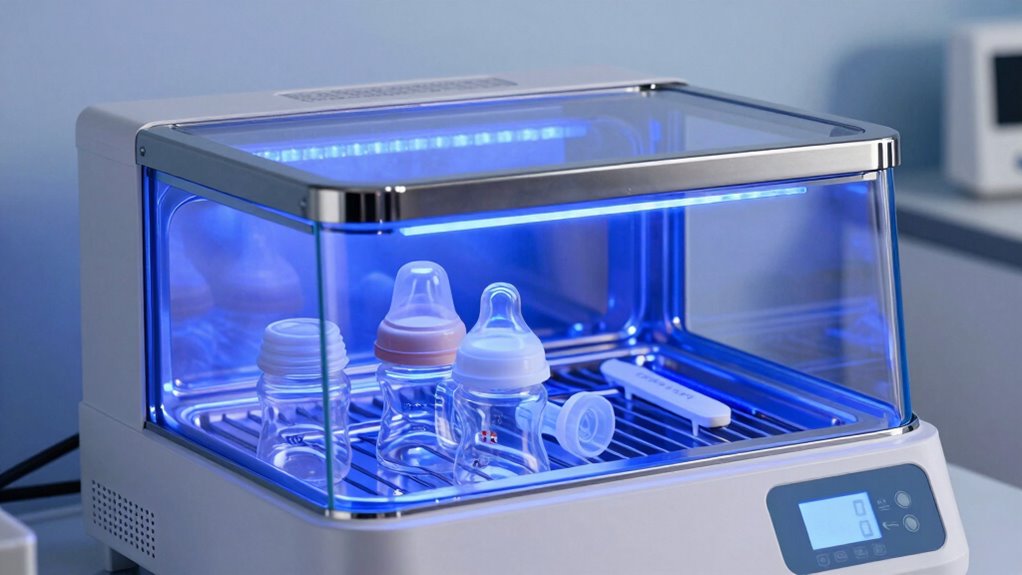

To use UV and ozone sterilizers safely for bottles and tools, always follow the manufacturer’s instructions and operate in a well-ventilated space. Avoid looking directly at UV light or inhaling ozone fumes, and keep children and pets away during use. Regularly inspect and maintain your sterilizer, replacing bulbs as needed, and ensure proper item placement to avoid overcrowding. Ventilate the area afterward to dissipate residual ozone. Continuing to explore these safety steps helps you safeguard yourself and your family effectively.

Get kitchen staples and gadgets delivered free with Prime
- Fast, free delivery on millions of items
- Prime Video, Amazon Music and more included
- Member-only deals all year
Key Takeaways
- Always follow manufacturer instructions for safe operation and item placement during sterilization.
- Ventilate the area thoroughly after ozone sterilization to dissipate residual ozone fumes.
- Keep children and pets away during sterilization procedures to prevent accidental exposure.
- Regularly inspect and replace UV bulbs and ozone generator components as recommended.
- Use protective gear and operate in a well-ventilated space to minimize inhalation of ozone and UV exposure.

UV and ozone sterilizers are effective tools for disinfecting surfaces and air by destroying bacteria, viruses, and other pathogens. When using these devices for sterilizing bottles and tools, it’s essential to prioritize safety to prevent accidental exposure and ensure peak performance. First, always read the manufacturer’s instructions carefully. These devices emit ultraviolet light or ozone, which can be harmful if mishandled. Never look directly into a UV sterilizer while it’s operating, and avoid inhaling ozone fumes. It’s best to operate the sterilizer in a well-ventilated area and keep children and pets away during use.
Always follow manufacturer instructions and avoid looking into UV sterilizers or inhaling ozone fumes for safety.
To maximize safety, consider setting a schedule for sterilization and maintaining a clear workspace. After each use, inspect your sterilizer for signs of damage or wear, such as cracks or corrosion, and replace parts as needed. Proper maintenance tips include regularly cleaning the device’s exterior and ensuring the UV bulbs or ozone generators are functioning correctly. UV bulbs typically need replacement every 6 to 12 months, depending on usage, to maintain sterilization efficacy. When replacing bulbs, handle them with gloves to avoid oils from your skin reducing their effectiveness, and always dispose of used bulbs properly.
For ozone sterilizers, ensure the device’s ozone output settings are appropriate for your items. Overuse can lead to excessive ozone levels, which might be harmful. After sterilization, ventilate the area thoroughly to dissipate residual ozone. When sterilizing bottles and tools, make sure they are thoroughly cleaned beforehand, as debris can hinder sterilization. Place items in the sterilizer according to the manufacturer’s guidelines, avoiding overcrowding to allow for even exposure.
Safety precautions extend beyond the operation itself. Store your sterilizer in a secure location away from children and untrained users. Use protective gear, like gloves and eye protection, if recommended. Regularly check the device’s power cords and connections for damage to prevent electrical hazards. Maintain proper ventilation during and after sterilization, especially with ozone devices, to prevent inhalation of ozone fumes.
As an affiliate, we earn on qualifying purchases.
Frequently Asked Questions
Can UV and Ozone Sterilizers Damage Plastic Bottles Over Time?
UV and ozone sterilizers can cause plastic degradation if the materials aren’t compatible. Over time, repeated exposure might weaken or discolor your plastic bottles, especially if they aren’t designed for such sterilization methods. To avoid damage, check the material compatibility of your bottles with UV and ozone sterilization, and follow the manufacturer’s instructions. Proper use helps preserve your bottles’ integrity and prolongs their lifespan.
Are There Any Safety Risks Using Ozone Sterilizers at Home?
Using ozone sterilizers at home is like walking a tightrope—you need to be cautious. They can pose safety risks if you don’t handle them properly, mainly due to potential chemical residues and ozone exposure. Inhaling ozone can irritate your respiratory system, and improper use might leave residues on items. Always follow manufacturer instructions, ensure proper ventilation, and avoid direct ozone contact to keep your home safe.
How Long Does Sterilization Typically Take With UV and Ozone Devices?
Sterilization with UV and ozone devices usually takes between 10 to 30 minutes, depending on the device’s efficiency and the items being sterilized. You should follow the manufacturer’s recommended sterilization duration for ideal results. Higher-quality devices often work faster, ensuring thorough sterilization in less time. Always check your device’s instructions to guarantee you’re using the correct sterilization duration for safe and effective cleaning.
Can UV Sterilizers Be Used on Electronic Baby Tools?
Yes, you can use UV sterilizers on electronic baby tools, but you need to verify electronic compatibility first. Make sure the sterilizer material is safe for sensitive electronics and won’t cause damage. Always read the manufacturer’s instructions for your specific device to prevent unintended harm. If the electronic tools are water-sensitive or have delicate parts, consider alternative sterilization methods to keep them safe and functional.
What Maintenance Is Required to Ensure Sterilizer Effectiveness?
To keep your sterilizer effective, you should follow proper cleaning protocols and perform regular inspections. Clean the UV bulbs and interior surfaces as recommended by the manufacturer, removing any dust or residue. Check for signs of wear or damage during inspections, replacing parts as needed. This routine maintenance guarantees your sterilizer continues to effectively eliminate germs, keeping your baby’s bottles and tools safe and sanitized.
Conclusion
By choosing UV and ozone sterilizers, you harness nature’s silent guardians to keep your bottles and tools safe. These sterilizers are like invisible shields, protecting your loved ones from harmful germs without harsh chemicals. Embrace this modern magic and make sterilization effortless—your health depends on it. So, why not turn on the light and let these powerful protectors do their job? After all, isn’t safeguarding your family’s well-being worth a little innovation?
Halloween Picks
halloween
As an affiliate, we earn on qualifying purchases.