To guarantee effective sanitizing, always follow the manufacturer’s recommended contact time and dilution ratios precisely—don’t guess or estimate. Measure your sanitizer carefully to achieve the correct concentration, and allow surfaces to stay wet for the specified duration. This ensures microbes are effectively killed without leaving harmful residues. Properly mixing and timing your sanitizing process is essential for safety and compliance, so keep these guidelines in mind to do it right every time. If you continue exploring, you’ll discover more essential tips.

Get kitchen staples and gadgets delivered free with Prime
- Fast, free delivery on millions of items
- Prime Video, Amazon Music and more included
- Member-only deals all year
Key Takeaways
- Always follow manufacturer recommended dilution ratios to ensure sanitizer effectiveness without guesswork.
- Measure ingredients precisely using appropriate tools for consistent solution concentrations.
- Use freshly prepared solutions daily or as specified to maintain proper contact time and potency.
- Adhere to recommended contact times for each sanitizer type to effectively kill microorganisms.
- Regularly review and update protocols to align with current guidelines and avoid improper mixing or timing.
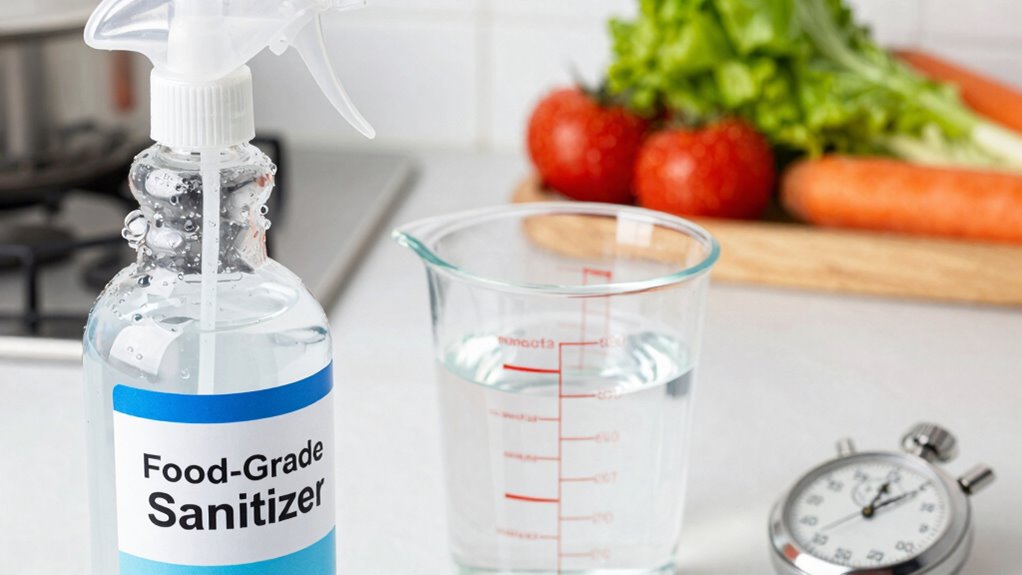
Food-grade sanitizers are essential tools for ensuring the safety and cleanliness of your food preparation environment. They help eliminate harmful bacteria and reduce the risk of contamination, but their effectiveness depends on proper application. One crucial aspect is understanding the importance of effective rinsing after sanitizing. You want to make sure that any residual sanitizer is thoroughly rinsed off, especially from surfaces that come into direct contact with food. This step prevents any chemical transfer to your ingredients, which could pose health risks or alter flavors. When rinsing, use clean water and ensure all sanitizer residues are removed. Keep in mind that over-rinsing isn’t necessary, but incomplete rinsing can leave behind traces that compromise safety.
Proper storage of your food-grade sanitizers is equally important. Store these solutions in a cool, dry place away from direct sunlight and incompatible chemicals. Proper storage not only maintains the potency of the sanitizer but also prevents accidental spills or misuse. Always keep the containers tightly sealed and clearly labeled to avoid confusion with other cleaning agents. Proper storage also involves following manufacturer instructions regarding shelf life; expired sanitizers can become ineffective or unsafe. If you notice any discoloration, sediment, or changes in smell, discard the product and replace it with a fresh batch. This proactive approach ensures that every time you use the sanitizer, you’re working with a reliable and effective solution.
When mixing sanitizers, always adhere to the recommended dilution ratios. Using too little sanitizer might render the solution ineffective, while too much can be wasteful or potentially harmful. Proper dilution ensures that you’re achieving the right concentration for maximum microbial kill without risking chemical residues. It’s best to prepare fresh solutions daily or as instructed by the manufacturer, especially if you’re sanitizing large quantities of equipment or surfaces regularly. Measure carefully and avoid guesswork, as inconsistent concentrations can lead to inadequate sanitation.
As an affiliate, we earn on qualifying purchases.
Frequently Asked Questions
Are Food-Grade Sanitizers Safe for Use on All Food Contact Surfaces?
Yes, food-grade sanitizers are safe for use on most food contact surfaces when you follow proper guidelines. Always check sanitizer compatibility with your specific surfaces to guarantee food contact safety. You should also adhere to manufacturer instructions for contact time and dilution to prevent contamination or damage. By doing so, you ensure effective sanitation without risking safety or compromising the integrity of your food contact surfaces.
How Often Should Sanitizers Be Reapplied During Food Processing?
Wondering how often you should reapply sanitizer? It’s vital to follow your sanitizer’s contact time recommendations and reapply as needed to prevent contamination. Typically, you should reapply sanitizer whenever food contact surfaces are visibly soiled or after processing certain foods. This frequent reapplication ensures continuous protection, helping prevent cross-contamination and maintaining a safe environment. Don’t wait for signs of contamination—stay proactive with sanitizer reapplication to keep food safe.
Can Sanitizer Residues Affect Food Taste or Quality?
Sanitizer residues can impact food taste and quality, causing off-flavors or lingering chemical tastes. Residue effects depend on the sanitizer type, concentration, and contact time. To prevent this, make certain thorough rinsing after sanitizing, especially with food-grade solutions. Proper dilution and contact time are essential, so you avoid leaving residues that could compromise taste or quality. Always follow manufacturer guidelines to maintain food safety and product integrity.
What Are the Environmental Impacts of Using Food-Grade Sanitizers?
You should consider that using food-grade sanitizers can have environmental impacts and ecological effects. When not properly diluted or disposed of, they may contaminate water sources and harm aquatic life. To minimize these risks, follow recommended contact times and dilution guidelines carefully. This guarantees effective sanitization while reducing environmental harm, helping protect ecosystems and maintain ecological balance. Proper management is key to responsible sanitizer use.
Are There Specific Storage Requirements for Food-Grade Sanitizers?
Think of your food-grade sanitizer as a precious treasure that needs a secure vault. You should store it in a cool, dry place away from sunlight, heat, and incompatible materials. Follow storage guidelines carefully to maintain its effectiveness, and always check the shelf life on the label. Proper storage guarantees the sanitizer stays potent, safe, and ready to protect your food without risking contamination or spoilage.
Conclusion
Now that you know the importance of proper contact time and correct dilution, aren’t your food safety practices worth the effort? Using food-grade sanitizers correctly isn’t just about following rules—it’s about protecting your customers and your reputation. When you measure carefully and allow the right contact time, you guarantee germs are gone and your food stays safe. So, why leave safety to chance when you can get it right every time?
Halloween Picks
halloween
As an affiliate, we earn on qualifying purchases.