When testing tap water for juicing, focus on key metrics like pH level, contaminants such as bacteria and chemicals, and mineral content like calcium, magnesium, and sodium. These factors affect safety, taste, and nutrition. Ensuring your water meets safety standards helps prevent health risks and preserves your juice’s flavor. If you want to learn about specific testing methods and solutions, keep exploring what makes water ideal for healthy, tasty homemade juice.
Key Takeaways
- Measure microbial contamination levels to ensure water is free from harmful bacteria and pathogens.
- Assess mineral content, including calcium, magnesium, sodium, and potassium, to prevent flavor issues and equipment buildup.
- Test for chemical pollutants such as heavy metals and pesticides to ensure water safety and health.
- Determine pH and total dissolved solids (TDS) to evaluate water’s suitability for juicing and taste quality.
- Use testing kits or professional services to obtain comprehensive data for effective water filtration and treatment choices.
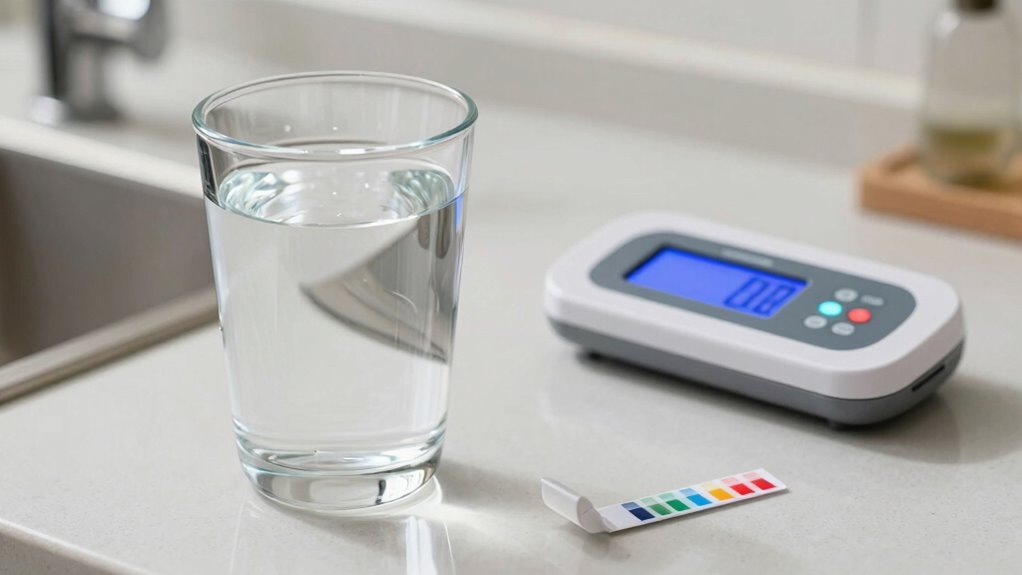
If you’re juicing at home, testing your tap water is a critical step to guarantee your beverages are safe and healthy. The quality of your water directly impacts the overall safety, taste, and nutritional value of your juices. One of the most important factors to consider is water purity. Ensuring your tap water is free from harmful contaminants like bacteria, heavy metals, or chemicals is essential because these can pose health risks or alter the flavor of your juice. Testing for water purity involves checking for pollutants and ensuring the water meets safety standards set by health authorities. Without this step, you may unknowingly consume substances that could compromise your health or diminish the quality of your juice.
Testing tap water for purity is essential to ensure safe, healthy, and great-tasting homemade juices.
Along with purity, mineral content plays a key role in determining whether your tap water is suitable for juicing. Minerals like calcium, magnesium, sodium, and potassium naturally occur in water, but their levels can vary greatly depending on your location and the source of your tap water. High mineral content, especially certain minerals like calcium and magnesium, can influence the taste of your juice, sometimes imparting a bitter or metallic flavor. Furthermore, excessive minerals may interfere with the juicing process itself, leading to residue buildup in your equipment or affecting the clarity of your finished product. Testing for mineral content allows you to understand the composition of your water, helping you decide if you need to filter or treat it before juicing.
Beyond taste and equipment considerations, monitoring mineral levels also impacts your health. For example, if your tap water contains high levels of sodium or other undesirable minerals, it could contribute to health issues over time, especially if you consume large quantities of homemade juice regularly. Conversely, water with an ideal balance of minerals can enhance the nutritional profile of your juice, providing beneficial electrolytes that complement your diet. Understanding the role of water quality in health and flavor can guide you in selecting the best water for your juicing needs.
To effectively test your tap water, you can use home testing kits or hire professional services. Home kits are generally straightforward and cost-effective, offering quick results on key parameters like water purity and mineral content. If the tests reveal contaminants or concerning mineral levels, you can then opt for filtration systems, such as activated carbon filters or reverse osmosis units, to improve your water quality. This proactive approach guarantees your juicing process remains safe, tastes great, and retains its nutritional benefits. Ultimately, paying attention to water purity and mineral content guarantees you’re making the healthiest choices for yourself and your family each time you press your juicer.
Frequently Asked Questions
How Often Should I Test My Tap Water for Juicing?
You should test your tap water for juicing at least once every six months to guarantee quality monitoring. If you notice any changes in taste, smell, or appearance, increase testing frequency. Regular water testing helps detect contaminants early, safeguarding your health and the taste of your juices. For homes with old pipes or nearby industrial activity, quarterly testing might be necessary to maintain safe, clean water for juicing.
Are There Specific Filters to Improve Tap Water Quality?
Think of your tap water as a garden needing the right nourishment. Activated carbon filters act like a sponge, absorbing impurities and odors, while reverse osmosis systems are like a diligent gatekeeper, removing contaminants at a microscopic level. Both are effective choices for improving water quality before juicing. Choose based on your specific needs, but remember, a good filter is essential for fresh, healthy juice.
What Are the Health Risks of Contaminated Tap Water?
Contaminated tap water can pose serious health risks, including lead contamination that harms your nervous system and brain development, especially in children. Microbial hazards like bacteria and viruses can cause illnesses such as diarrhea, cholera, and other infections. Regularly testing your water helps identify these dangers early. Using proper filters can reduce these risks, but it is crucial to stay informed about your water quality to protect your health effectively.
Can Bottled Water Be a Safer Alternative for Juicing?
Think of bottled water as a clear river, promising purity. It can be a safer alternative for juicing since it’s often tested for contaminants and offers consistent quality. However, not all bottled waters are equal; check labels for safety certifications. While it’s a convenient option, consider alternative water sources like filtered tap water, which, when properly treated, can be just as safe and eco-friendly for your juicing needs.
How Do I Interpret Test Results for Safe Juicing?
You interpret test results by checking for water contaminants like bacteria, heavy metals, and chemicals. Verify the testing accuracy is reliable by reviewing the lab’s credentials and methods used. If contaminant levels are within safe limits, your tap water is safe for juicing. If not, consider filtering or using bottled water. Always compare your results to local safety standards to make informed decisions about water safety for juicing.
Conclusion
So, next time you’re juicing, remember that your tap water might be hiding more than just purity. Ironically, the very water you trust to brighten your drink could be lurking with unseen contaminants. Don’t let the clear illusion fool you—testing reveals what’s truly beneath the surface. After all, in the quest for fresh, healthy juice, the real flavor might just be in knowing your water’s secrets. Cheers to transparency, literally and figuratively.