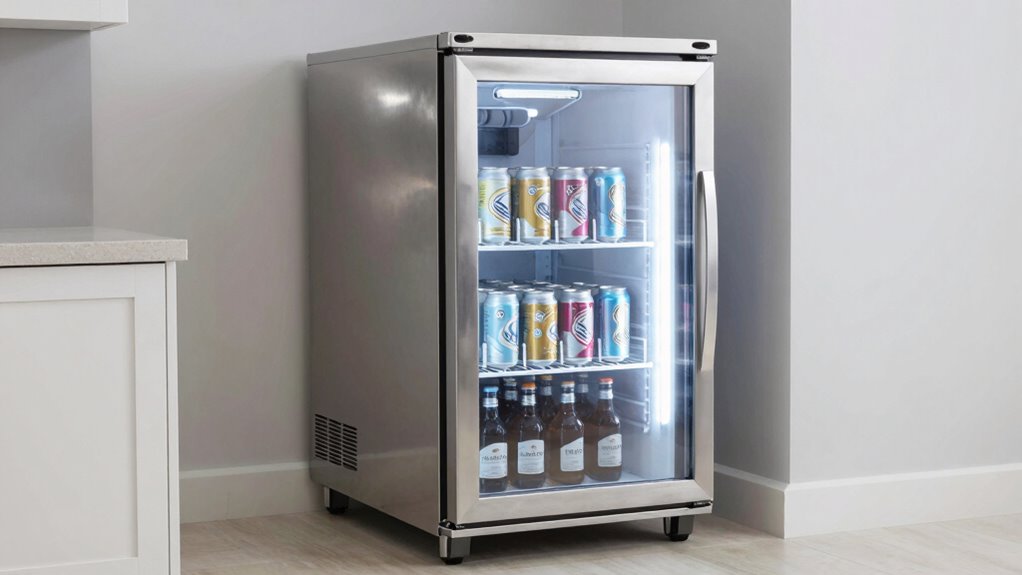

To avoid ventilation mistakes with your undercounter beverage refrigerator, make sure it’s installed with enough space around it, following the manufacturer’s clearance guidelines. Keep vents unobstructed and free of dust or debris, and avoid placing the unit near heat sources or in direct sunlight. Prevent overcrowding or sealing vents with cabinetry, as this can hinder airflow. Proper ventilation keeps your unit efficient and extends its lifespan—continue to explore tips to optimize performance and avoid common issues.

Get kitchen staples and gadgets delivered free — and shop member deals
- Fast, free delivery on millions of items
- Access to Prime Big Deal Days deals on October 6–7
- Prime Video, Amazon Music and more included
Key Takeaways
- Avoid enclosing the refrigerator with cabinetry that seals vents tightly; maintain proper clearance for airflow.
- Do not block or cover vents during installation or maintenance to ensure unobstructed ventilation.
- Keep the area around the unit free from clutter and obstacles to prevent airflow restrictions.
- Position the refrigerator away from heat sources and direct sunlight to reduce cooling strain.
- Regularly clean vents and check for dust buildup to maintain optimal airflow and efficiency.

One common mistake is installing the refrigerator in an enclosed or poorly ventilated area. These units need proper airflow around their vents to dissipate heat generated during operation. If the vents are blocked or surrounded by walls or cabinetry too close, the unit will struggle to cool effectively. This can lead to increased wear and higher energy bills. To avoid this, leave at least a few inches of space around all sides of the refrigerator, especially near the vents. Follow the manufacturer’s installation tips, which often specify the minimum clearance needed for proper ventilation.
Another mistake is stacking or overcrowding the space around the refrigerator, which impairs airflow. When installing the unit, make sure nothing obstructs the vents or prevents air circulation. If you’re placing the refrigerator under a counter, verify that the cabinetry doesn’t seal tightly around it, blocking air intake or exhaust. Regularly check the vents for dust or debris that can clog airflow, and clean them as needed. Keeping the area around the unit tidy and well-ventilated guarantees it operates efficiently and reduces energy bills over time. Ensuring proper airflow management is crucial for maintaining optimal performance. Proper installation techniques also help prevent unnecessary strain on the compressor and extend the lifespan of your refrigerator.
Considering energy efficiency during installation is essential. Positioning the refrigerator away from heat sources like ovens, direct sunlight, or warm appliances helps reduce the workload on the compressor. This not only improves energy efficiency but also keeps your drinks cooler more consistently. When installing, follow the manufacturer’s advice on placement and ventilation. Proper installation techniques, including leveling the unit and ensuring unobstructed airflow, prevent unnecessary strain on the compressor, which can lead to higher energy costs and premature wear. Additionally, understanding ventilation requirements can help you optimize the setup for better performance.
Ultimately, avoiding ventilation mistakes starts with paying close attention to installation tips and maintaining clear airflow around your undercounter beverage refrigerator. Proper setup guarantees it runs efficiently, consumes less energy, and keeps your drinks perfectly chilled without breaking the bank. By taking these simple steps, you extend your refrigerator’s lifespan and enjoy its convenience for years to come.
undercounter beverage refrigerator ventilation kit
As an affiliate, we earn on qualifying purchases.
As an affiliate, we earn on qualifying purchases.
Frequently Asked Questions
Can Ventilation Issues Affect the Longevity of My Beverage Refrigerator?
Yes, ventilation issues can shorten your beverage refrigerator’s lifespan. Poor airflow causes the unit to work harder, leading to increased ventilation noise and temperature fluctuations. These fluctuations strain the compressor and other components, accelerating wear and tear. To guarantee longevity, keep vents clear and maintain proper ventilation. This helps your refrigerator run efficiently, reducing noise and preventing temperature inconsistencies that could damage your beverages over time.
Are There Specific Ventilation Requirements for Built-In Versus Freestanding Models?
Built-in and freestanding beverage refrigerators have different ventilation requirements. You should follow the installation guidelines closely for each type, focusing on proper ventilation design. Built-in models often need more concealed airflow space, while freestanding units typically require clearance around the sides and back. Ensuring adequate ventilation helps prevent overheating and extends your refrigerator’s lifespan. Always consult the manufacturer’s instructions to maximize airflow and maintain peak performance.
How Do I Know if My Refrigerator Has Proper Ventilation?
Your refrigerator’s airflow optimization is essential—if it’s not well-ventilated, it’s like trying to breathe through a clogged straw! To check if you have proper ventilation, make certain there’s enough space around the unit for air to circulate and that vents aren’t blocked. Regular ventilation maintenance keeps your fridge running efficiently, prevents overheating, and prolongs its lifespan. Keep vents clear and maintain airflow for peak performance.
What Are the Signs of Poor Ventilation in My Beverage Fridge?
If your beverage fridge shows signs of poor ventilation, you’ll notice airflow obstructions like excessive frost buildup or warm spots inside. The compressor may run constantly or become noisier, indicating ventilation issues. To prevent this, perform regular ventilation maintenance by clearing vents and ensuring nothing blocks airflow. Ignoring these signs can lead to inefficient cooling and potential damage, so stay attentive to airflow obstructions and keep your fridge well-ventilated.
Is External Ventilation More Effective Than Internal Airflow Systems?
External ventilation is far more effective than internal airflow systems, dramatically transforming your fridge’s performance. It’s like giving your beverage fridge a turbocharged engine, ensuring ideal airflow design and heat dissipation. With external ventilation, hot air escapes effortlessly, preventing overheating and sluggish cooling. Internal systems can get blocked or clogged, but external ventilation keeps things breezy and cool, letting your beverages stay perfectly chilled no matter how busy your fridge gets.
Conclusion
To keep your undercounter beverage refrigerator running smoothly, avoid common ventilation mistakes—think of proper airflow as its lifeblood. When you give your unit the space it needs, it’ll perform like a well-oiled machine, keeping drinks perfectly chilled and ready to serve. Remember, good ventilation isn’t just a detail; it’s the secret sauce to prolonging your fridge’s life and ensuring your beverages stay as revitalizing as the day you bought them.
NFL season / tailgating Picks
team gear
As an affiliate, we earn on qualifying purchases.