Wireless temperature monitoring is an easy upgrade that boosts safety for batch storage with minimal setup. You can quickly install sensors without needing deep technical expertise, while regular calibration keeps your data accurate for regulatory compliance. Secure data transmission protects against breaches and tampering, ensuring reliable info. Automation allows remote access, so you get instant alerts for deviations, reducing spoilage. Keep your system secure and efficient—discover how this upgrade can make a real difference.
Key Takeaways
- Wireless systems enable quick, easy setup without extensive technical expertise, streamlining batch storage upgrades.
- Remote monitoring and alert features help detect temperature deviations promptly, ensuring safety and compliance.
- Secure data transmission protects temperature logs from tampering and unauthorized access, enhancing safety.
- Cloud-based data analysis identifies trends for process improvement and prevents safety hazards.
- Robust network security safeguards the system against cyber threats, maintaining system integrity and reliability.
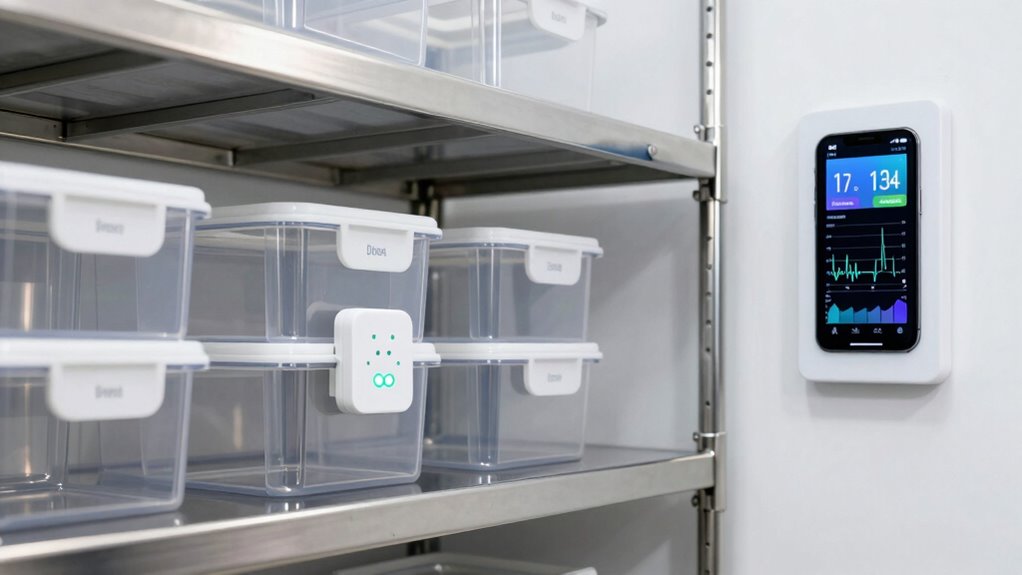
One of the key benefits of wireless temperature monitoring is its ease of integration into your existing operations. Modern systems are designed for user-friendly setup, allowing you to quickly install sensors without extensive technical knowledge. Once in place, these sensors often require regular calibration to guarantee data accuracy. Sensor calibration is crucial because it ensures that the temperature readings are precise, which is especially important when storing sensitive or perishable goods. Proper calibration not only maintains data integrity but also helps you meet regulatory standards, avoiding costly penalties or product loss. Additionally, selecting a system with secure data transmission helps protect your information from potential breaches. Along with calibration, data security is a top priority when managing wireless temperature monitoring systems. You want to know that your data is protected from unauthorized access or tampering. Leading systems incorporate robust encryption methods and secure data transmission protocols, ensuring that your temperature logs remain confidential and unaltered. Implementing these security measures prevents potential breaches that could lead to false data or safety hazards, giving you peace of mind that your stored products are under reliable surveillance. The automation and remote accessibility of wireless systems also streamline your monitoring process. You can set alerts for temperature deviations, enabling prompt action without constant manual checks. This proactive approach minimizes the risk of spoilage or safety violations, saving you money and safeguarding your reputation. Additionally, the stored data can be easily accessed and analyzed through cloud platforms, helping you identify trends or recurring issues that may require process improvements. Ensuring data accuracy is fundamental for reliable monitoring and compliance. Employing systems with reliable sensors further enhances the overall effectiveness of your temperature management. To maximize system performance, it’s also important to understand network security considerations to protect your data from cyber threats.
wireless temperature monitoring system
As an affiliate, we earn on qualifying purchases.
As an affiliate, we earn on qualifying purchases.
Frequently Asked Questions
How Does Wireless Temperature Monitoring Integrate With Existing Storage Systems?
Wireless temperature monitoring integrates seamlessly with your existing storage systems by connecting sensors that require regular calibration to guarantee accuracy. These sensors transmit real-time data, which your system can automatically back up for data redundancy, preventing information loss. You can monitor temperatures remotely, making it easier to respond quickly to changes, and the integration process typically involves minimal disruption, enhancing safety and efficiency without extensive system overhauls.
What Are the Initial Setup Costs for Wireless Temperature Monitoring Systems?
About 60% of businesses find initial setup costs for wireless temperature monitoring systems manageable, making them a smart investment. Your cost analysis should include equipment, installation, and integration fees. Budget considerations are vital, but the enhanced safety and compliance benefits often outweigh the upfront expenses. Planning carefully helps you maximize ROI and guarantees a smooth rollout, giving you peace of mind that your batch storage remains safe and compliant.
How Secure Is the Data Transmitted by Wireless Temperature Sensors?
Your data transmitted by wireless temperature sensors is quite secure, thanks to robust data encryption methods that protect information during transmission. Additionally, regular sensor calibration guarantees accuracy and minimizes errors that could compromise data integrity. By keeping your sensors properly calibrated and utilizing strong encryption protocols, you can confidently rely on the security of your wireless temperature monitoring system, safeguarding your batch storage effectively.
Can Wireless Systems Operate Reliably in Harsh Environmental Conditions?
Imagine you’re overseeing a pharmaceutical storage facility during a storm. Wireless systems can operate reliably in harsh conditions if they’re designed with environmental durability in mind. They often feature rugged enclosures and advanced shielding to withstand moisture, dust, and temperature extremes. To avoid signal interference, choose systems with strong, secure signals, ensuring consistent temperature monitoring even in challenging environments, giving you peace of mind and safeguarding your valuable batches.
What Is the Typical Lifespan of Wireless Temperature Sensors?
Wireless temperature sensors typically last 2 to 5 years, depending on battery longevity and usage. You should regularly check sensor calibration to guarantee accurate readings over time. Proper maintenance, like replacing batteries when needed, can extend their lifespan. Environmental factors, such as temperature extremes or moisture, may also impact durability. By monitoring these aspects, you maximize sensor performance and ensure reliable, safe batch storage.
Conclusion
Imagine if upgrading your storage system could drastically boost safety with minimal effort—sounds too good to be true, right? Well, wireless temperature monitoring proves otherwise. This technology isn’t just a convenience; it’s a game-changer, ensuring precise, real-time data that can prevent costly spoilage or hazards. So, don’t dismiss this upgrade as optional. Instead, embrace it as your smart move toward safer, more reliable batch storage—you might just find it’s the best decision you make today.