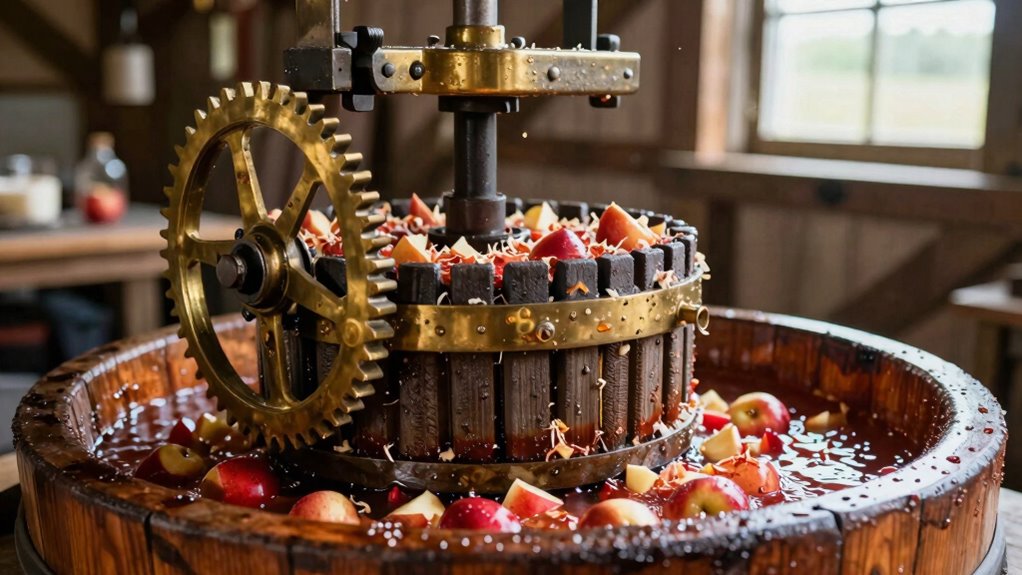
To prevent dry puck failures during apple cider pressing, you should aim for a balanced grind size—not too fine or too coarse. A medium grind maximizes juice extraction while avoiding pulp compaction that causes dry pucks. Fine grinding increases surface area but can lead to over-extraction and dry pucks if too fine. Coarse grinding reduces juice yield. Consistently maintaining the right grind size improves pressing efficiency and cider quality—keep exploring to discover more tips for flawless pressing results.
Key Takeaways
- Use a medium grind size to balance pulp surface area and prevent over-compression leading to dry pucks.
- Avoid overly fine grinding, which increases pulp compaction and risks dry puck formation.
- Regularly inspect and calibrate your grinder to ensure consistent, optimal pulp size.
- Proper equipment maintenance prevents uneven pulp and reduces dry puck failures.
- Consistent grind size promotes better juice extraction and minimizes pressure buildup during pressing.
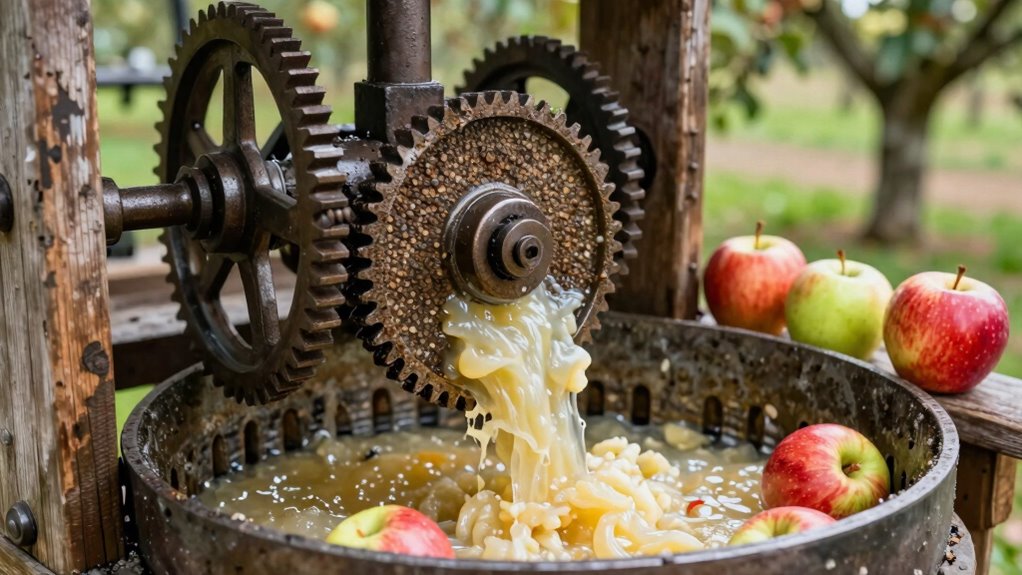
Apple cider pressing is a rewarding process that transforms freshly harvested apples into delicious, natural juice. As you work through this process, understanding how to optimize your grind size is essential to avoiding common pitfalls like “dry puck” failures. The grind size directly influences pressing efficiency and the quality of your cider. If your apples are ground too fine, you risk over-extraction, which can cause the pulp to compact excessively and lead to dry puck formation. This results in poor juice yield and increased pressure during pressing, often damaging your equipment and requiring more effort to extract liquid. Conversely, if your apples are ground too coarsely, you won’t extract enough juice, and the pressing becomes inefficient. Striking the right balance in grind size ensures a smooth pressing process, with minimal risk of dry pucks and maximum juice recovery.
Controlling fermentation is another key aspect of successful cider making, especially when considering how grind size impacts fermentation dynamics. Smaller particles from a fine grind can increase surface area, accelerating fermentation and potentially leading to over-fermentation if not monitored carefully. A properly managed fermentation process involves regular checks on temperature and sugar levels, ensuring the yeast activity remains steady and predictable. This way, you prevent spoilage and off-flavors that can arise from uncontrolled fermentation. Adjusting your grind size to produce a consistent pulp size helps maintain uniform fermentation, reducing the chances of bacterial contamination or yeast stress that could compromise your cider’s flavor.
Equipment maintenance plays an important role in achieving the perfect grind size and smooth pressing. Regularly inspecting your grinder and press ensures they operate efficiently and produce a uniform pulp. Dull blades or worn-out rollers can result in inconsistent grinding, leading to uneven pulp sizes that either cause dry puck issues or poor juice extraction. Keeping your equipment clean prevents buildup of pulp and residue, which can interfere with fermentation control by harboring unwanted bacteria or wild yeasts. Lubricating moving parts and calibrating your grinder ensures precise control over grind size, helping you avoid the “dry puck” failures that stem from improper pulp texture. Well-maintained equipment not only extends its lifespan but also guarantees a more predictable and efficient pressing process, allowing you to focus on refining your craft and producing high-quality cider.
Frequently Asked Questions
How Does Ambient Temperature Affect Apple Cider Pressing Efficiency?
Ambient temperature impacts your cider pressing efficiency by affecting juice extraction and pulp consistency. When it’s too warm, pulp may become overly soft, reducing the pressure needed for *best* juice flow. Conversely, cooler temperatures can make apples firmer, requiring more effort. Proper temperature control and monitoring ambient humidity help maintain *ideal* conditions, ensuring steady pressing and preventing dry puck failures. Keep your environment stable to maximize juice yield and quality.
What Types of Apples Are Best for Optimal Pressing Results?
You should choose apple varieties like Honeycrisp, Fuji, or Gala for ideal pressing results because they have high juice content and good flavor balance. Select apples from well-maintained orchard sections with minimal bruising or rot. Proper orchard selection ensures your apples are ripe and healthy, which makes pressing easier and yields better-quality cider. Combining the right apple variety with careful orchard selection helps you get the most juice and flavor from your apples.
Can Pressing Pressure Influence the Final Cider Flavor?
Pressing pressure directly influences cider flavor by extracting different compounds from the apples. Applying too much pressure can lead to bitter or overly tannic cider, while too little may produce a weak, bland taste. You should adjust pressing pressure carefully to balance juice extraction and flavor clarity. Properly controlled pressure helps you achieve a well-rounded, flavorful cider that reflects the apples’ natural qualities.
How Often Should the Pressing Equipment Be Cleaned?
You should clean your pressing equipment after every use to maintain ideal equipment maintenance and guarantee high-quality cider. Regular cleaning prevents buildup of pulp and bacteria, which can spoil flavors or cause equipment failures. Establish a consistent cleaning frequency based on your production volume—daily if you press frequently, weekly for occasional use. Proper cleaning not only prolongs equipment life but also ensures the best tasting cider every time.
Is There a Recommended Storage Method for Pressed Apple Pulp?
A stitch in time saves nine, so proper press pulp storage is key. You should store pressed apple pulp in airtight containers, preferably chill it in the refrigerator, to prevent fermentation. For longer storage, freezing is best, as it halts fermentation and preserves freshness. Keep the pulp away from direct sunlight and oxygen exposure, ensuring fermentation prevention and maintaining quality until you’re ready to use it.
Conclusion
By dialing in the right grind size, you’re the captain steering your cider ship clear of dry puck storms. Think of it as tuning a finely crafted instrument—small adjustments make all the difference between a smooth flow and a stubborn block. When you master this art, you release the secret to consistent, juicy pours. So, keep your grind just right, and let your cider flow like a well-oiled river—rich, sweet, and unstoppable.